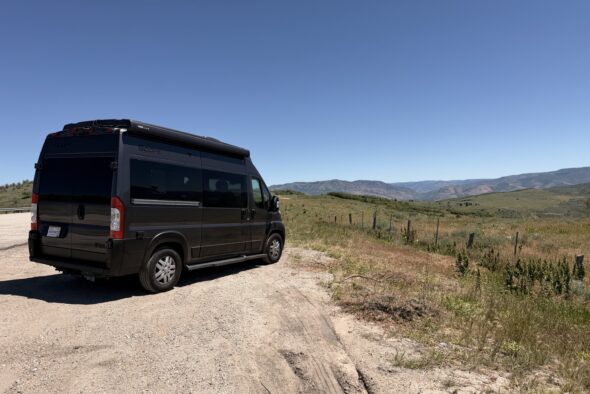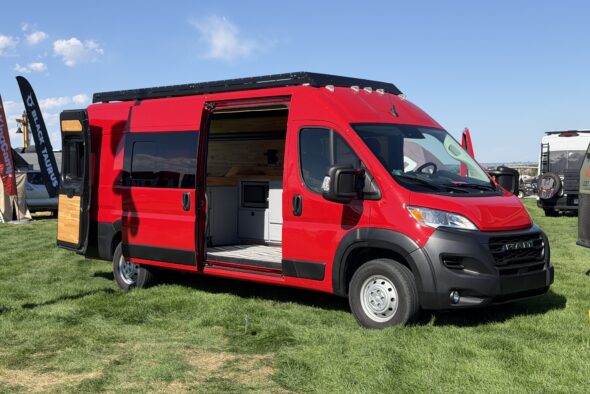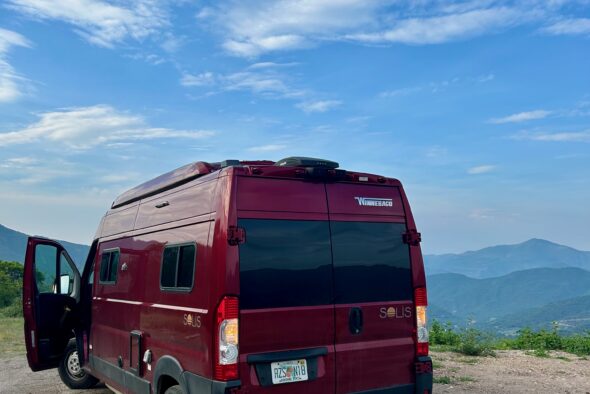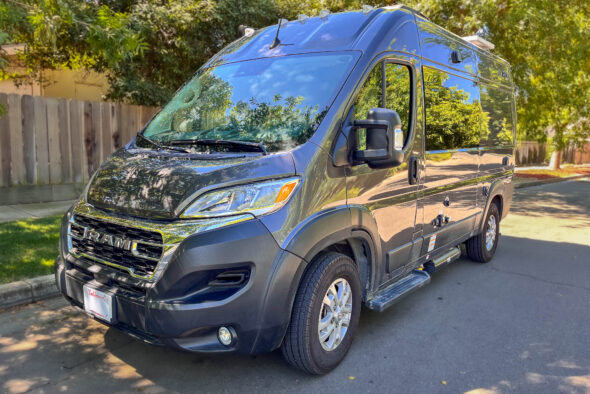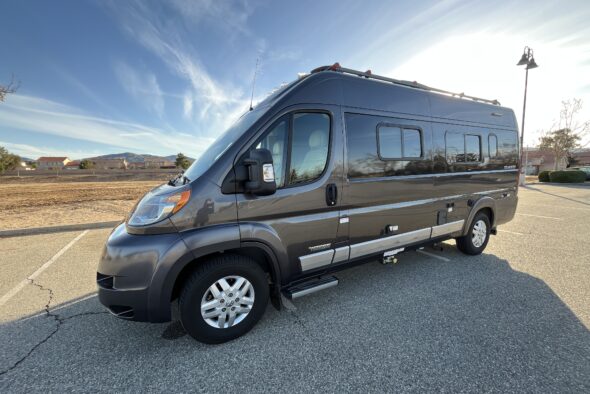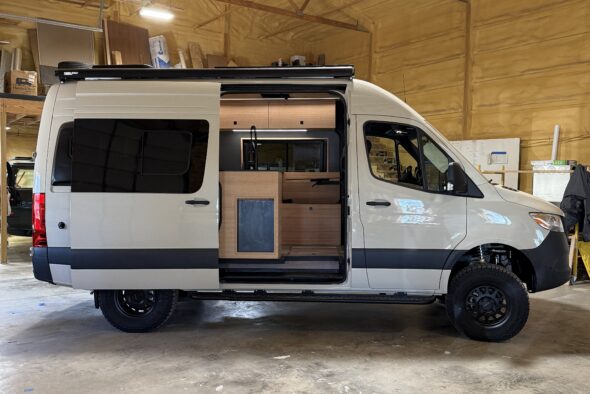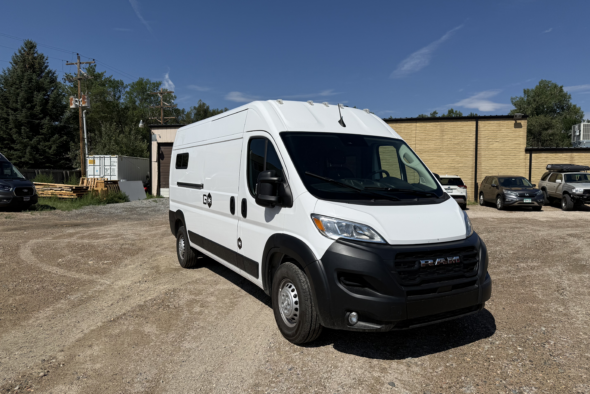
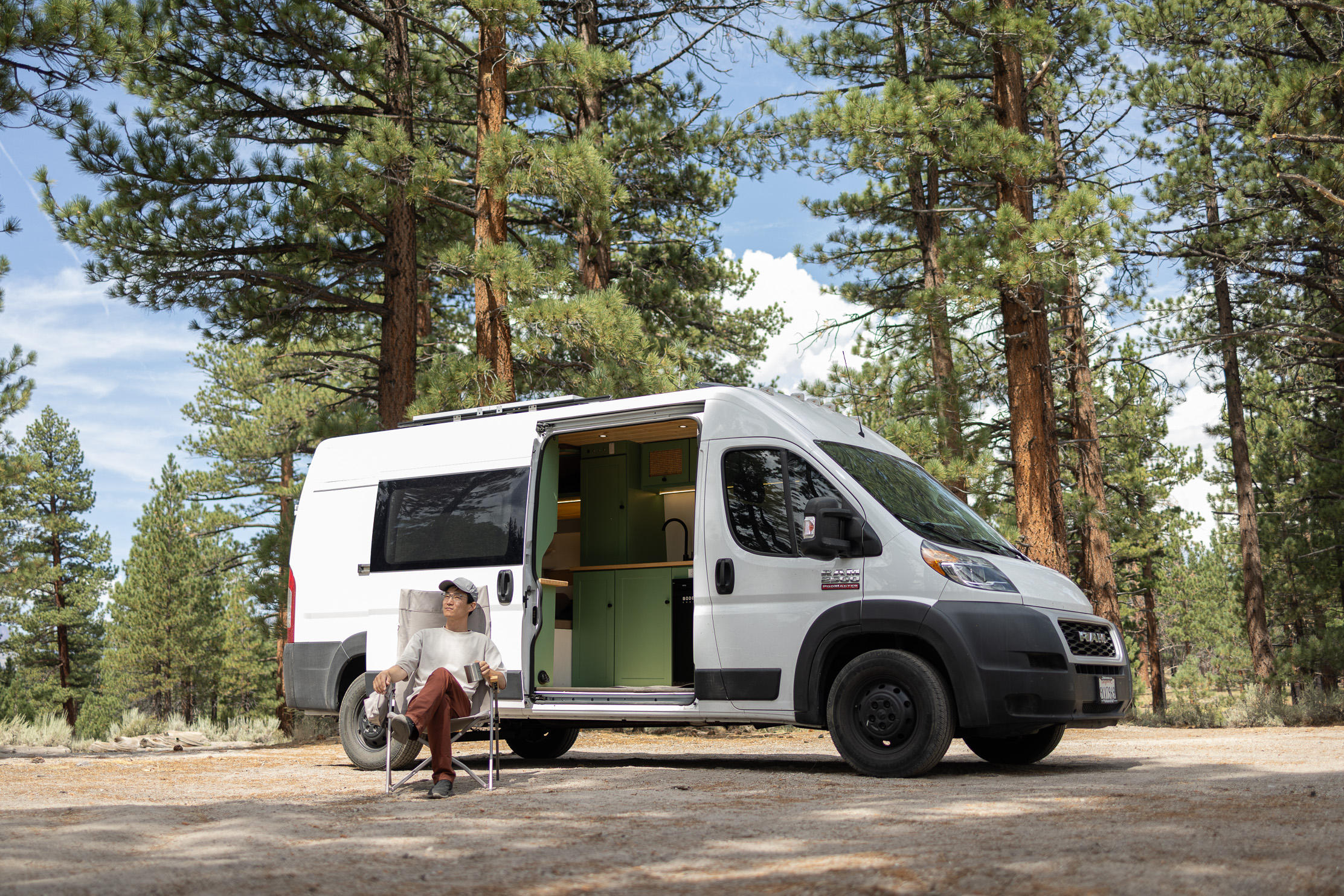
I built my first van 5 years ago and have been traveling in vans ever since. This one was designed by someone who’s actually lived in one — and built by someone who thinks like the person who’ll eventually have to fix it. Everything in it came from things I ran into along the way.
Here’s what that experience turned into.
The sofa & table
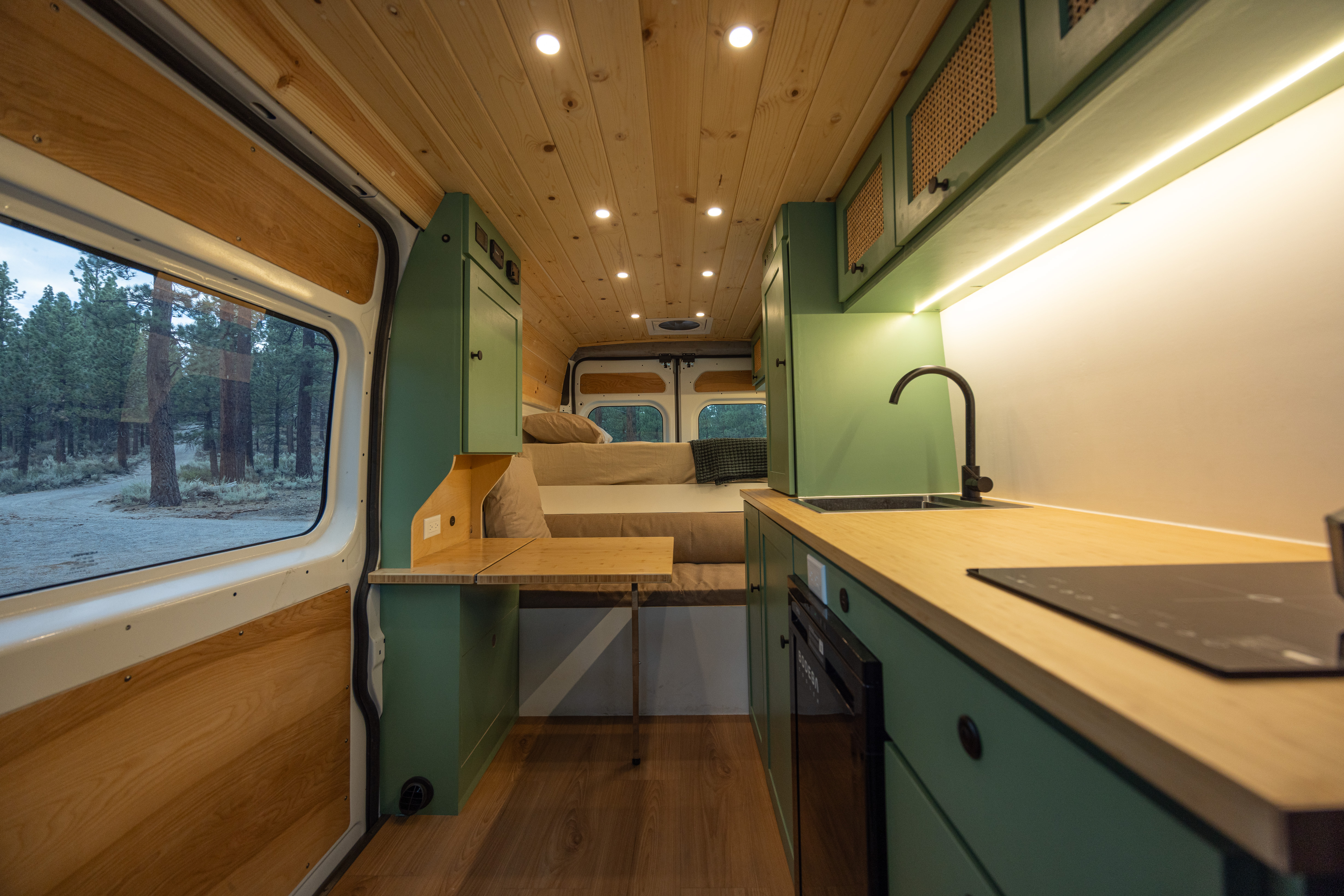
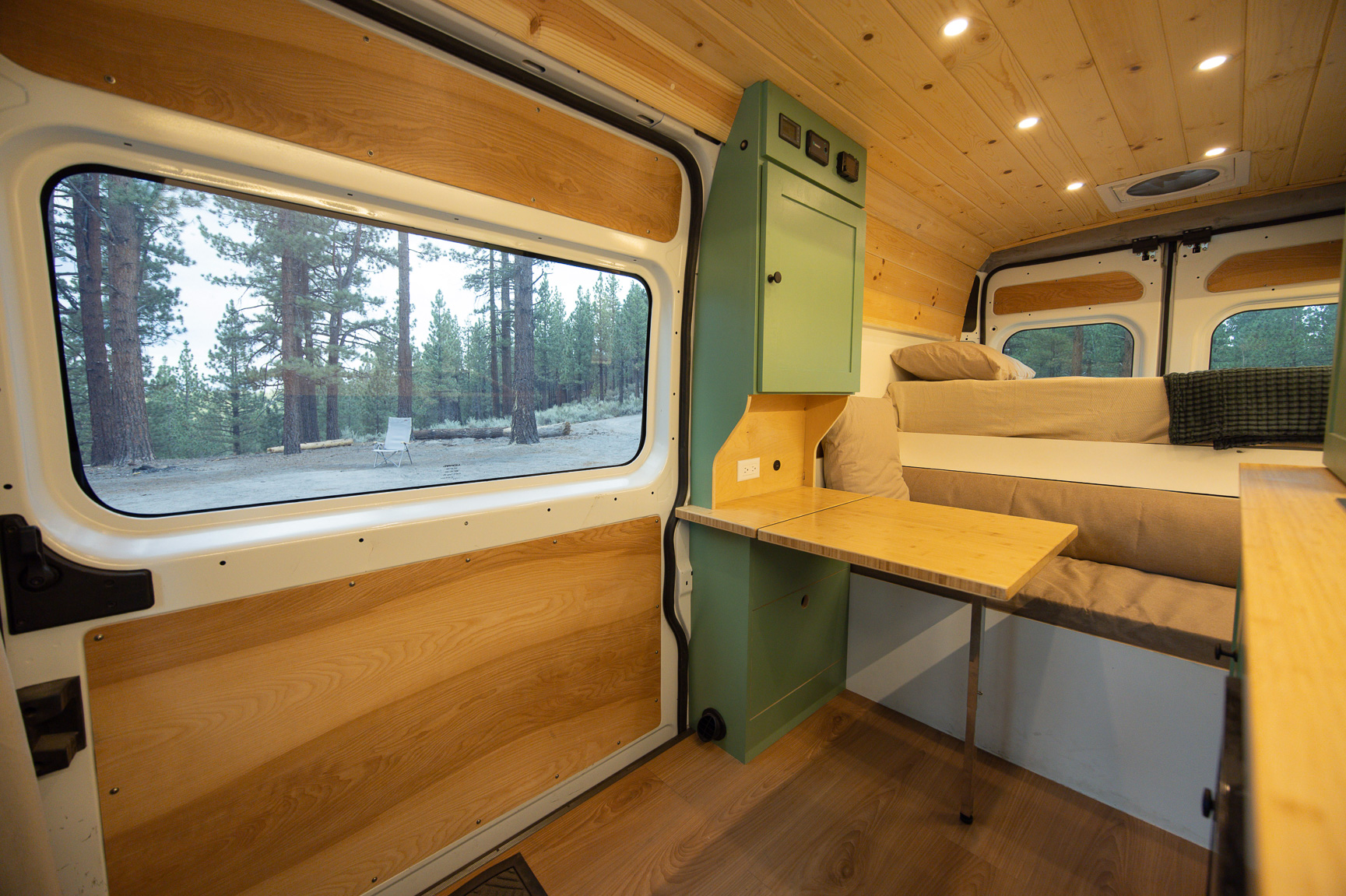
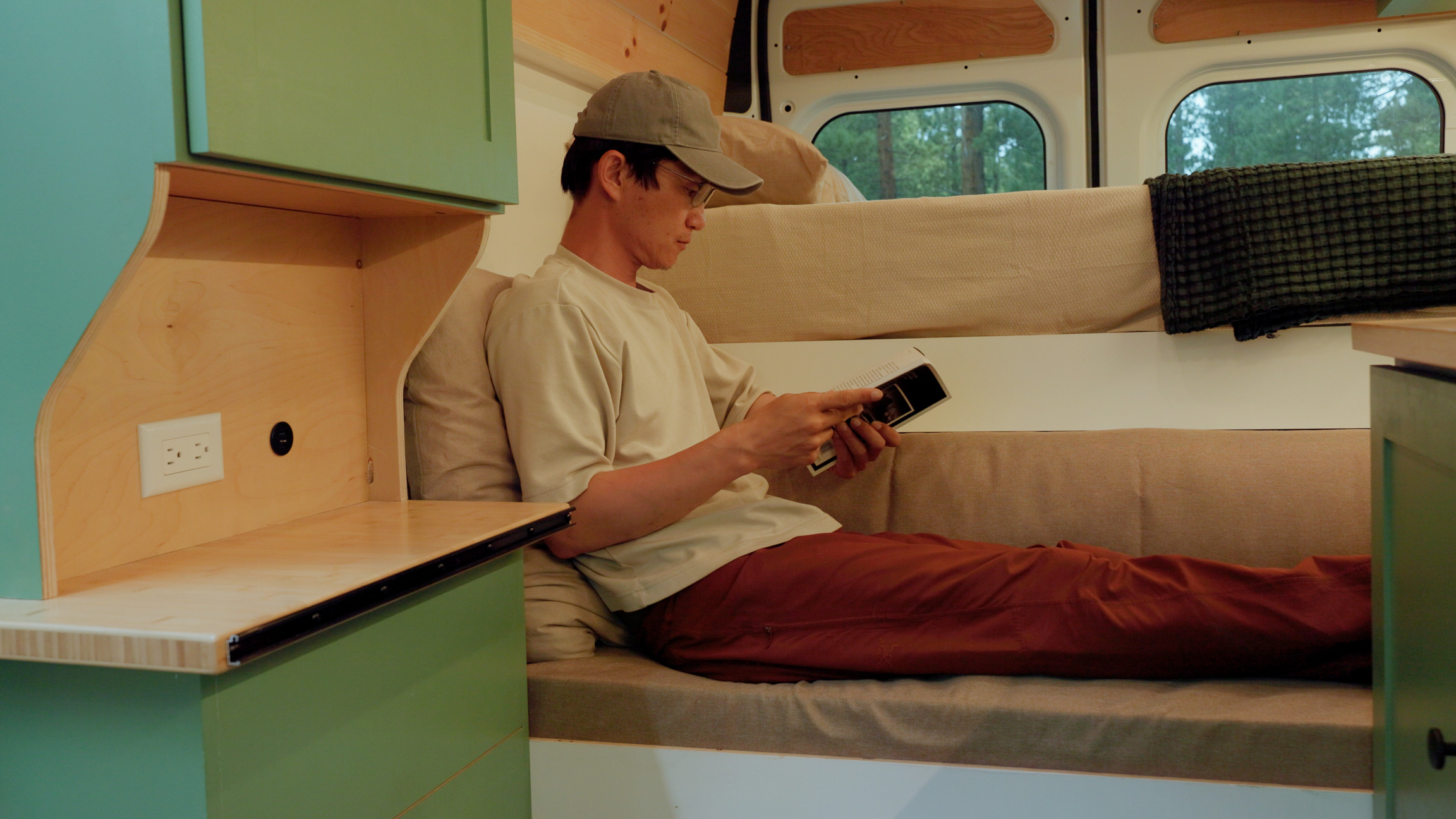
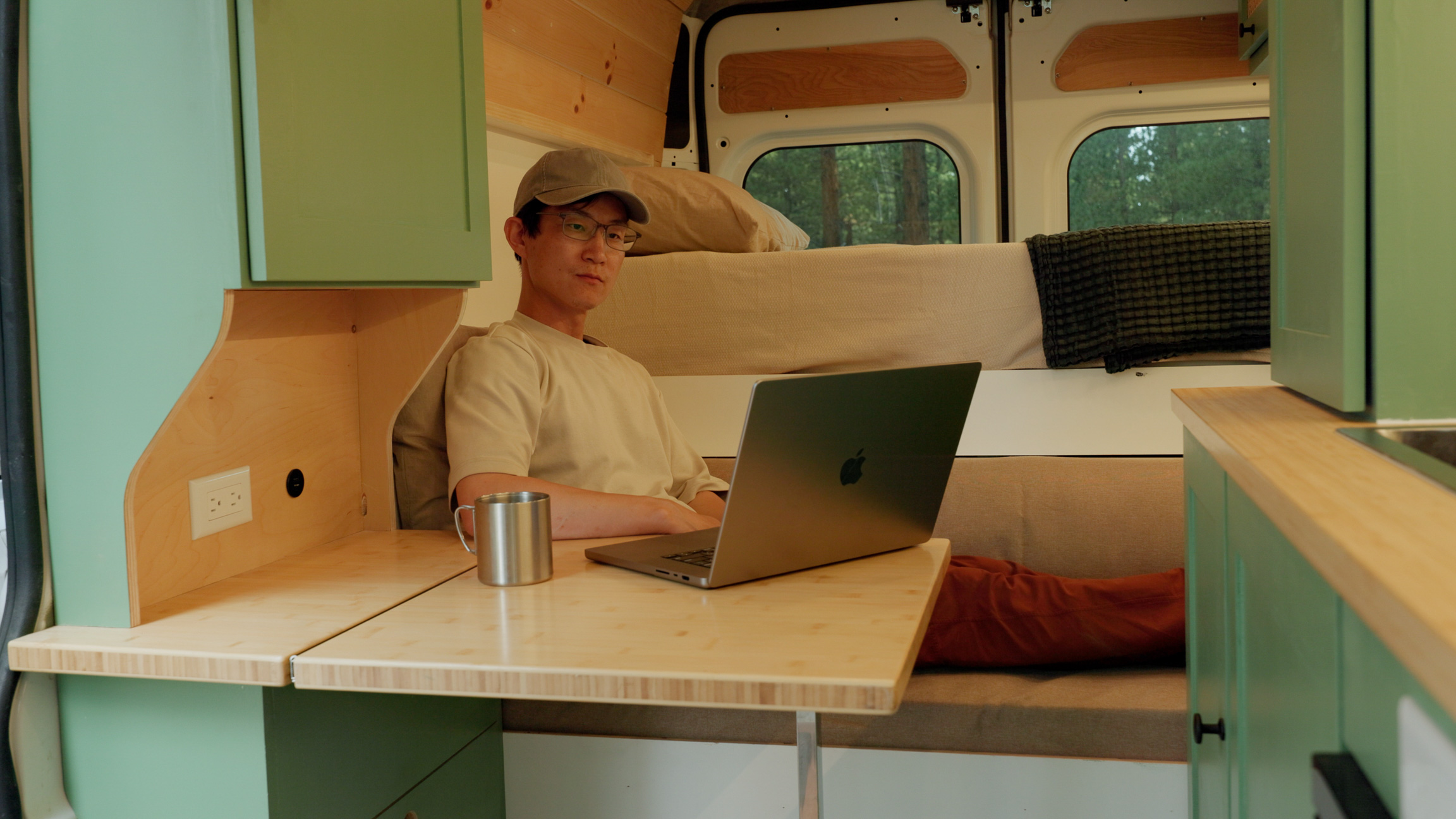
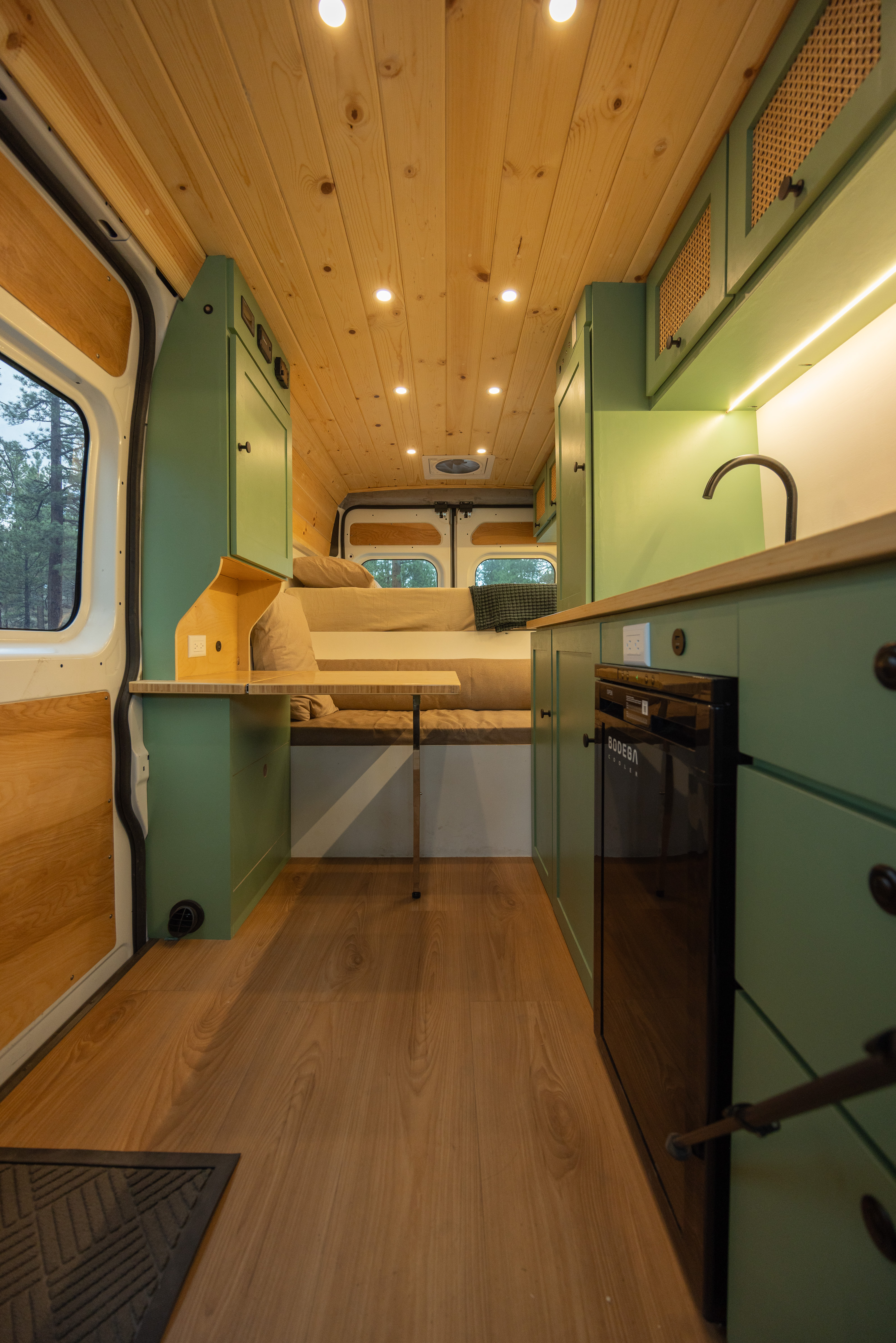
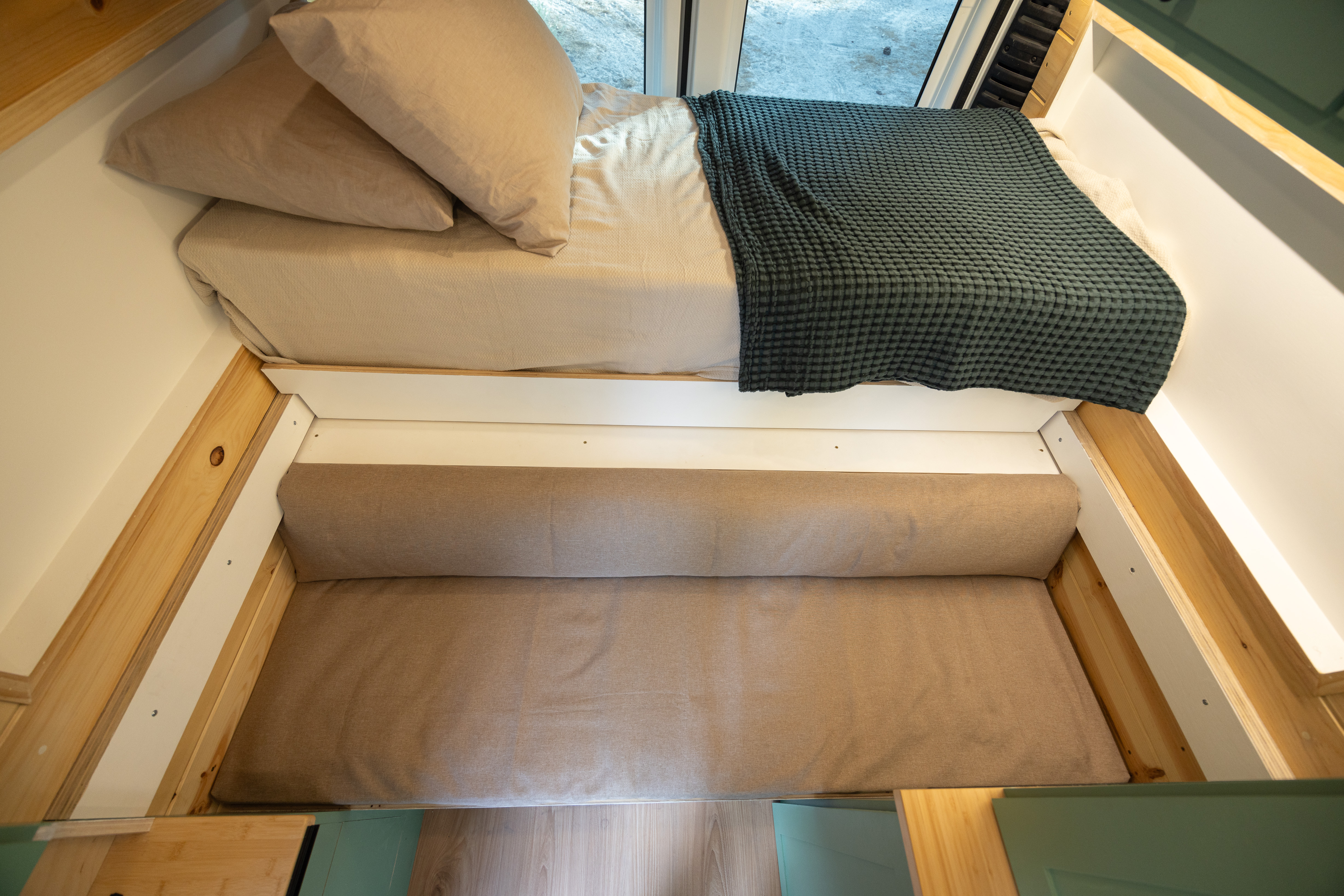
The bed is simple — a good mattress is most of what matters. The sofa isn’t. I didn’t want a sofa that gets uncomfortable after a few hours, or a table that wobbles every time you set something down. It works three ways: upright for working, leaning sideways for reading, or flat for a nap when you’re tired from driving. The backrest is curved to hold up either way, and the table doesn’t wobble when you type. It also slides forward and back — turned out to be useful for watching something lying down.
Less storage, on purpose
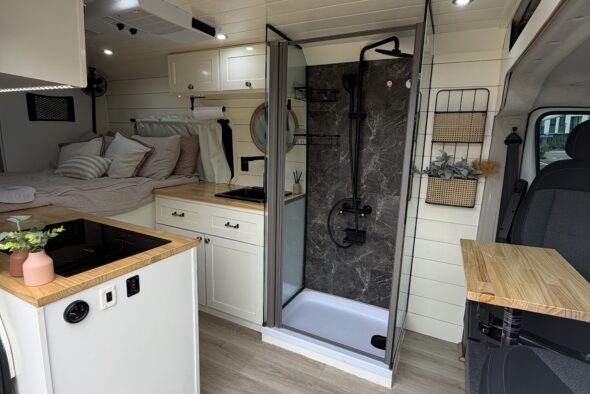
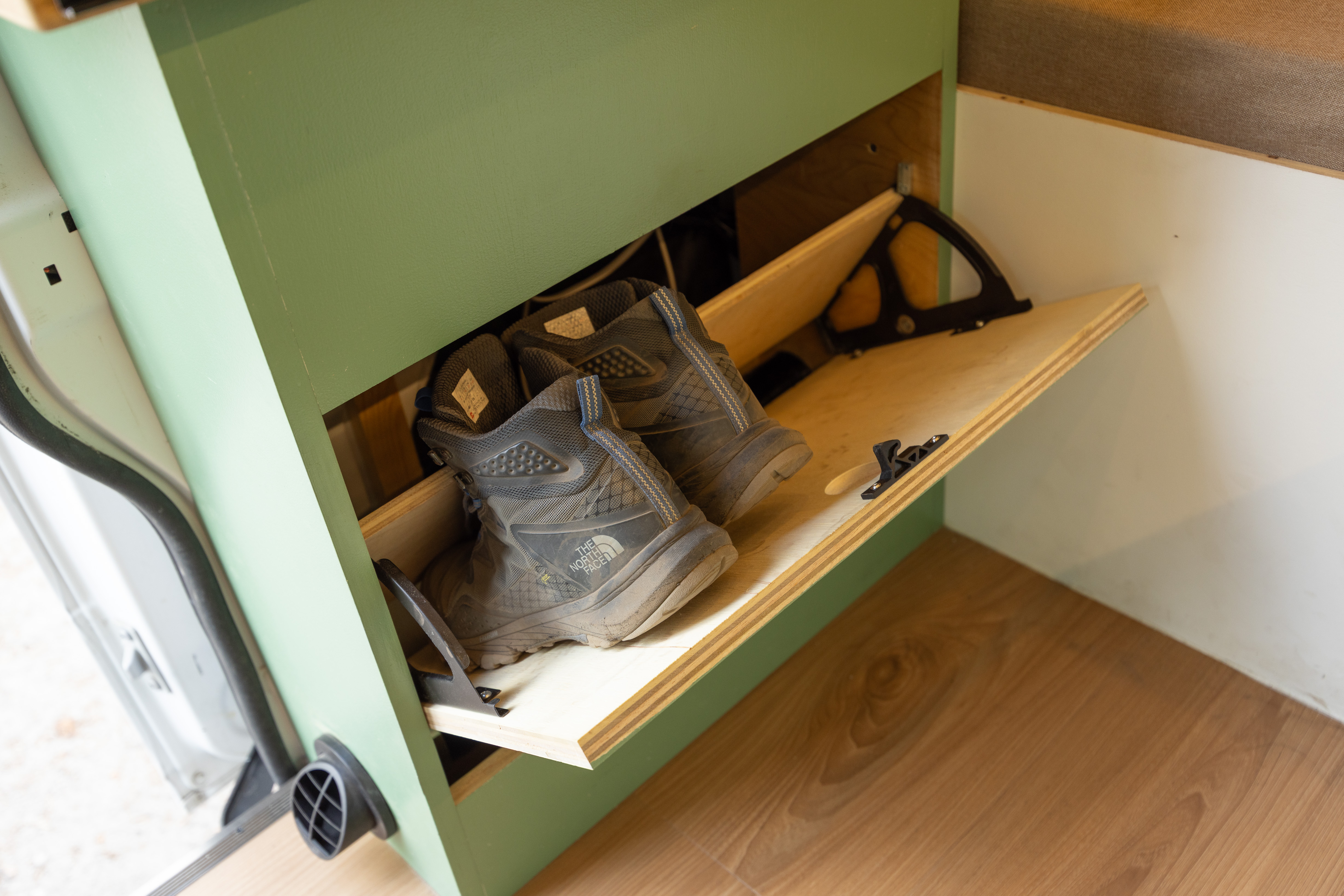
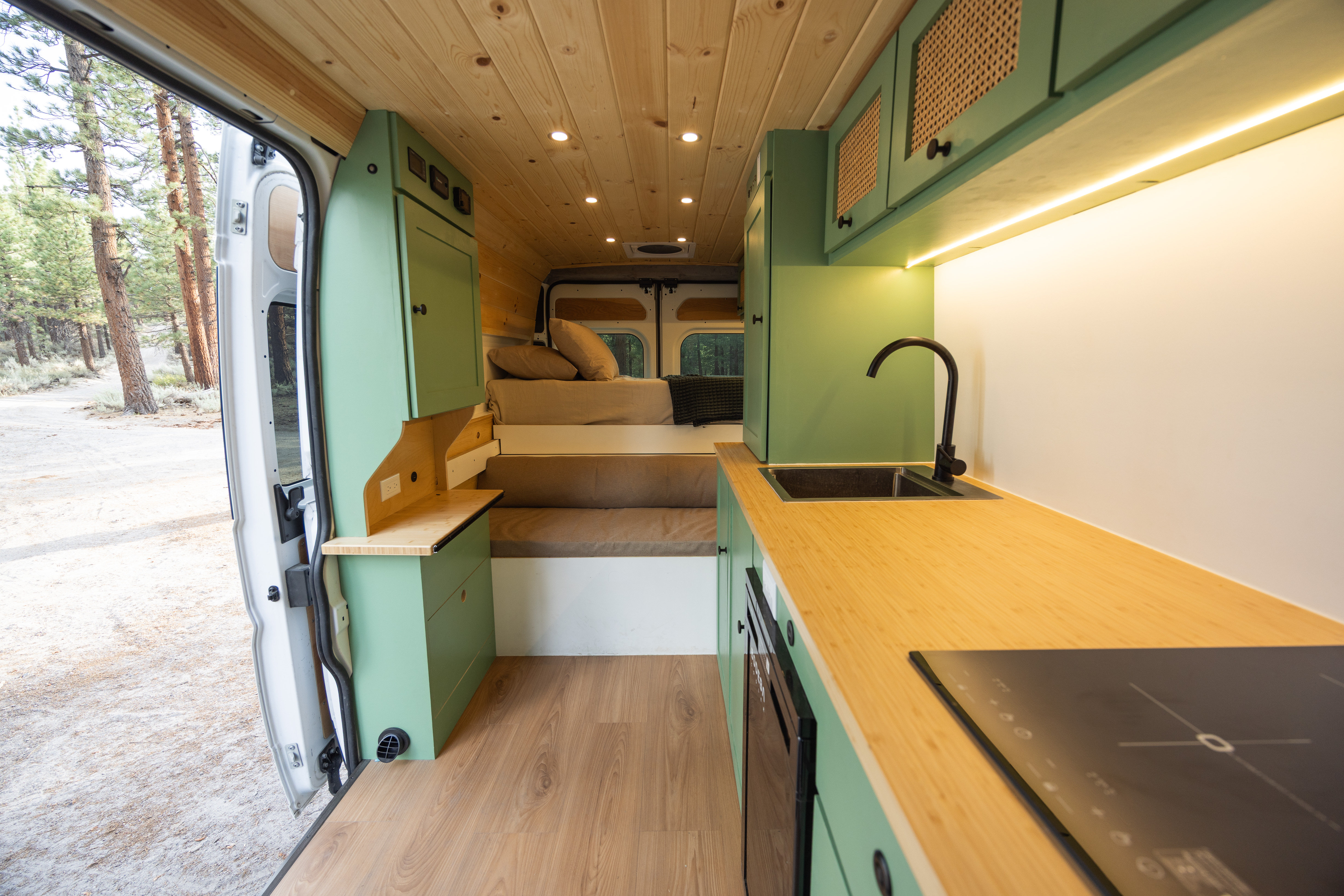
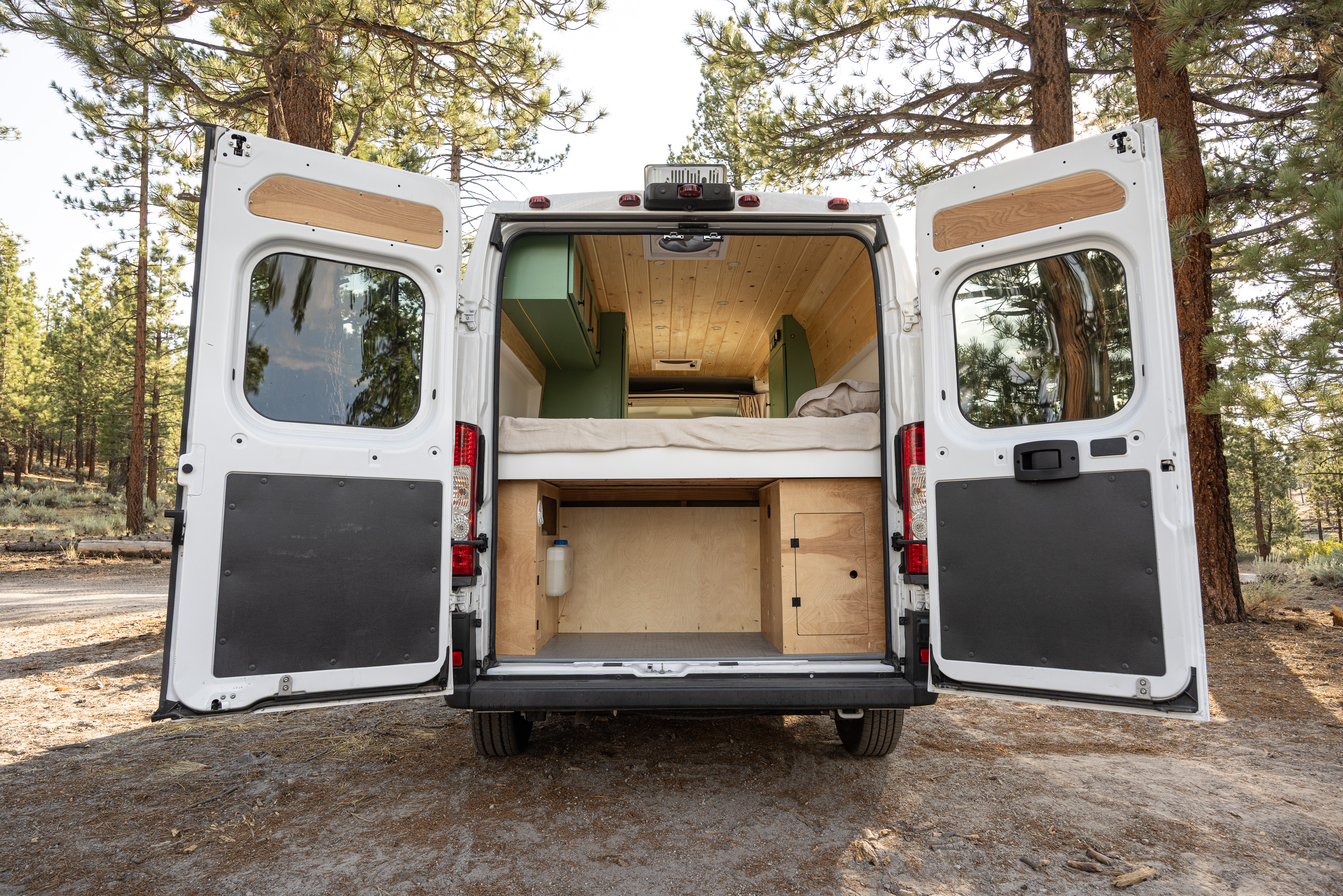
Most vans fill every wall with cabinets. I didn’t. Less stuff, more space — that’s worth more. If you want to bring more, there’s a large storage area in the back. That space went into the sofa area instead — more room to move around, less stressful after a long time inside, and no fighting for space every time you open a drawer.
Induction cooktop instead of propane
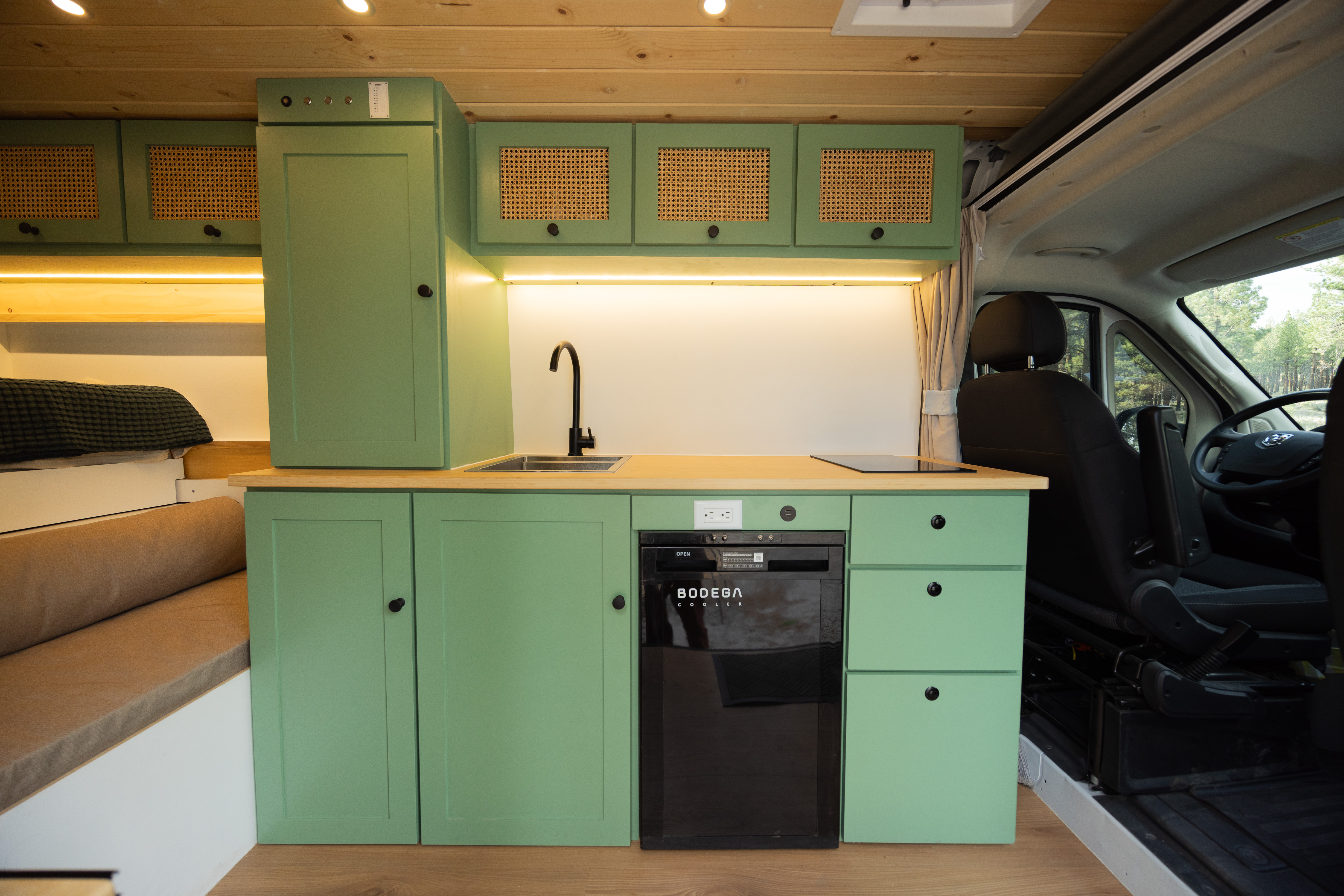
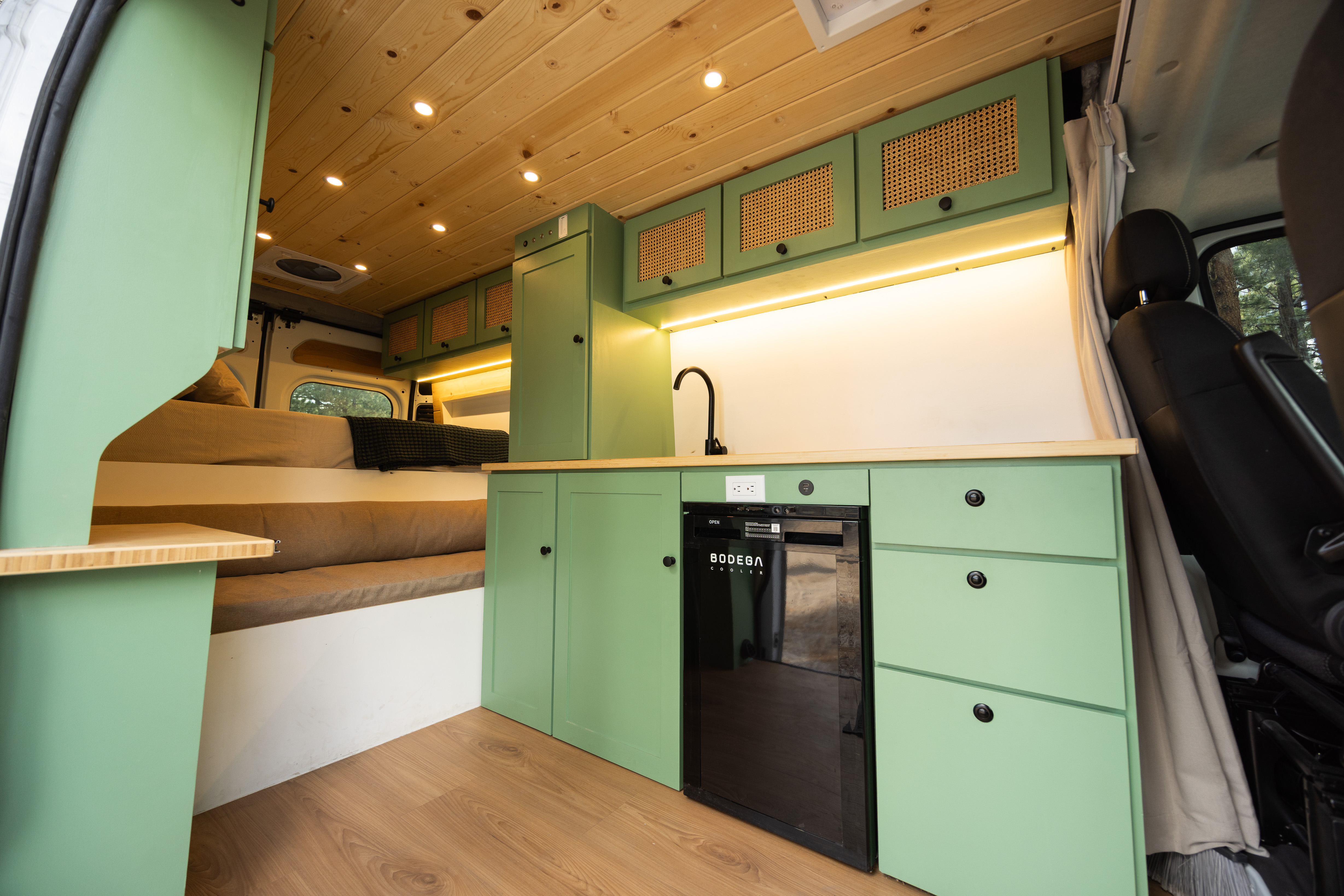
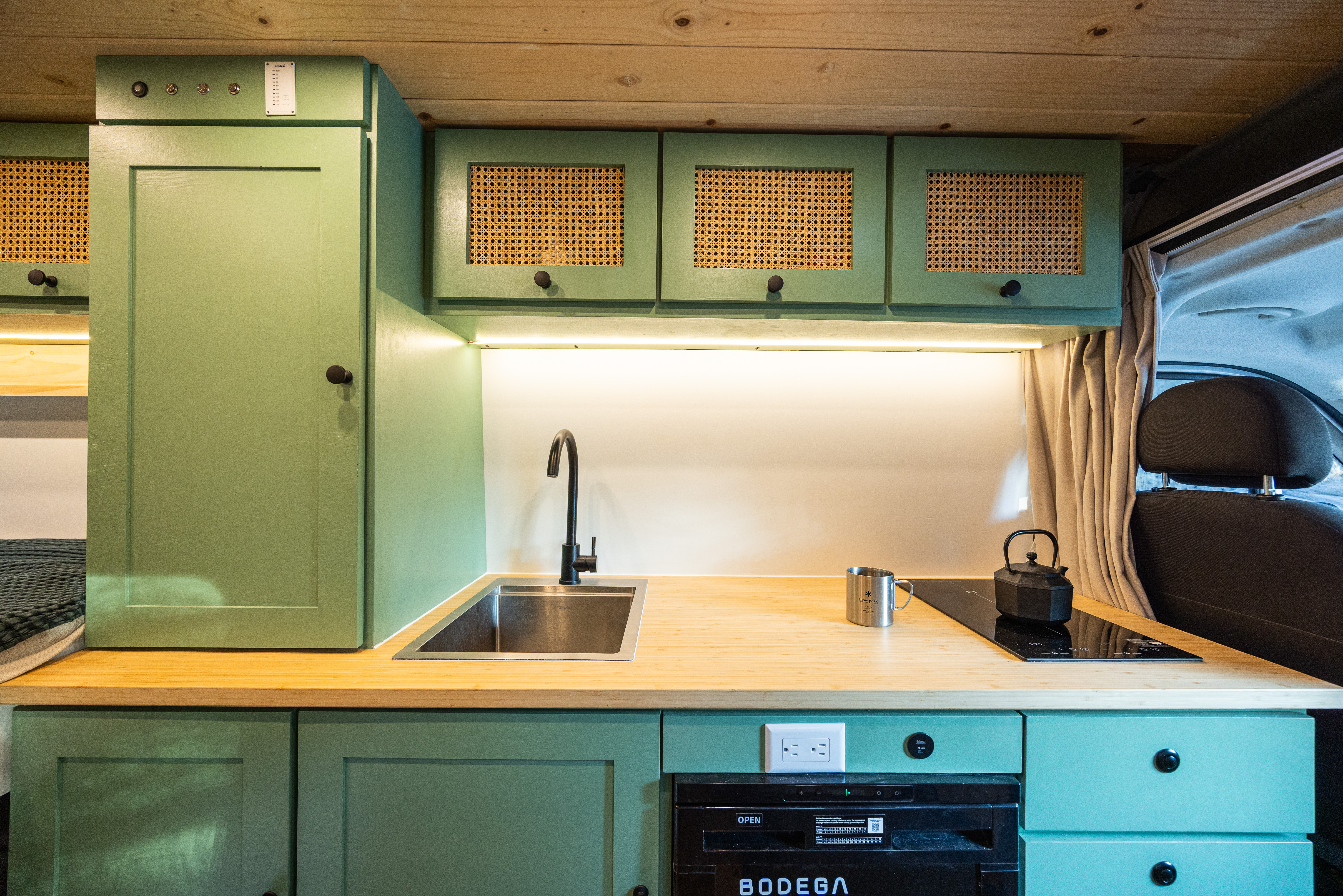
Cooking with propane in a closed van heats up the whole space fast — in summer it can push the inside temperature dangerously high. Induction doesn’t put out that heat, and there’s no gas leak risk, no open flame to worry about. It also runs off the solar system, so there’s no added fuel cost either.
Fixed freshwater tank, portable gray water
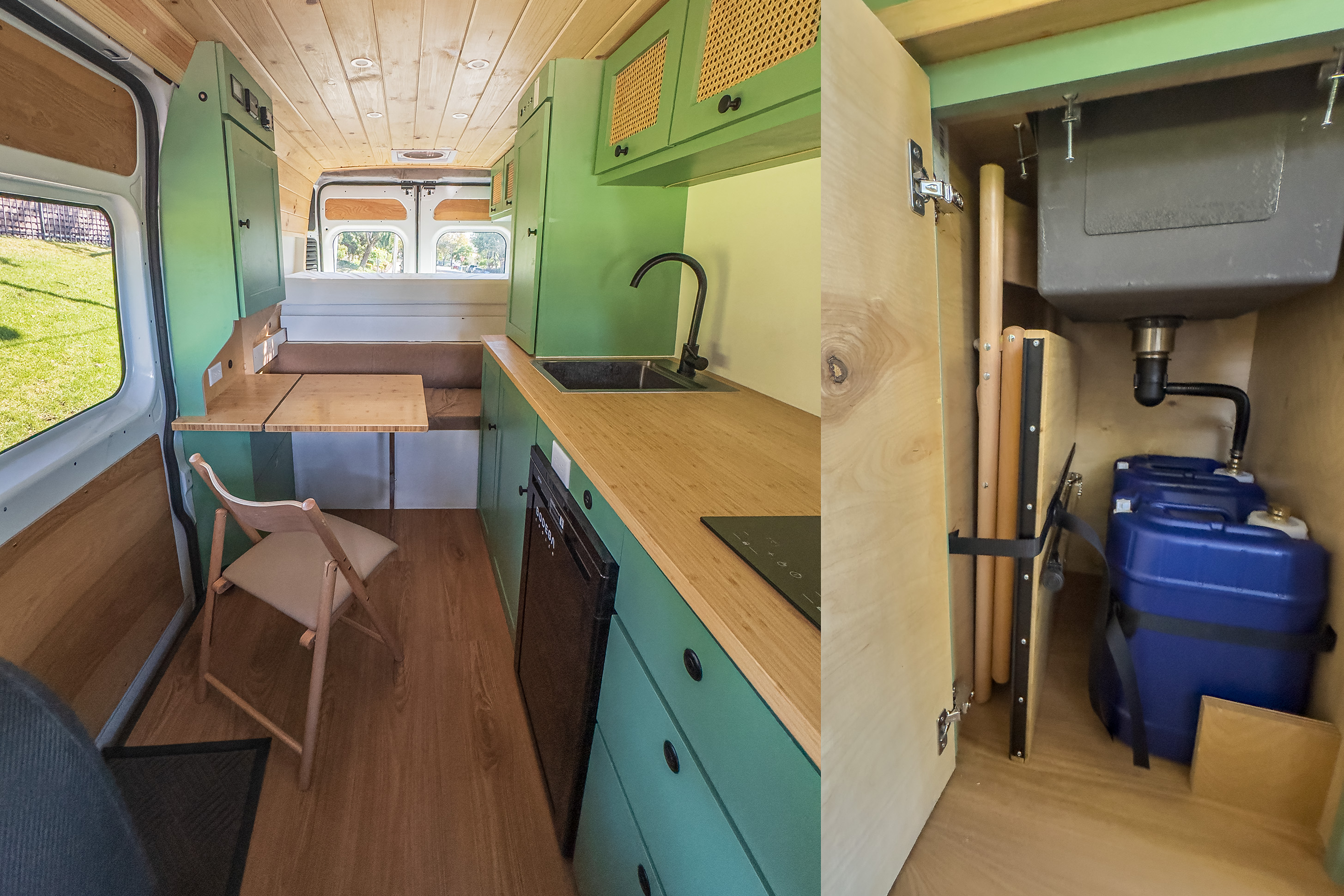
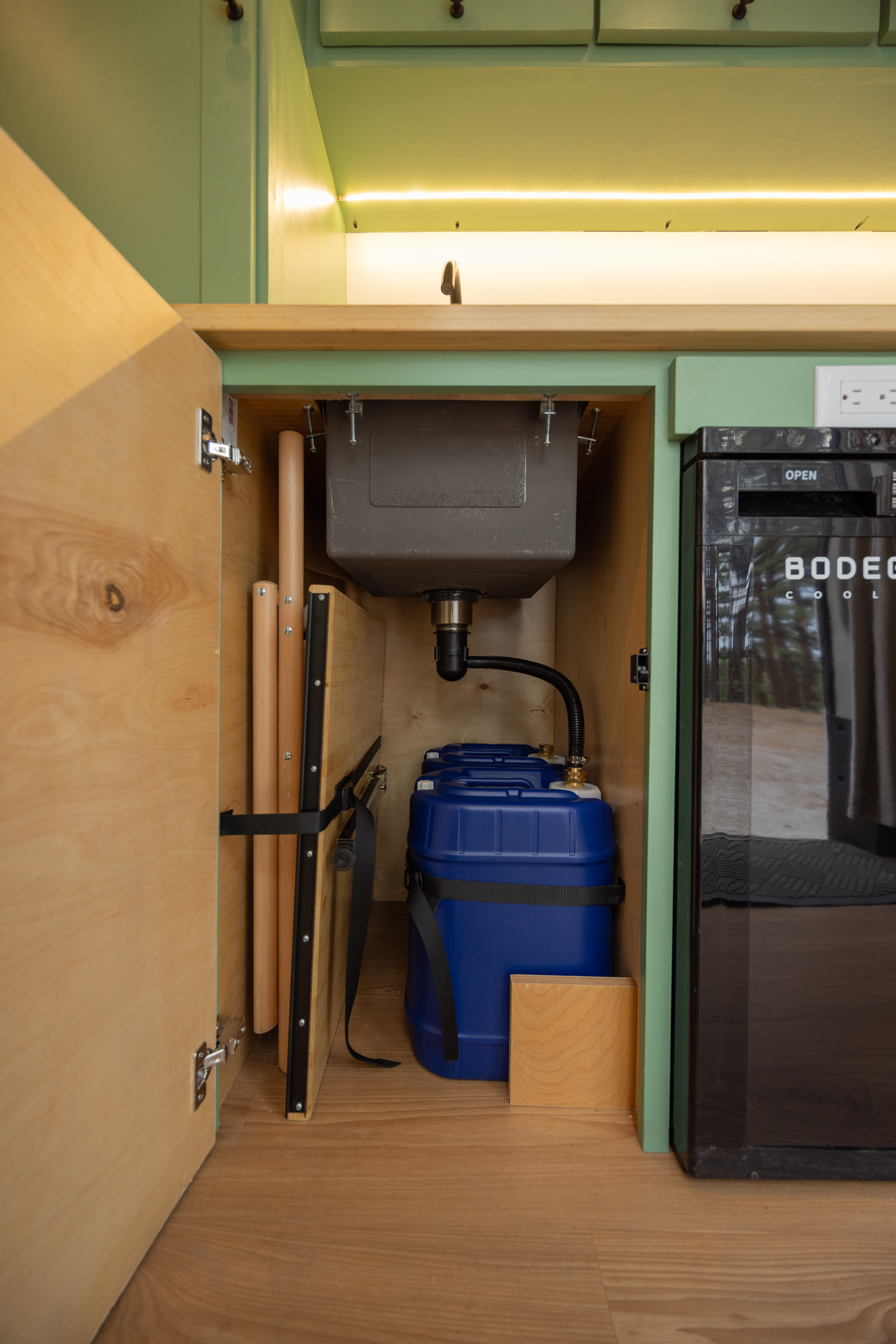
The freshwater tank is a fixed 29-gallon tank. For gray water, I chose two 5-gallon portable containers instead of a fixed tank. I know that means emptying more often, and that’s a real downside. But the alternative is worse for how I actually travel — most dump stations charge a fee, and if you’re out in the middle of nowhere or at a campground without one, you’re driving somewhere just to dump gray water. With portable containers, I empty them at a restroom or any legal drain point, wherever I happen to be. More trips to empty, but none of them cost a special drive.
No bathroom, no shower installed
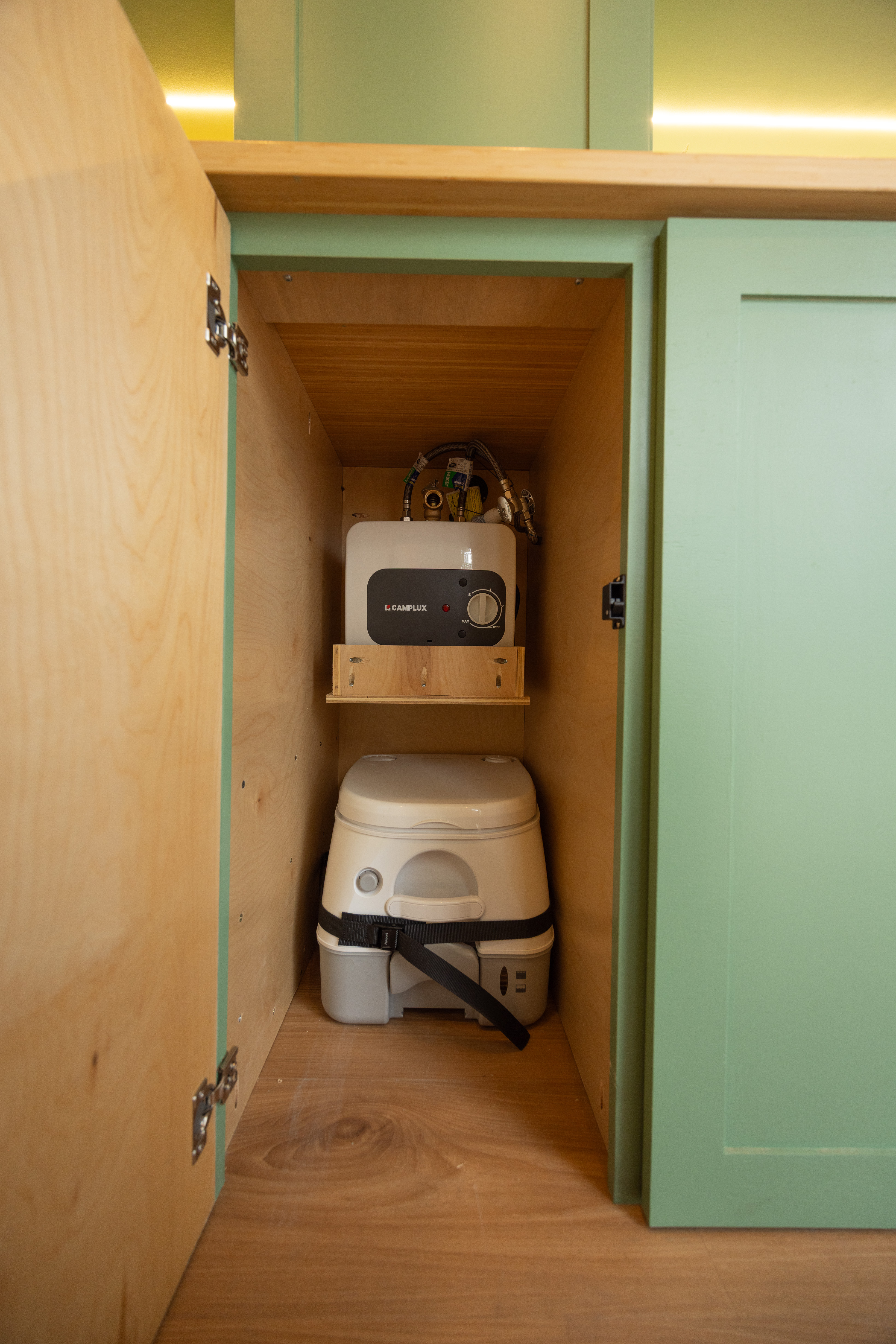
No toilet installed — the space is there, sized and ready for whichever type you prefer (cassette, composting, or portable). For showering, the sink faucet has a hose adapter, so you can run your own shower hose outside with hot water on tap.
No air conditioning
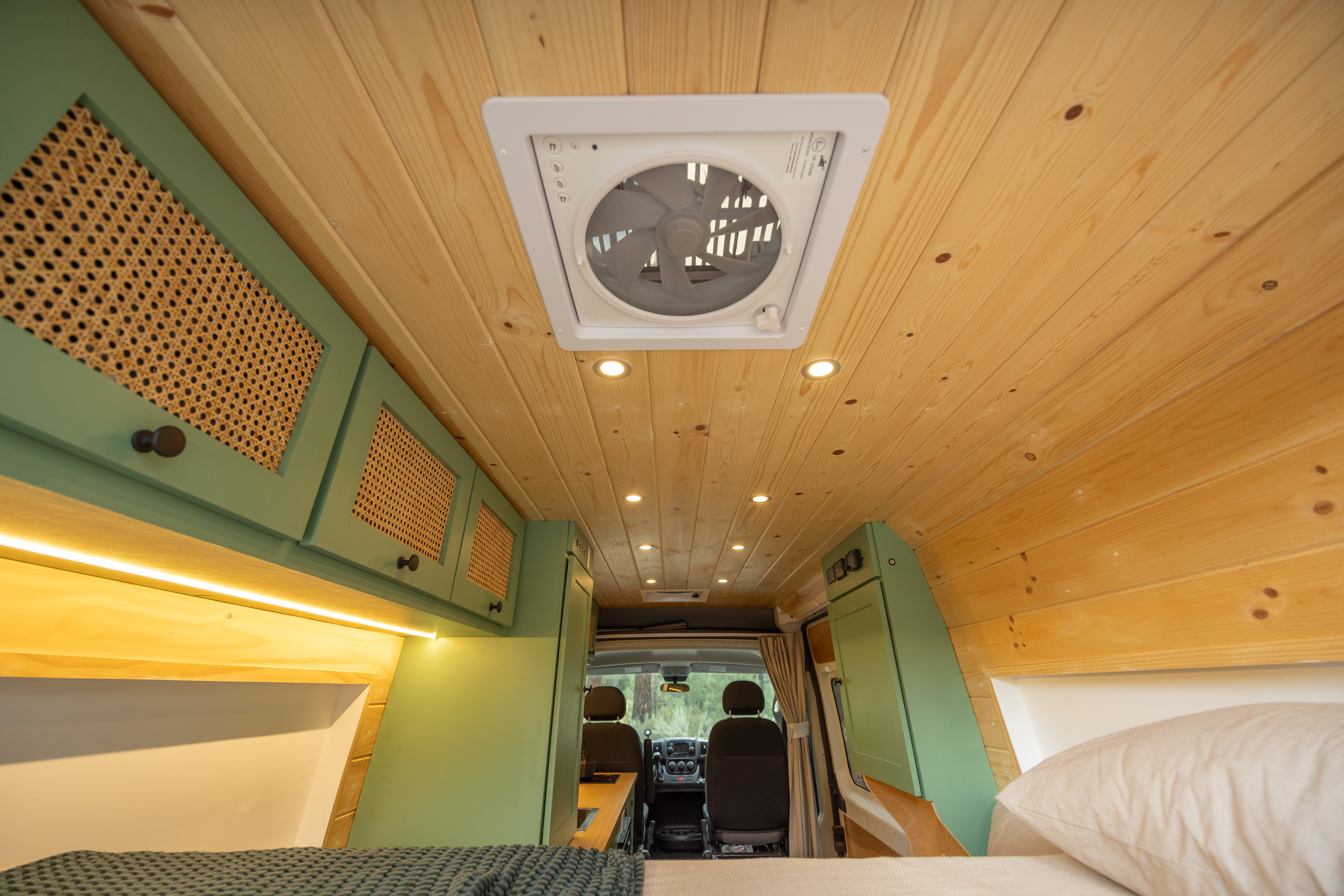
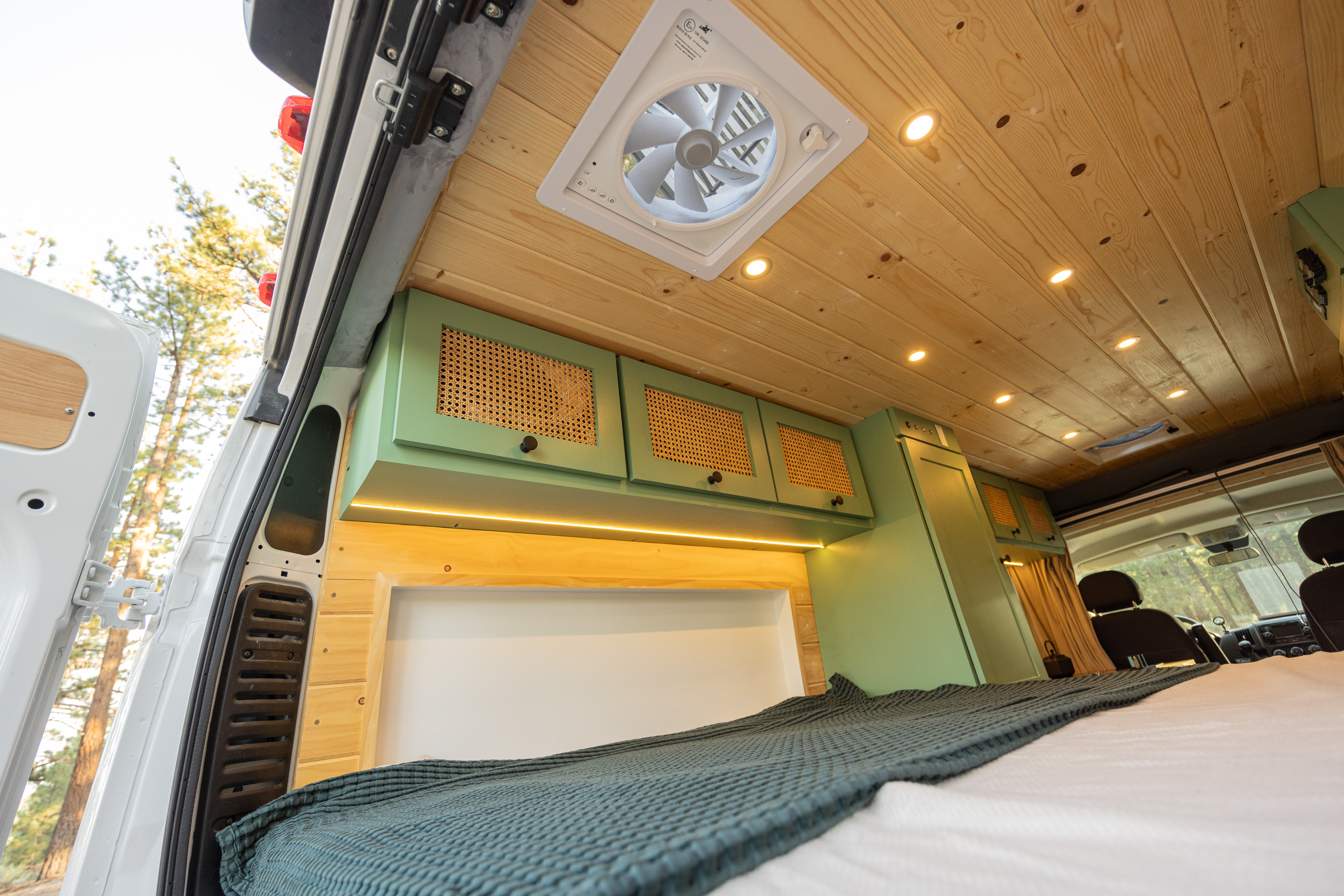
Two fans move air through the van fast — quiet enough that I’ve forgotten to turn them off at night.
Built to be fixed, not just built
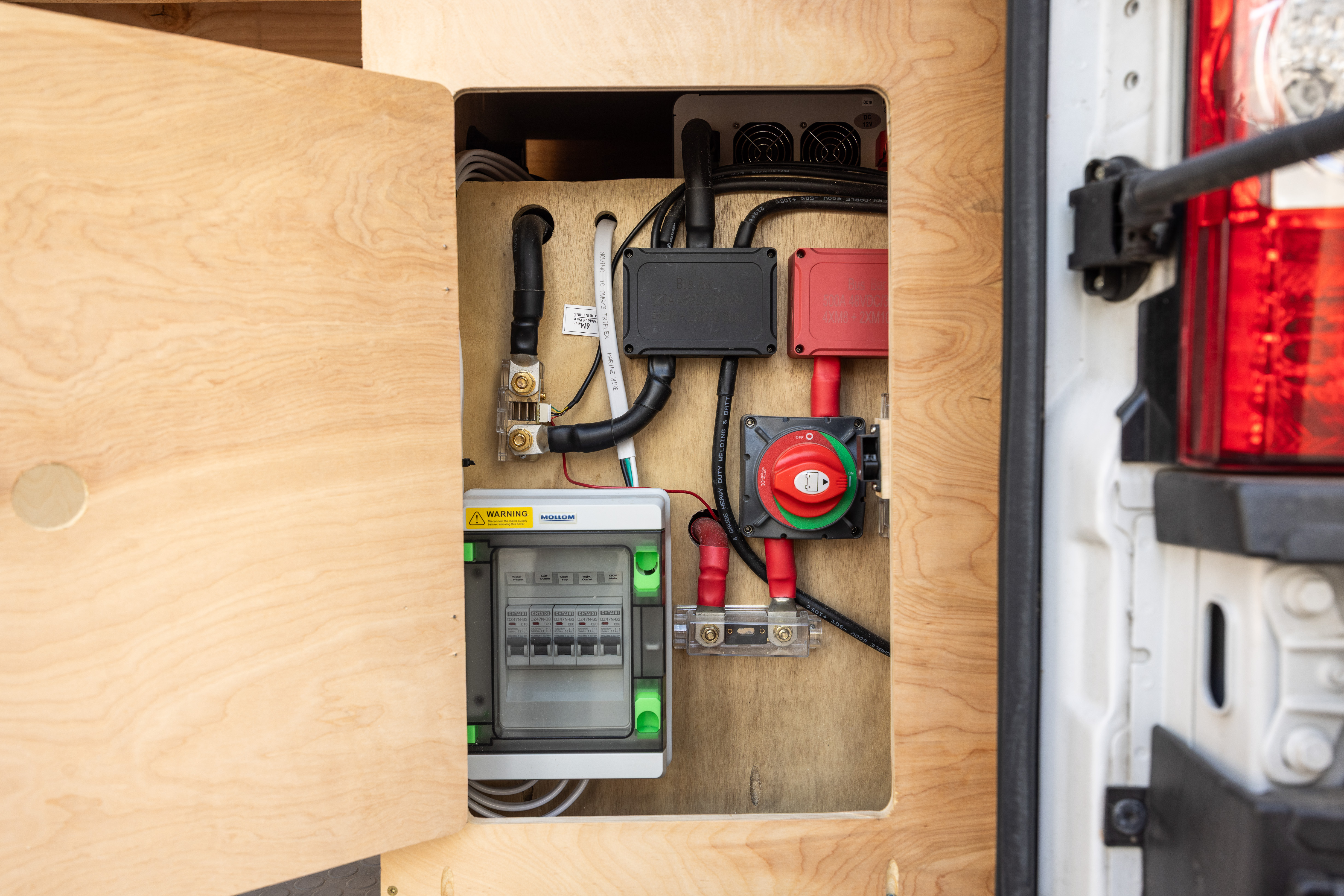
Every panel is screwed on, not glued — so if something needs fixing, you just take the screws out. No prying panels apart, no breaking anything to get in. Most of the wiring and plumbing is easy to reach, not buried behind something you’d have to tear open first. Most of the electrical and water parts are proper RV-grade products, not household ones
Specs
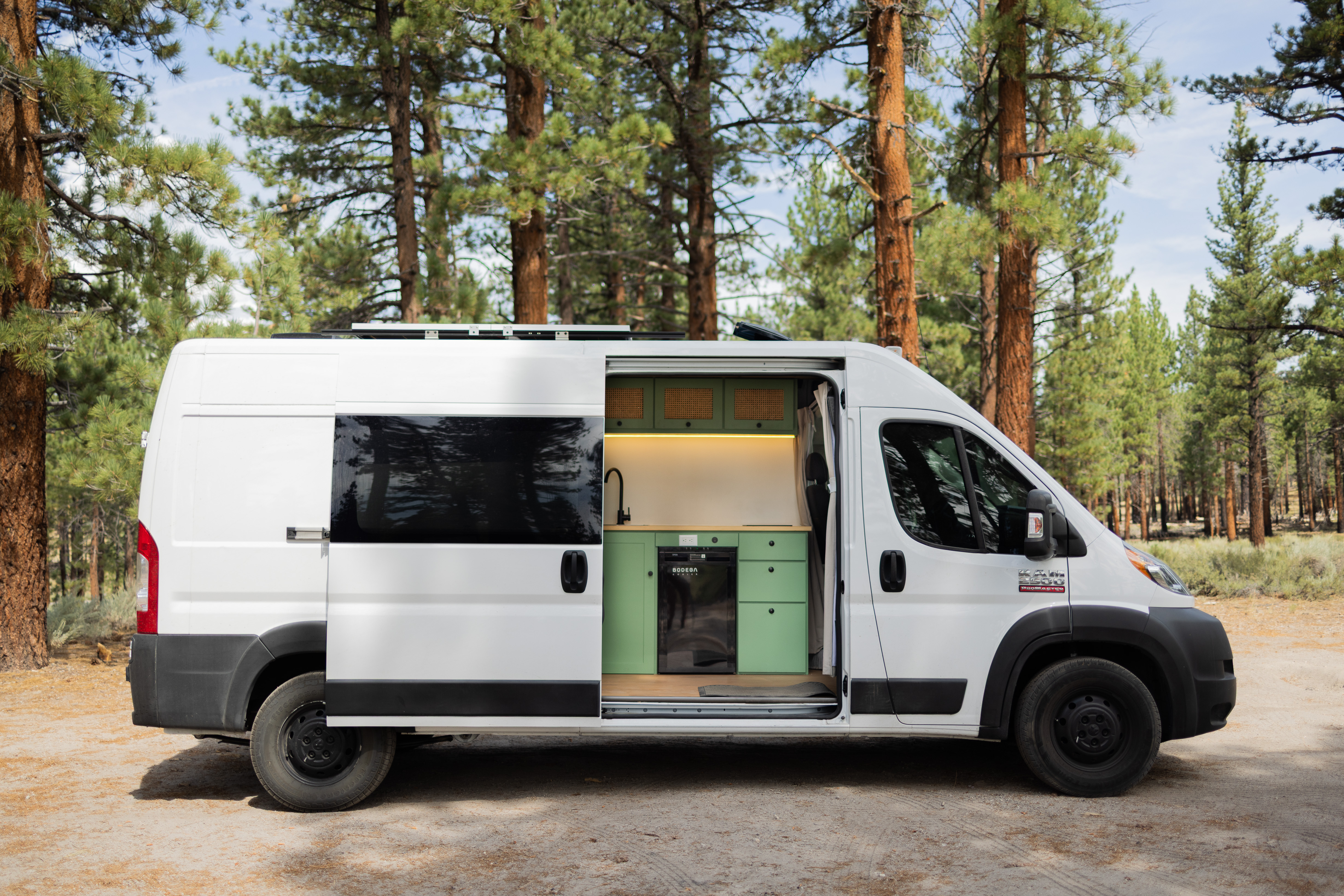
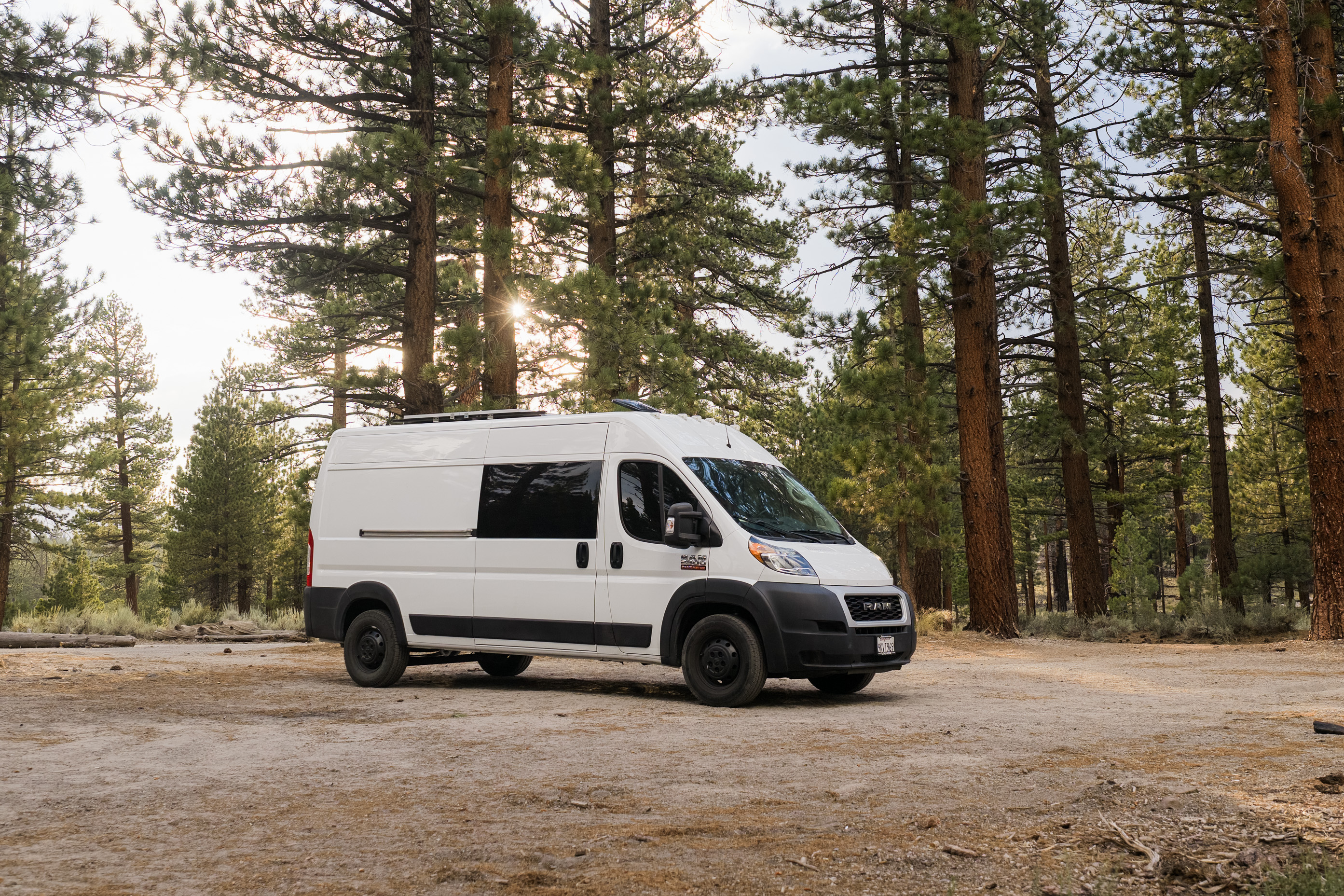
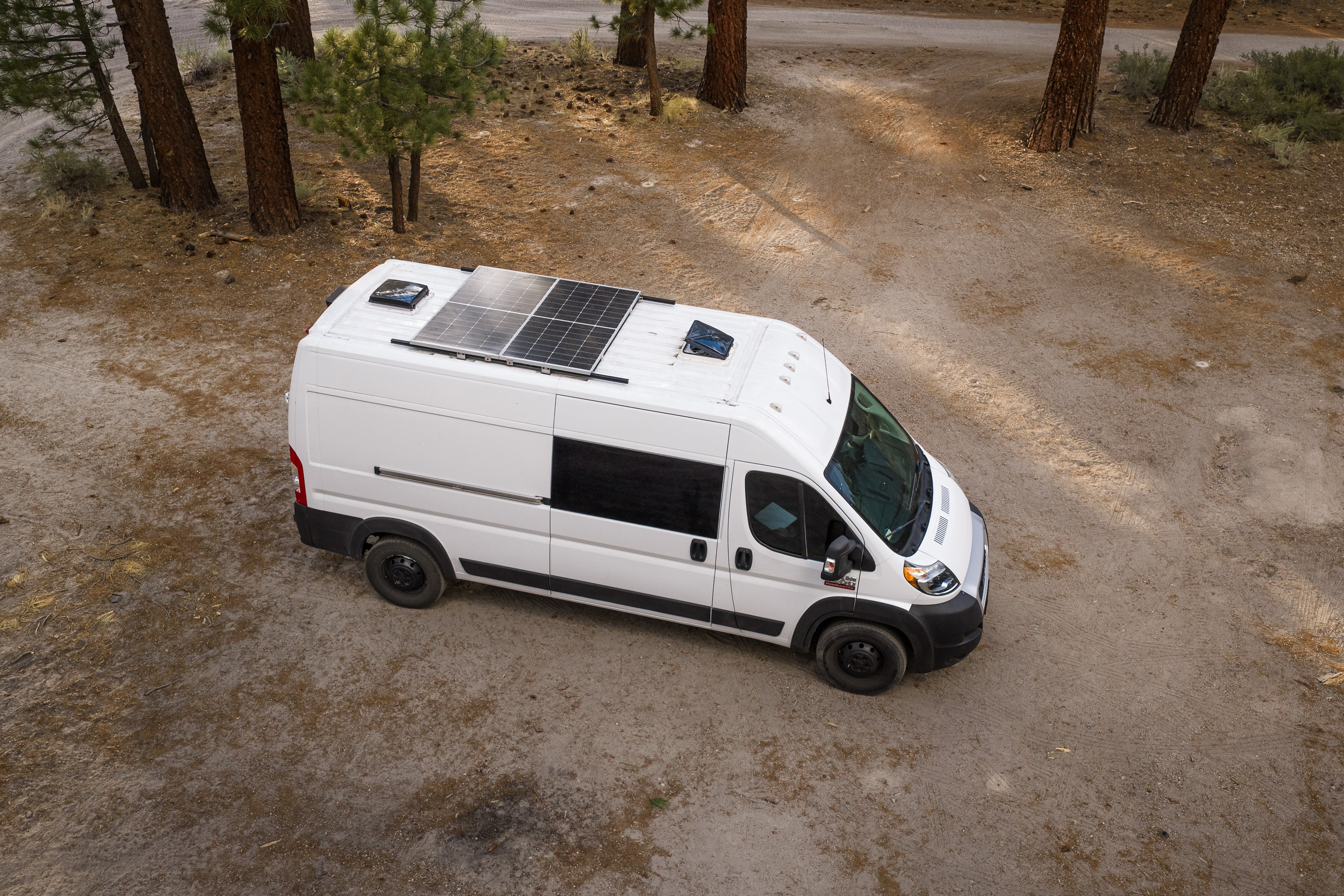
Chassis: 2021 Ram ProMaster 2500, 159″ High Roof, 9,500 miles
Power:
560Ah lithium battery, 500W solar (2×250W)
Renogy Smart 50A DC-DC/MPPT dual-input charger
Renogy 3000W pure sine wave inverter with UPS transfer switch and Bluetooth monitoring, 30A shore power
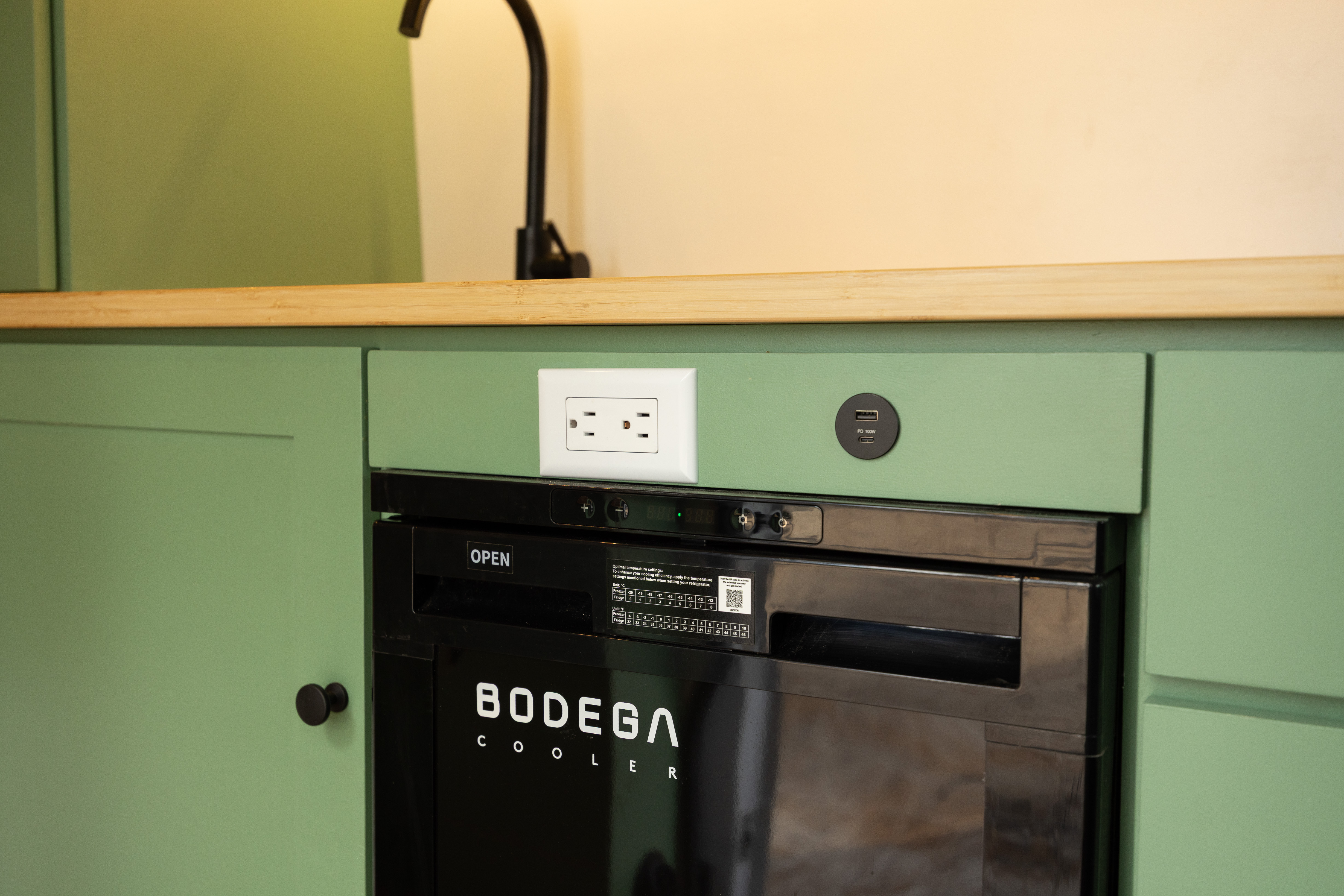
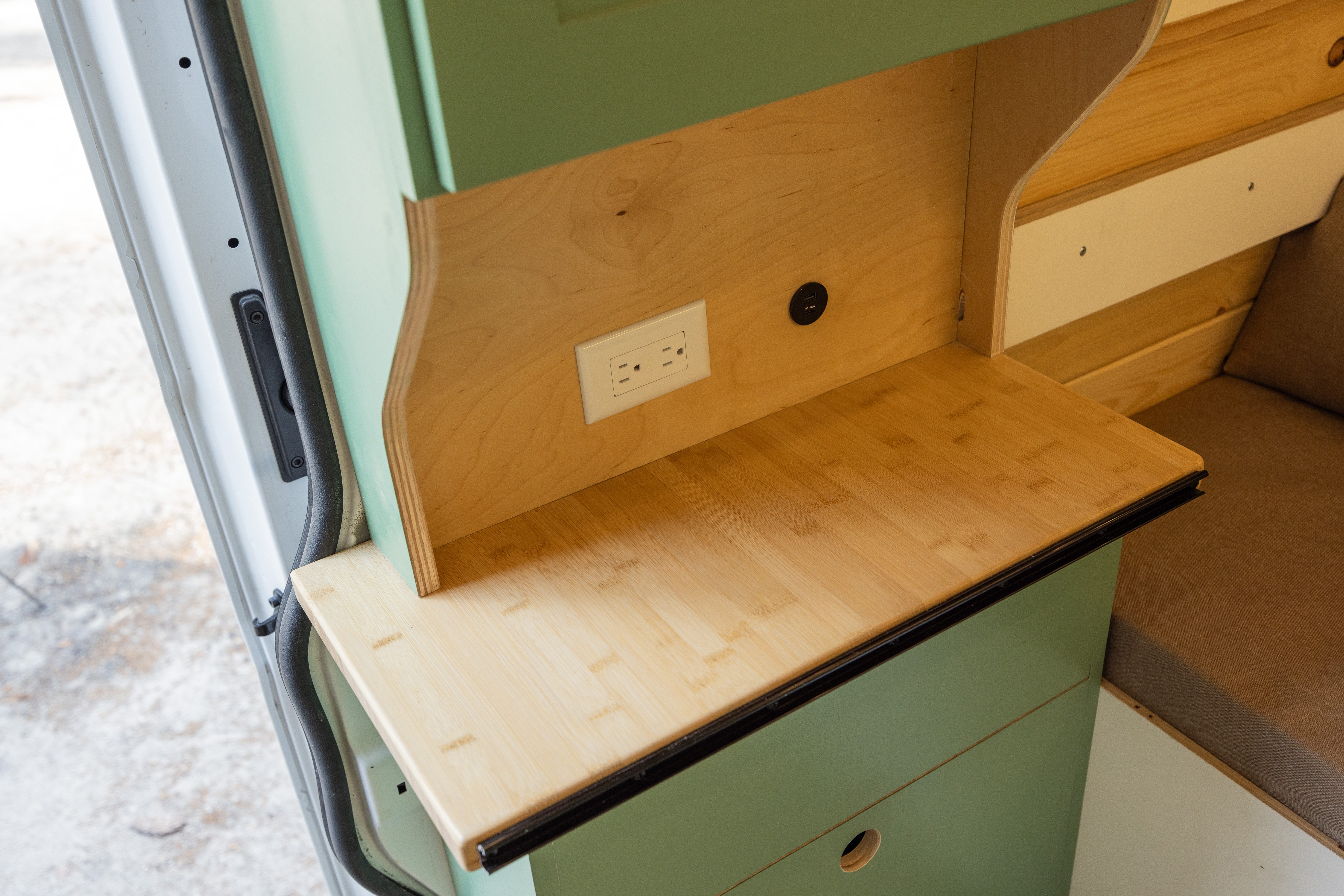
118W 12V USB Outlet
Renogy battery monitor panel
Heat: 2kW diesel-fired parking heater
Ventilation: 2 fans (headboard + cab)
Insulation: Sound-deadening mat 3M Thinsulate
Kitchen: Induction cooktop, bamboo countertop
Fridge: BougeRV 12V, 2.94 cu.ft, app-controlled
Hot water: Camplux electric water heater, 1.32 gal
Water: 29-gallon fixed freshwater tank, 2×5-gallon portable gray water containers
Fresh water level gauge
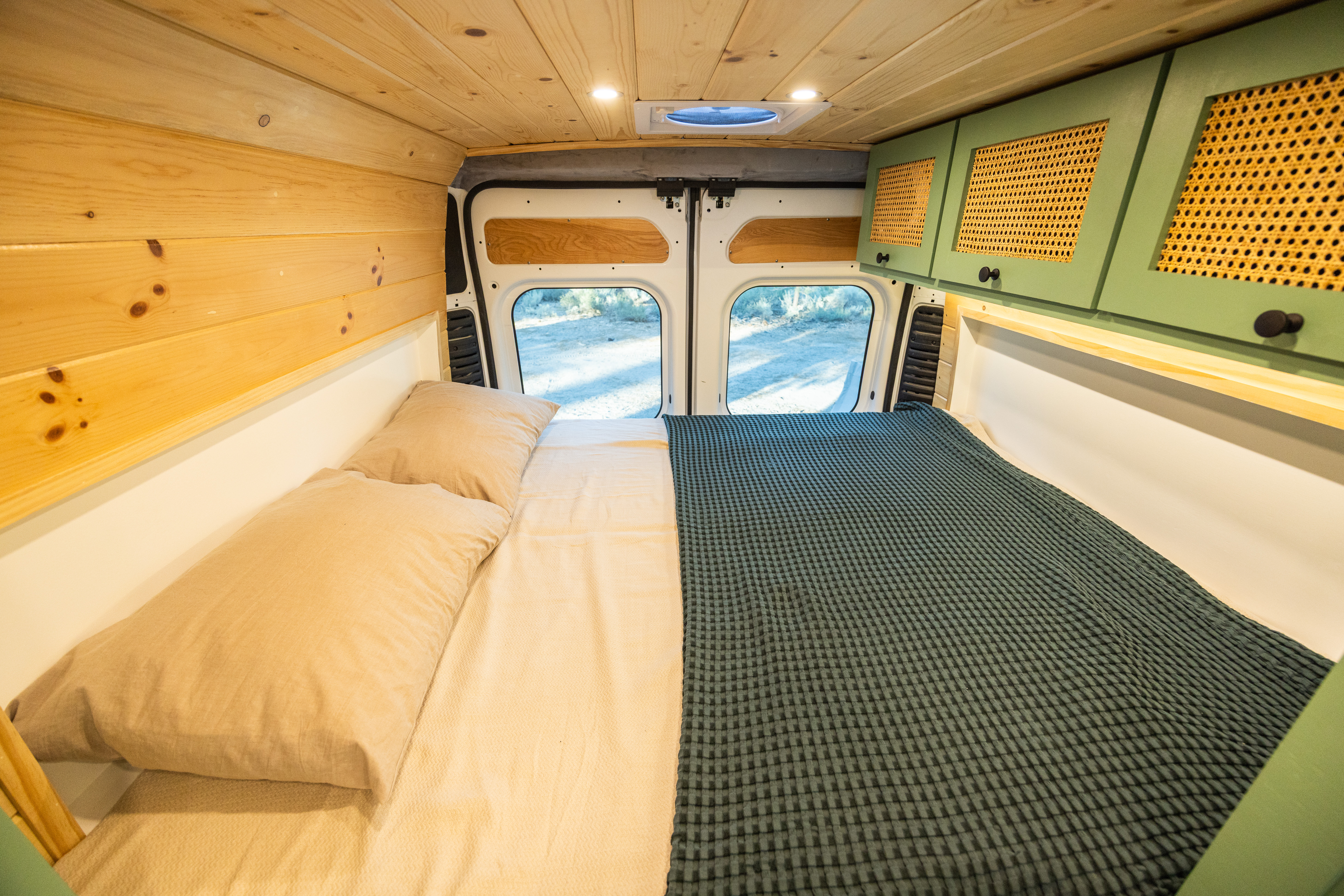
Bed: Extendable queen-size, 6″ mattress
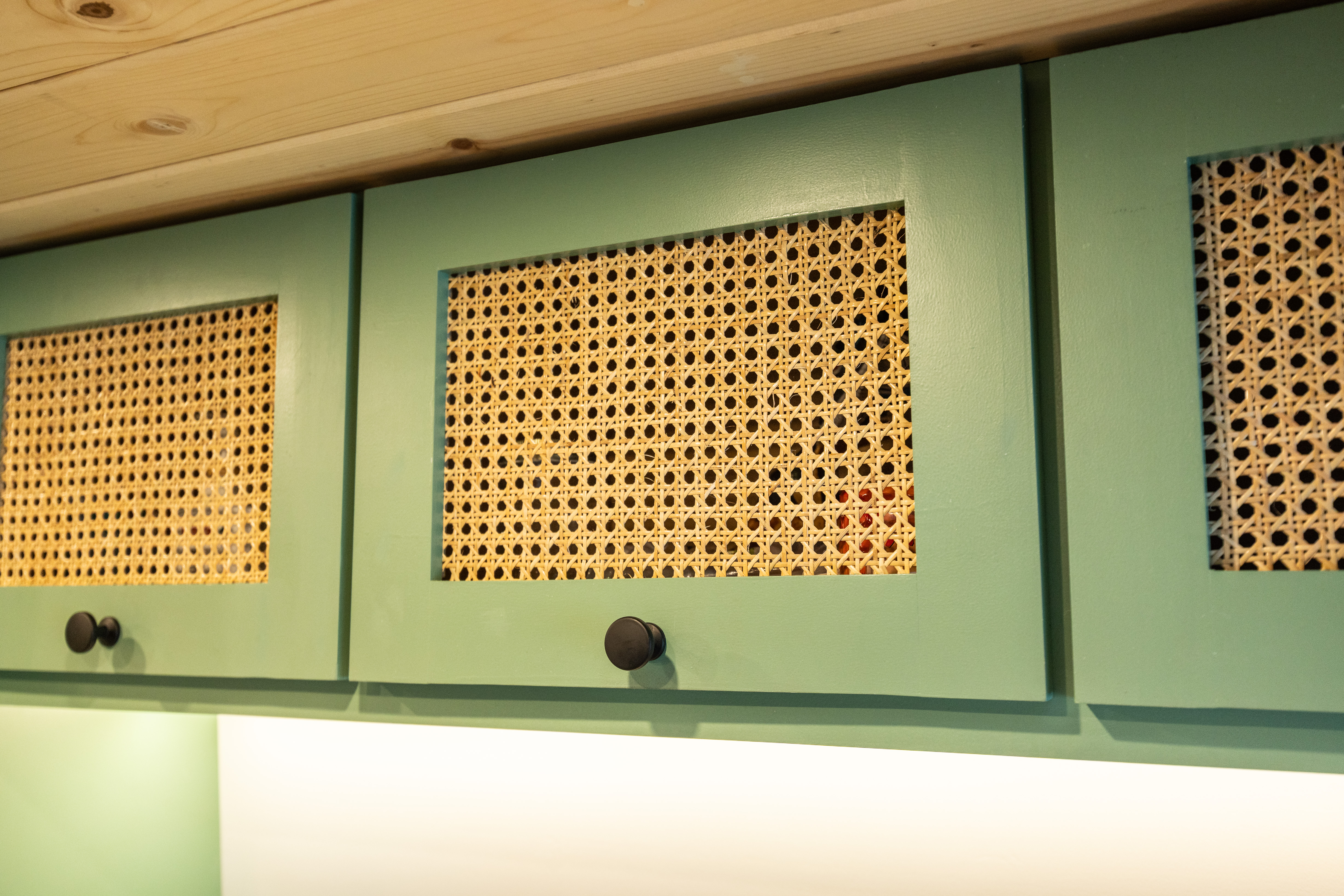
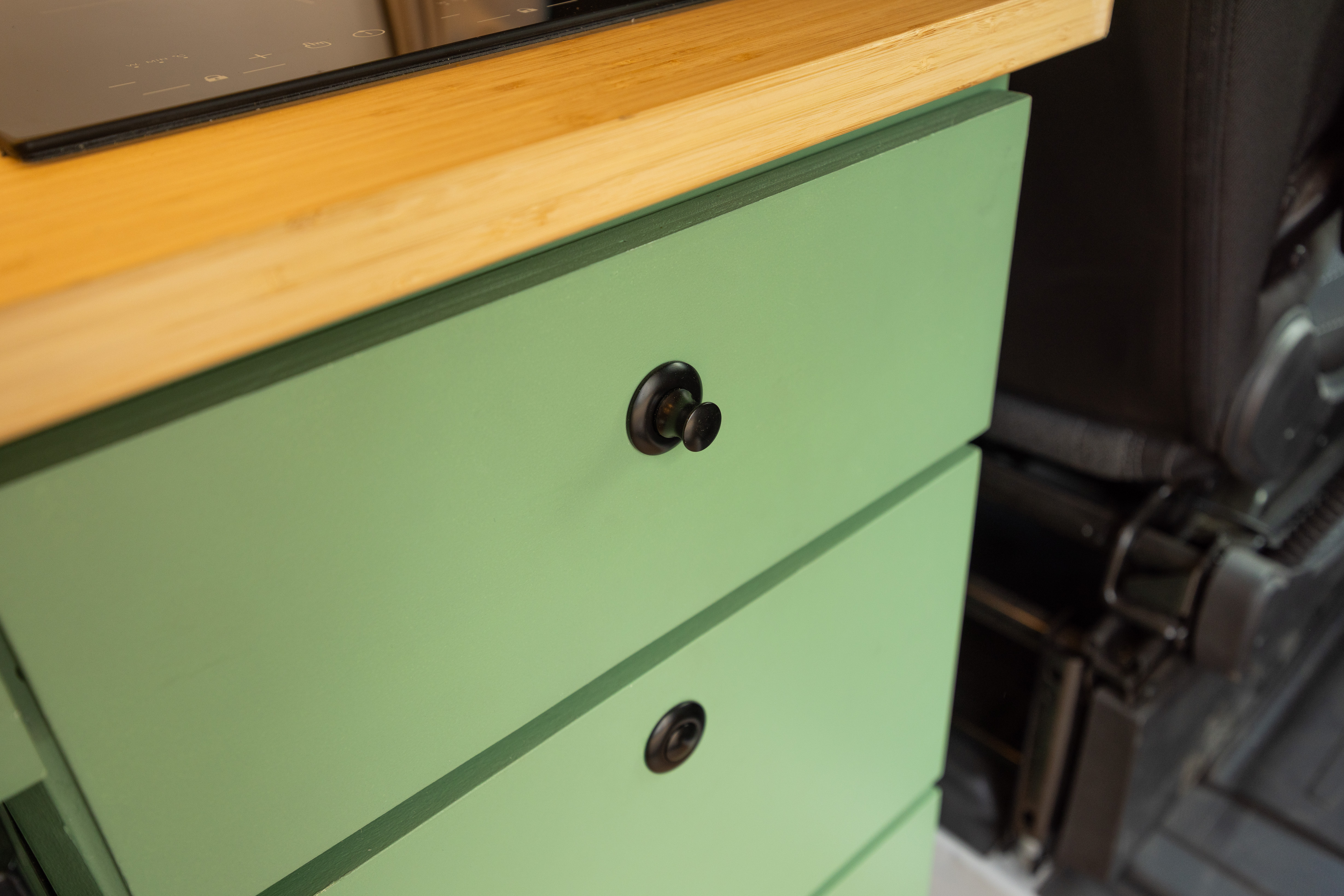
Interior: Scandinavian green + natural wood, bamboo, rattan cabinet inserts