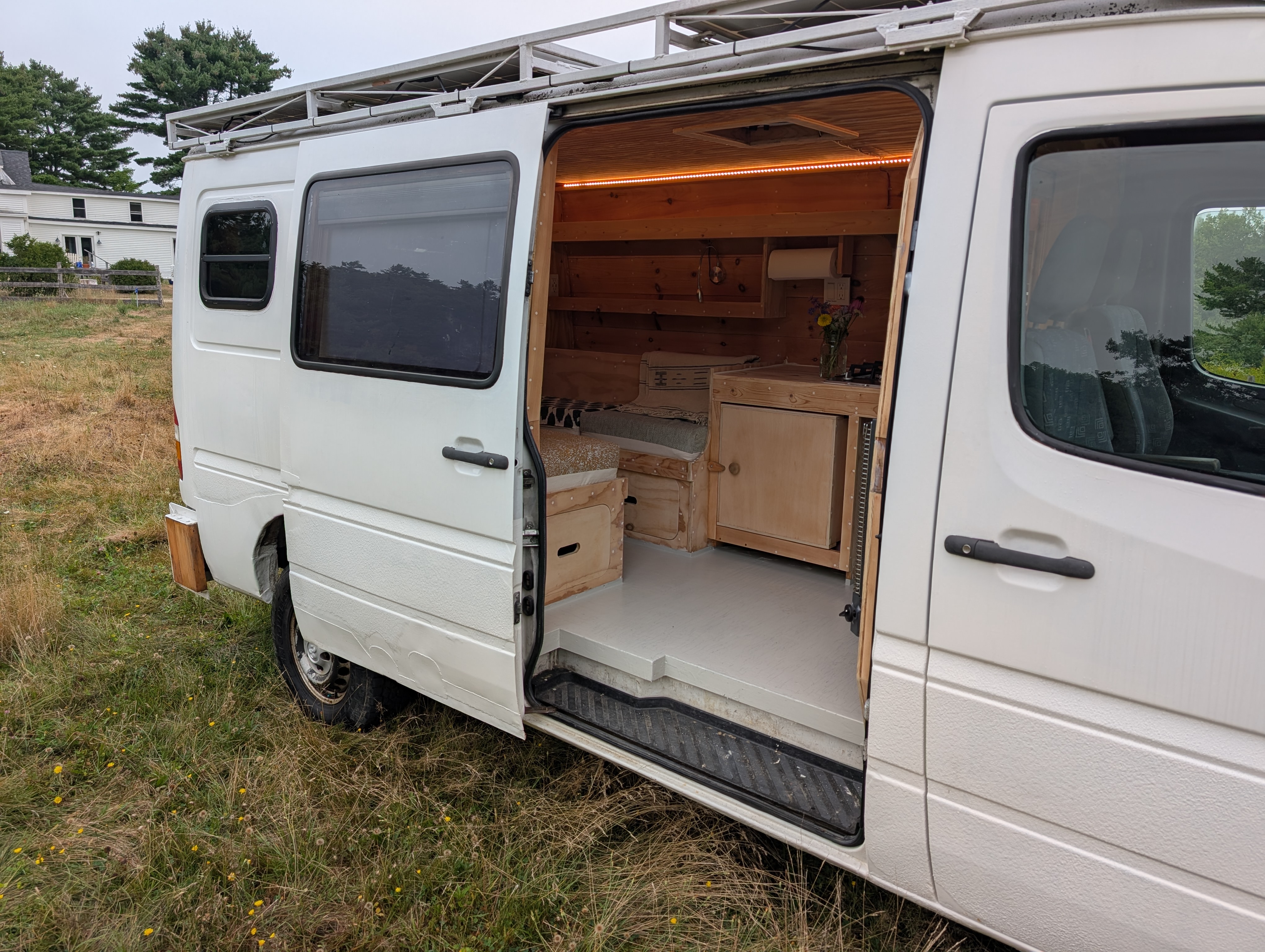
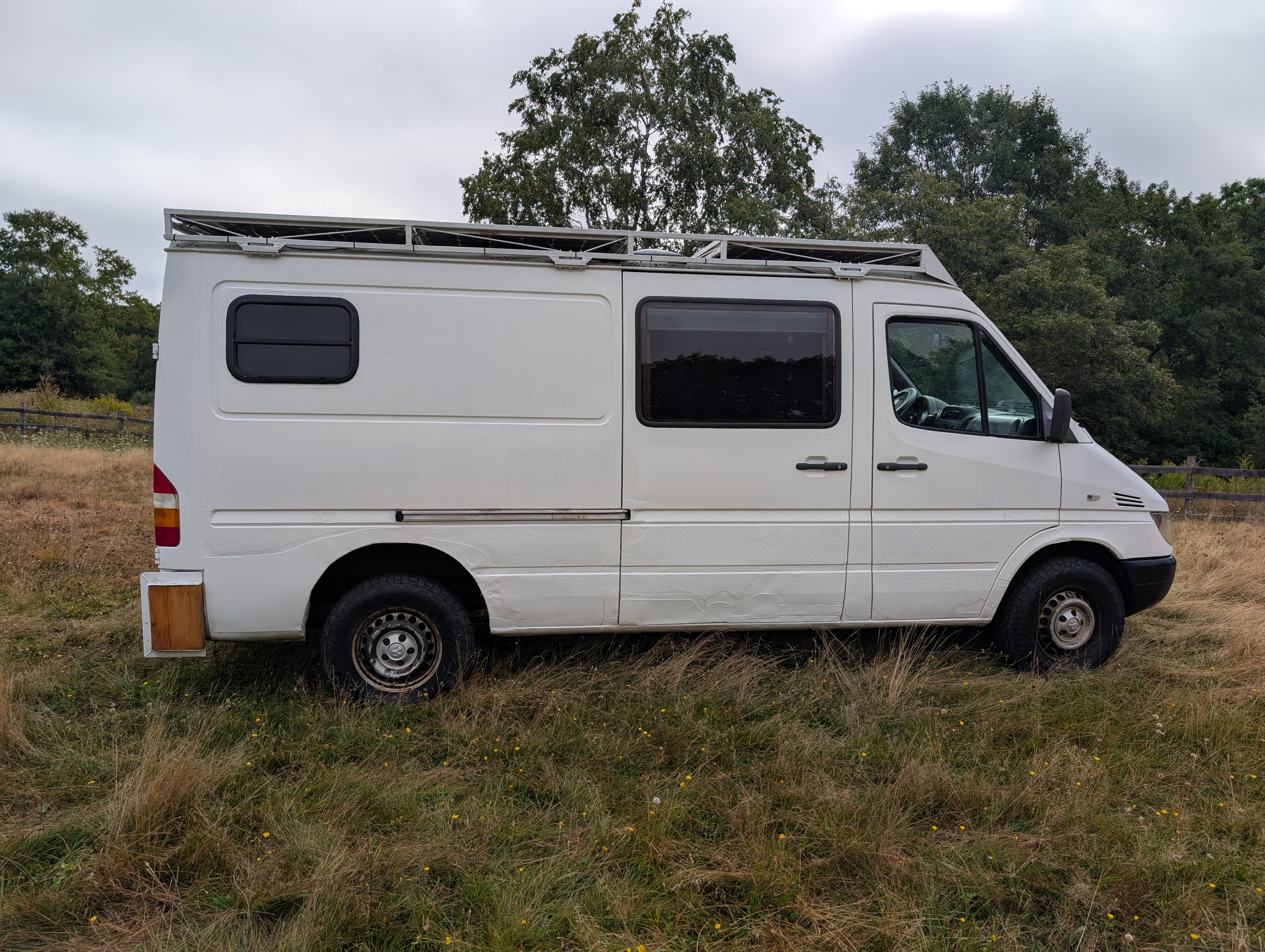
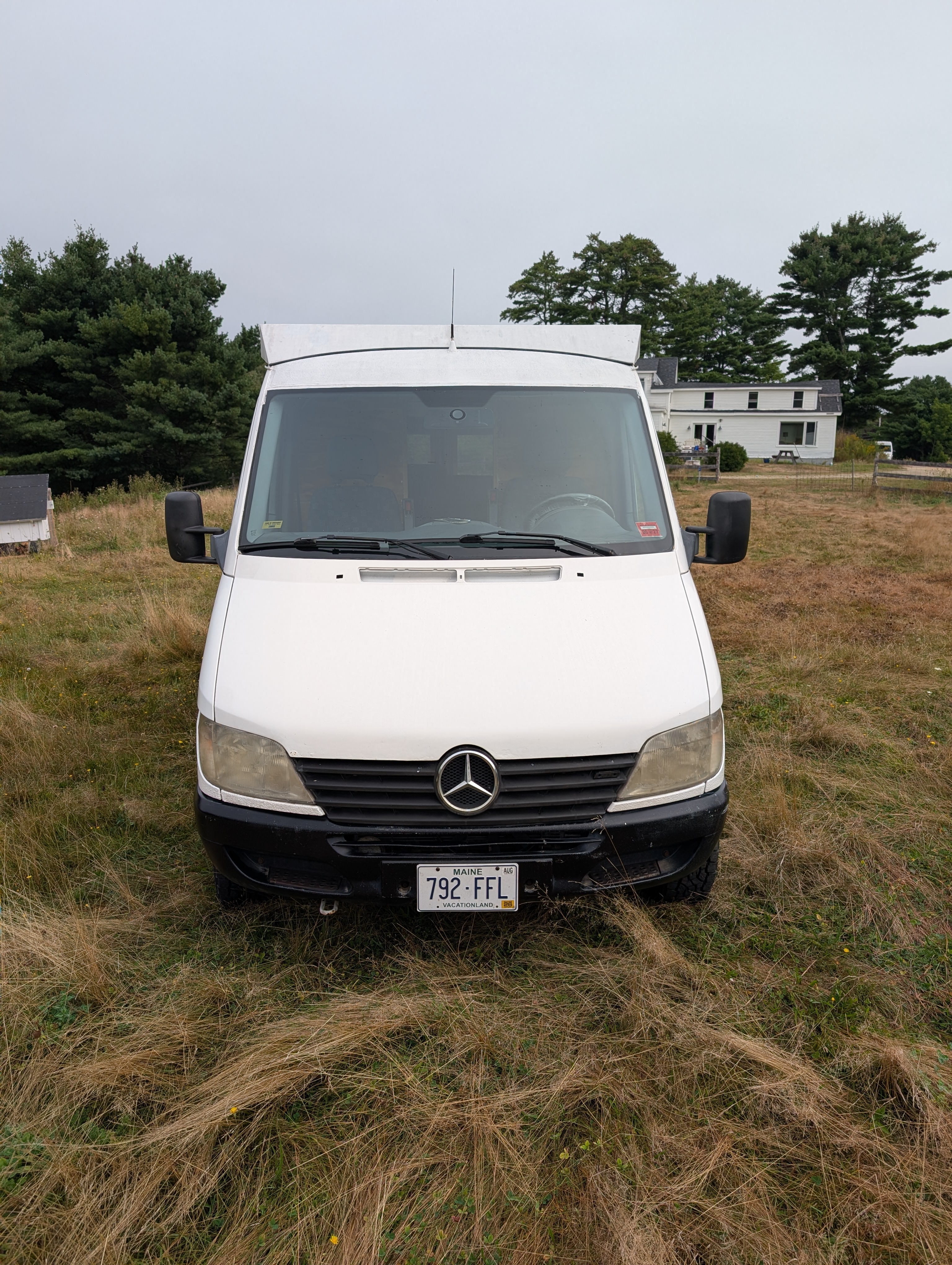
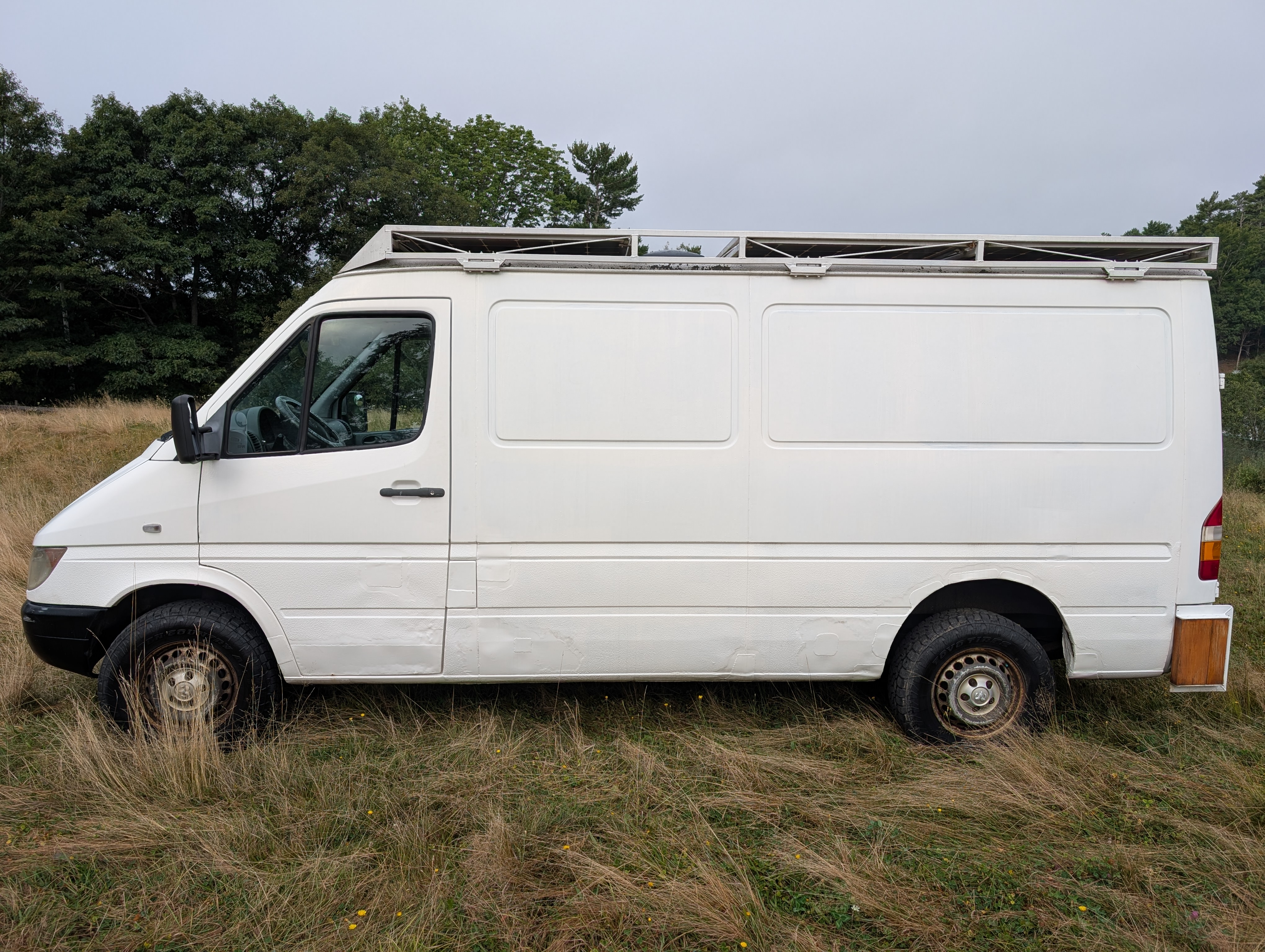
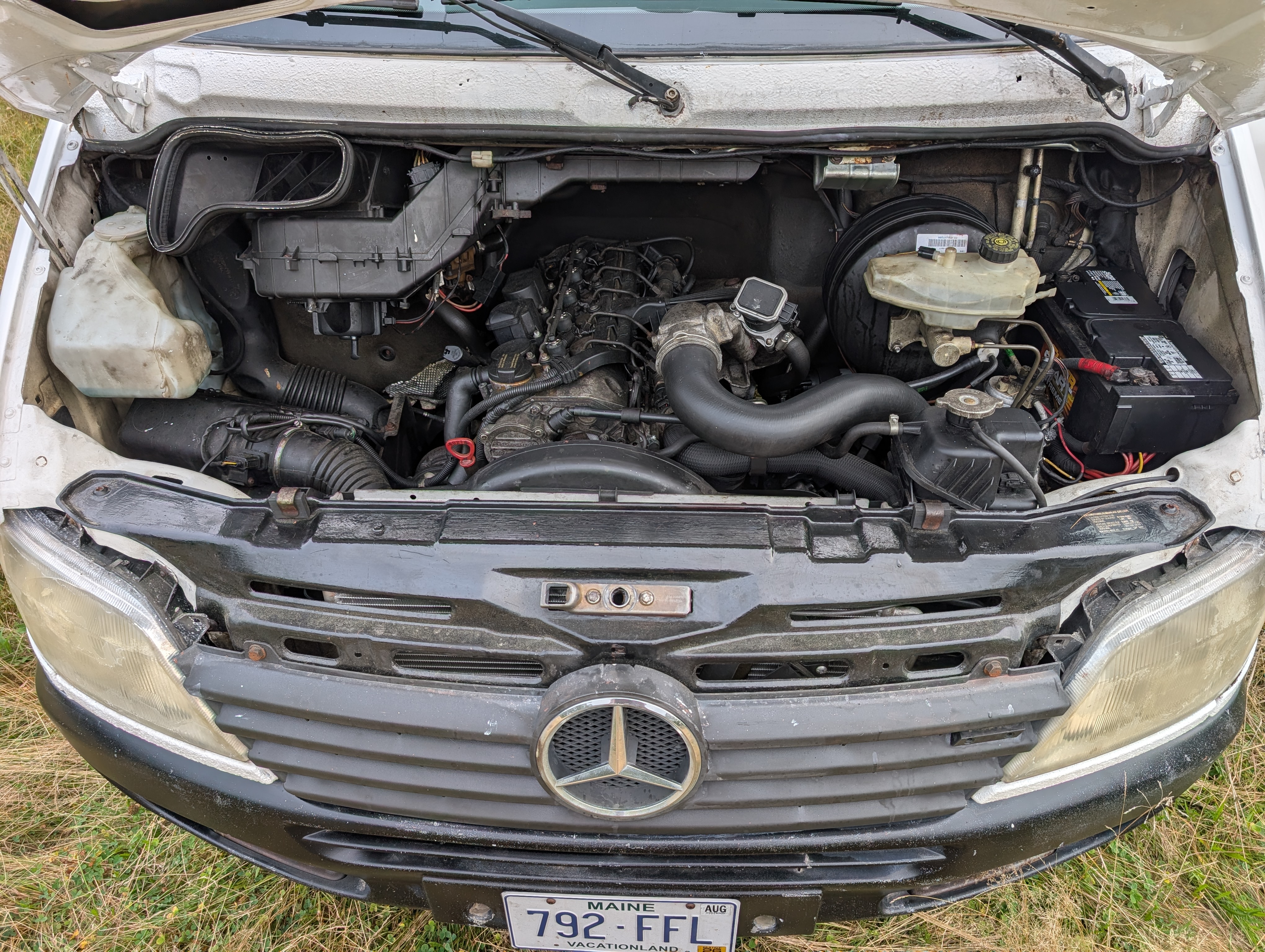
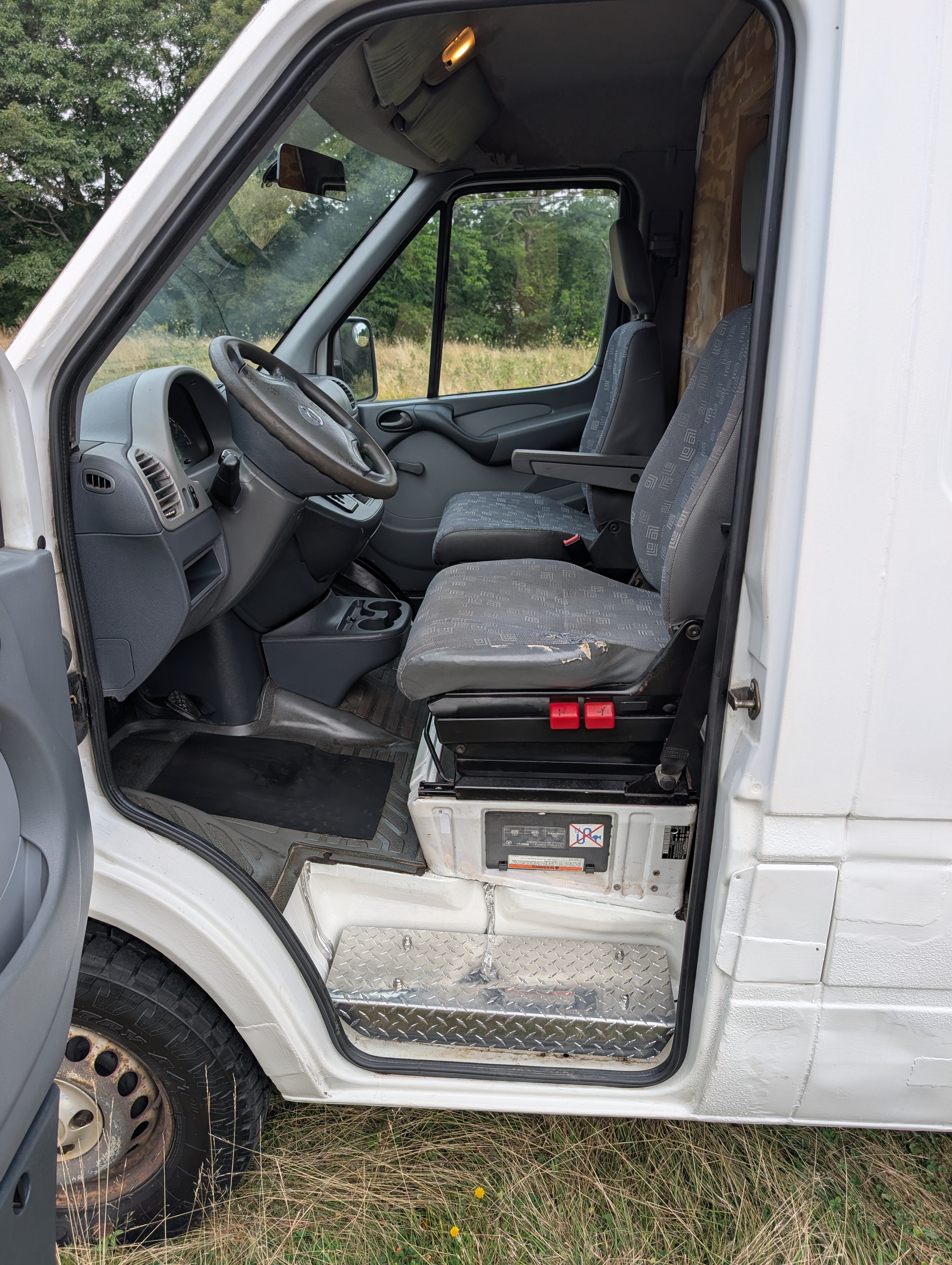
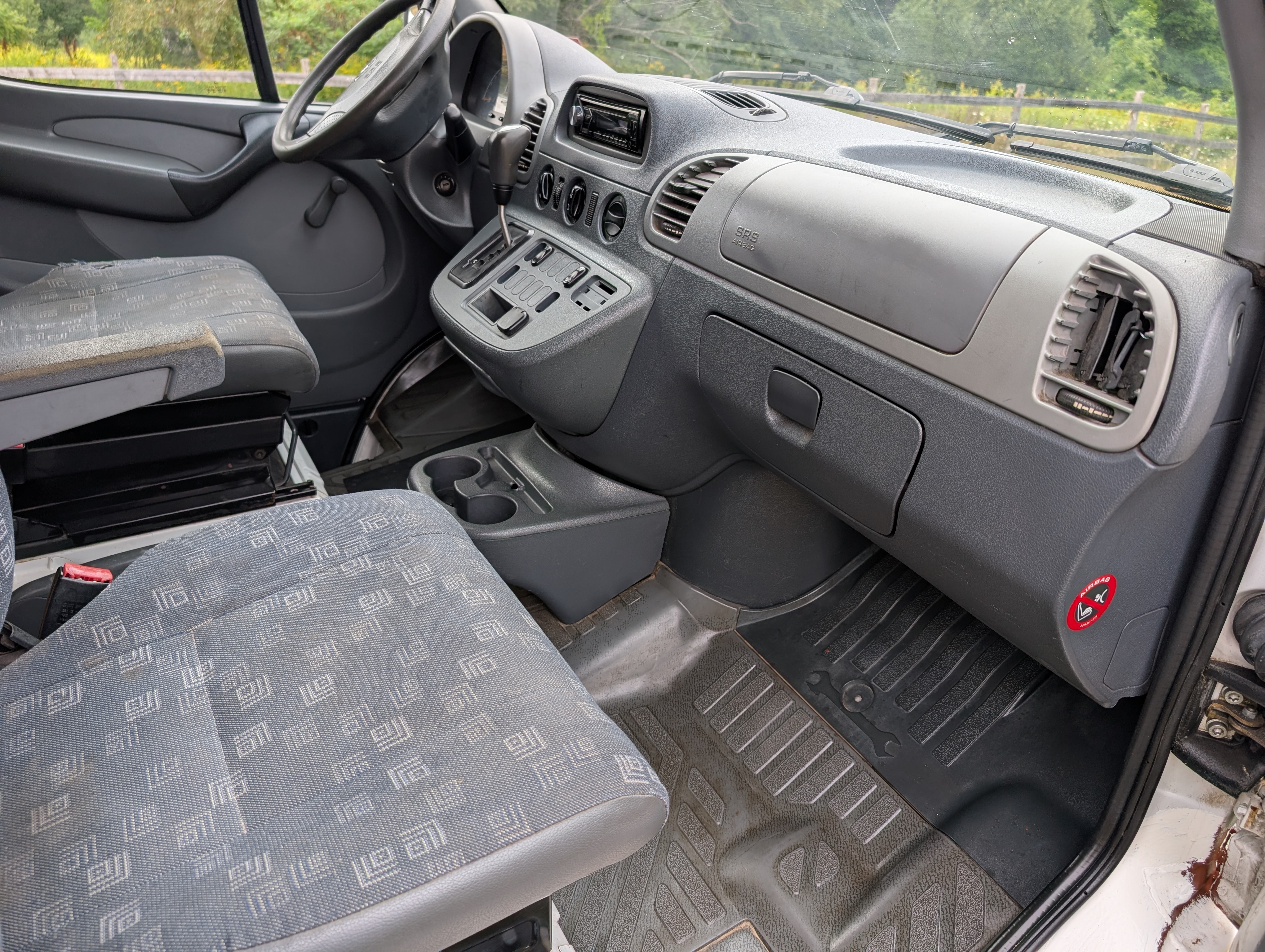
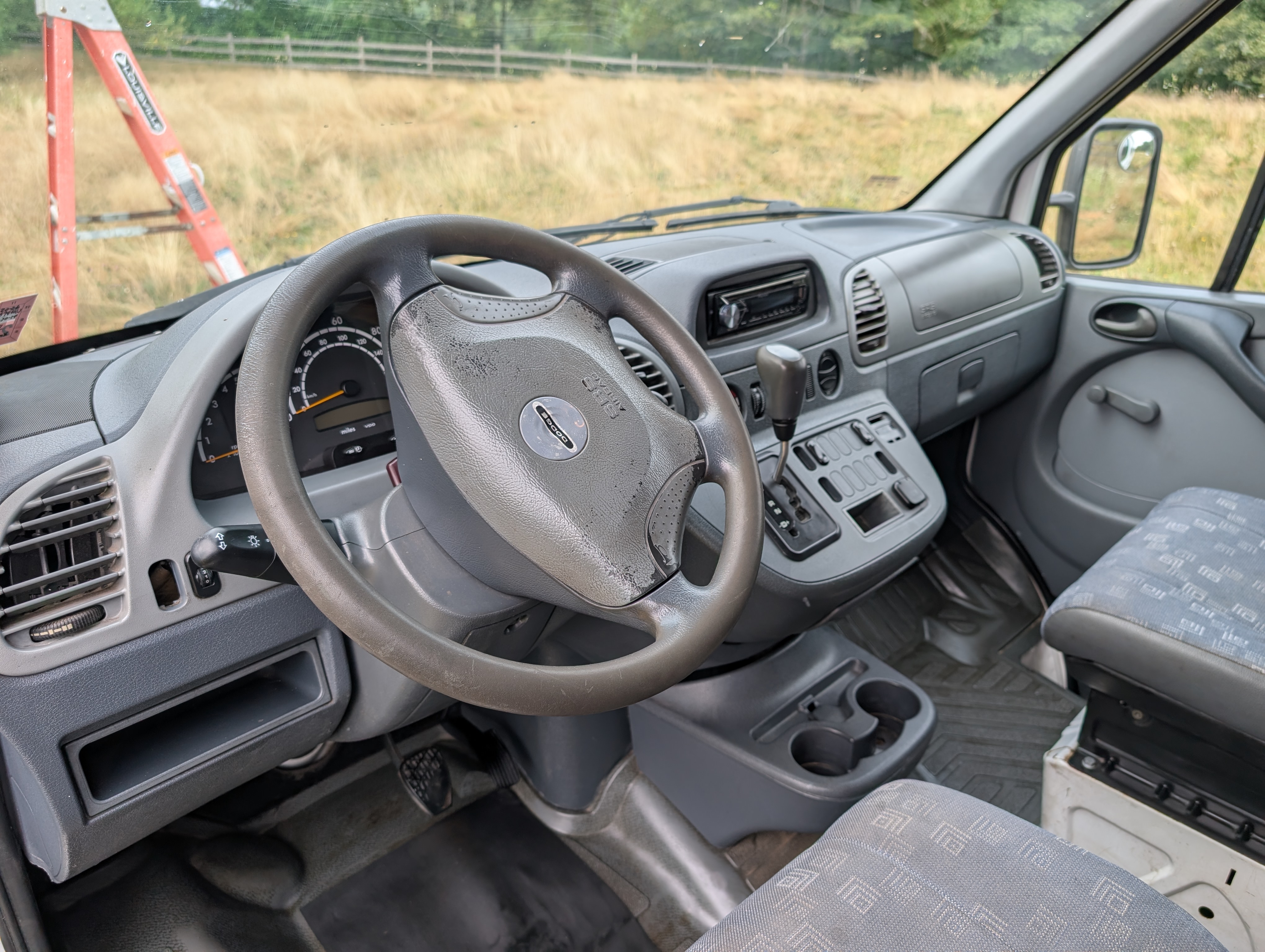
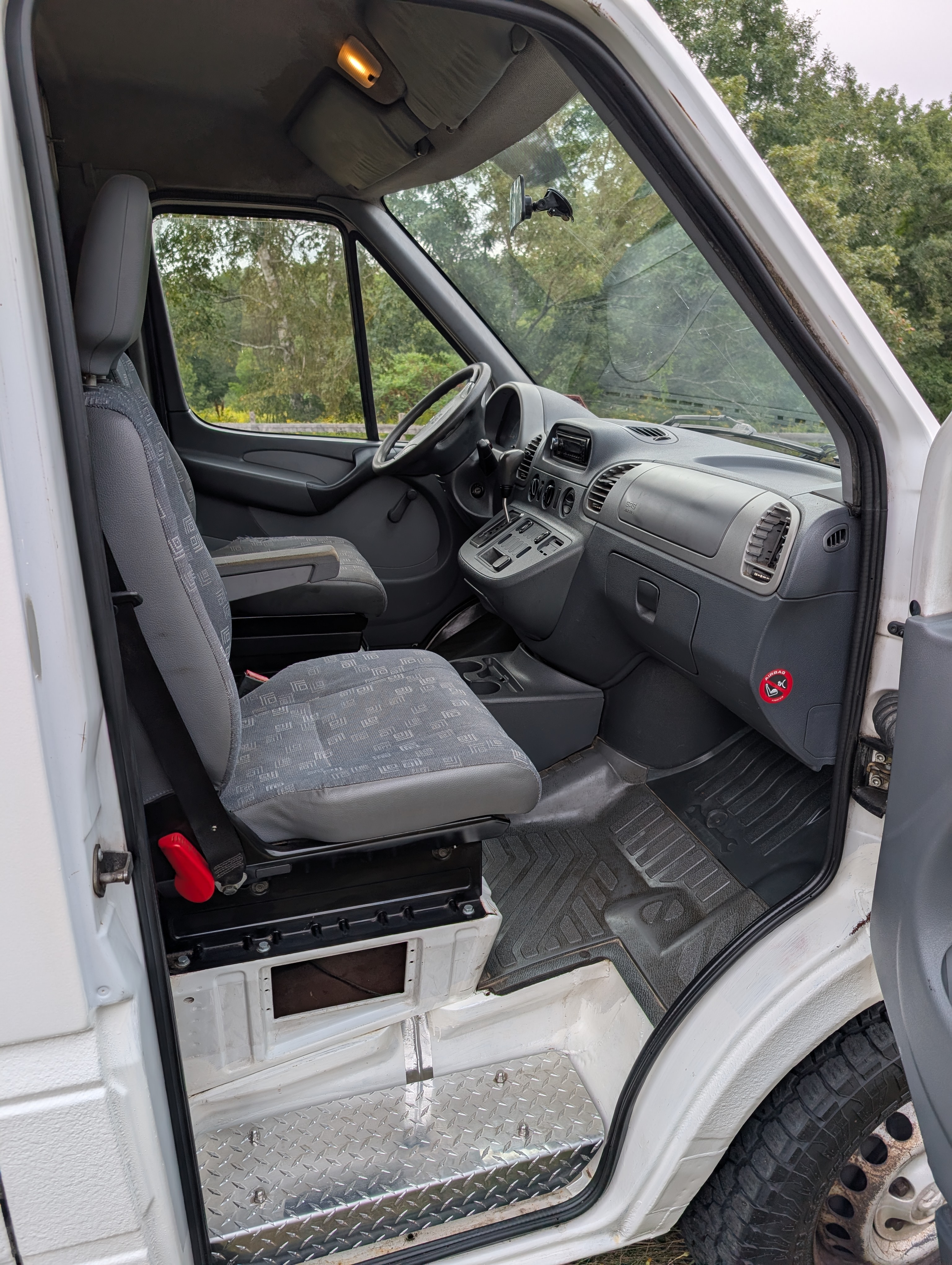
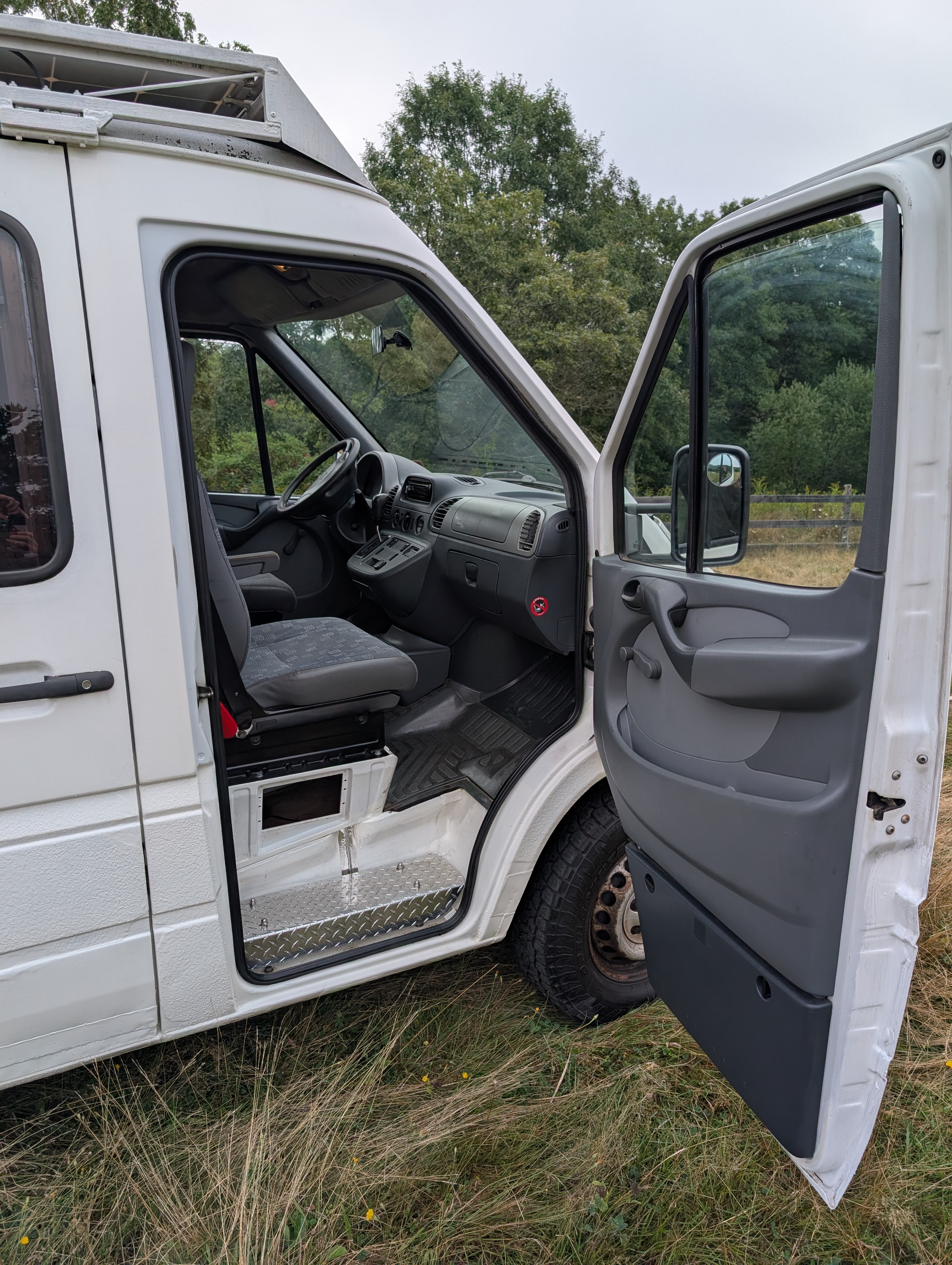
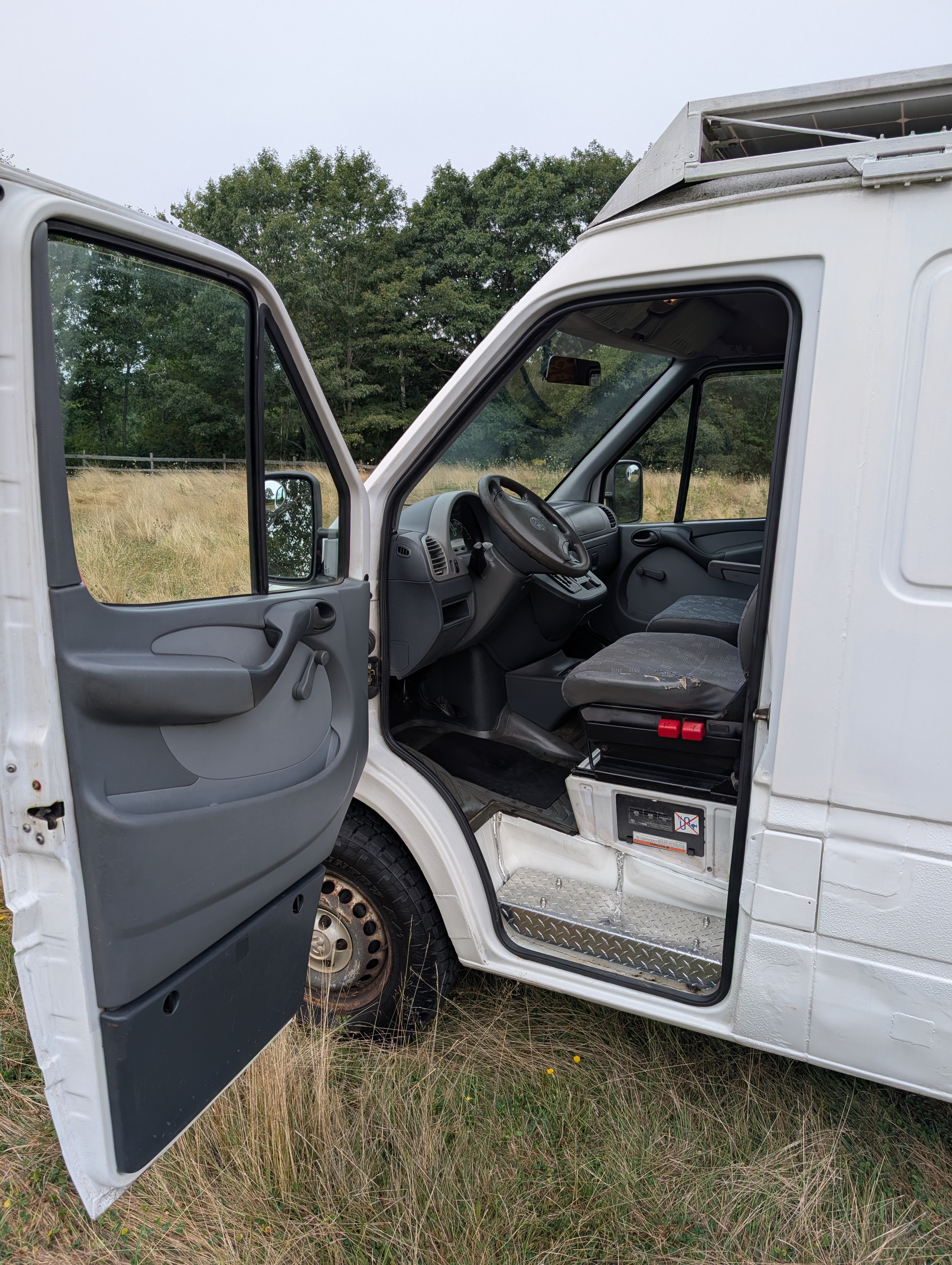
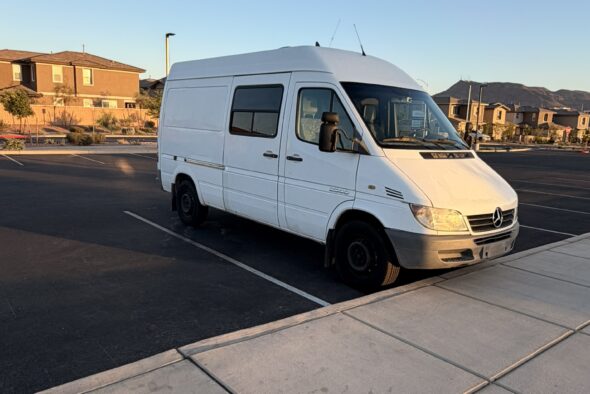
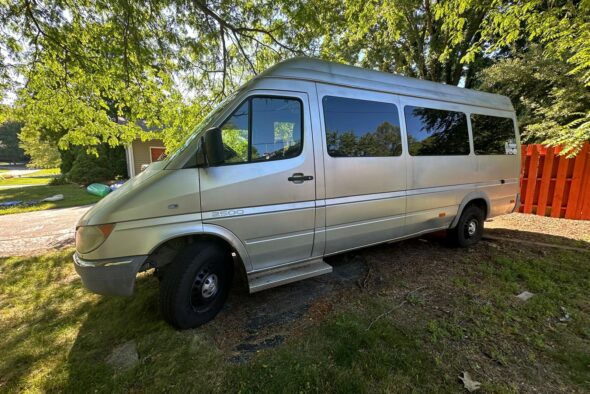
I’m selling my longtime home-on-wheels having since settled into a new stationary lifestyle! This is a thoughtfully converted and well maintained 2005 T1N Mercedes (technically Dodge in this case) Sprinter van. This generation of Sprinter is well loved by enthusiasts for its maintainability, simplicity, and long life with the legendary 5-cylinder Mercedes diesel and “pre-emissions” (DEF) technology.
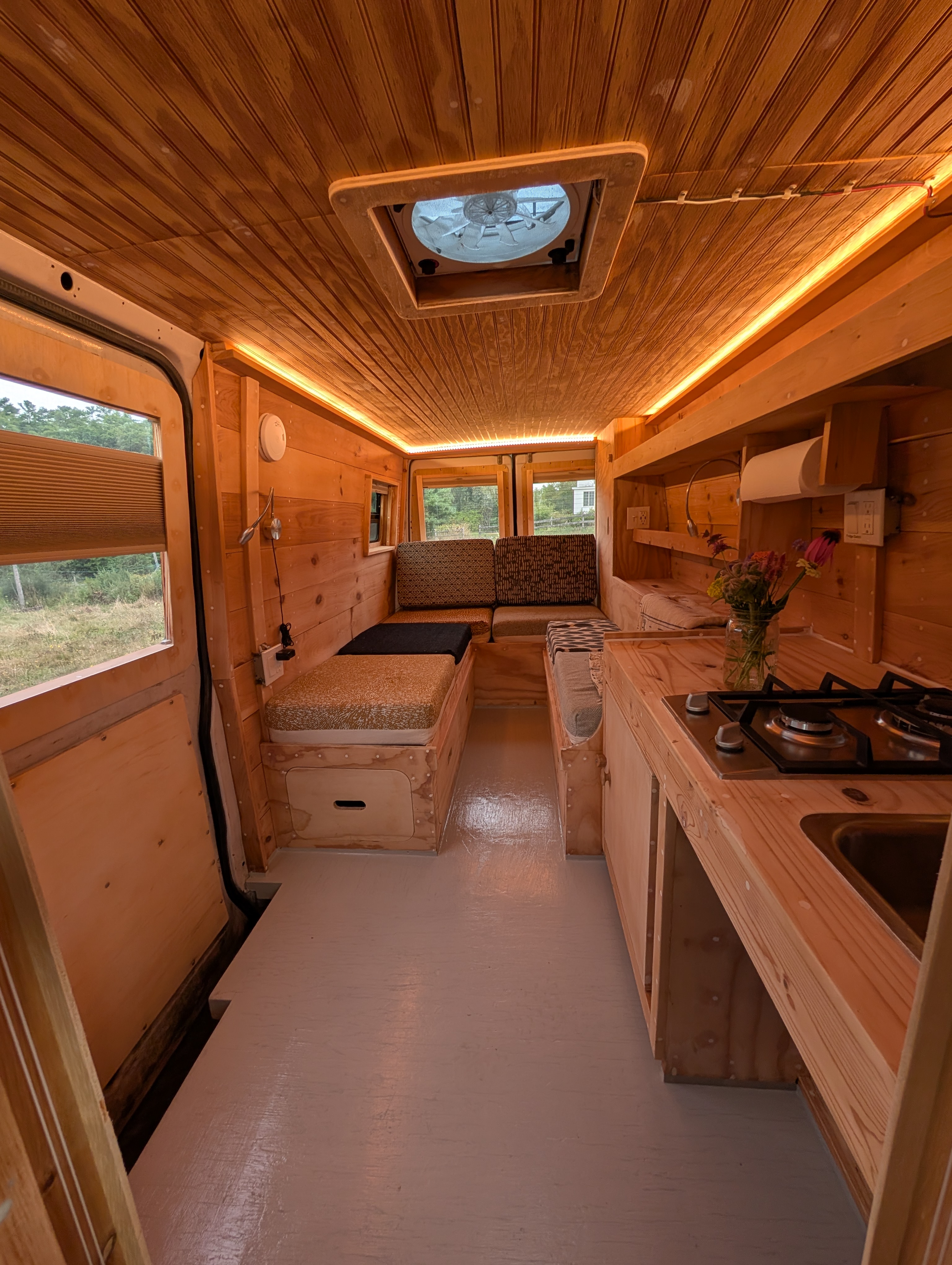
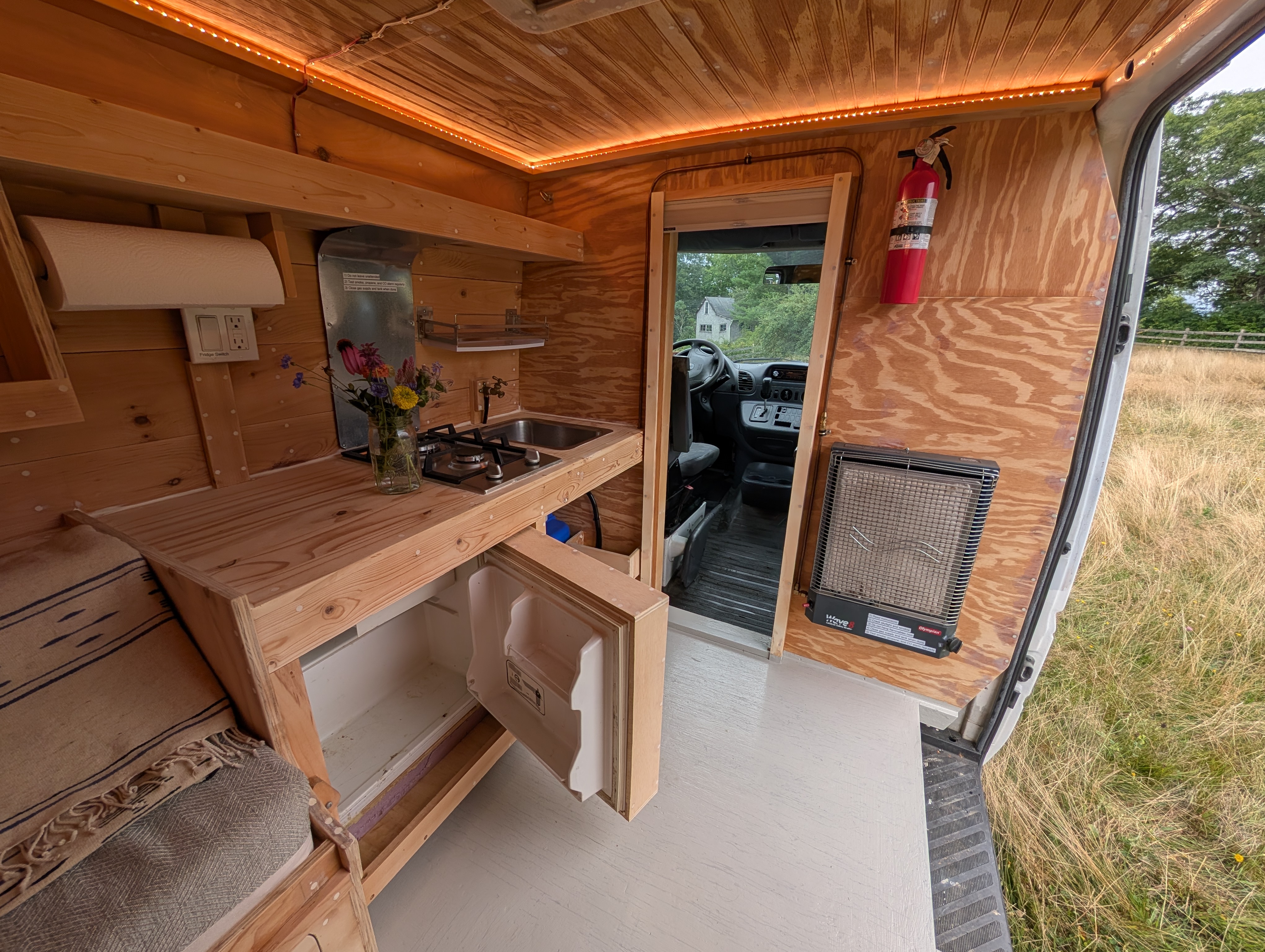
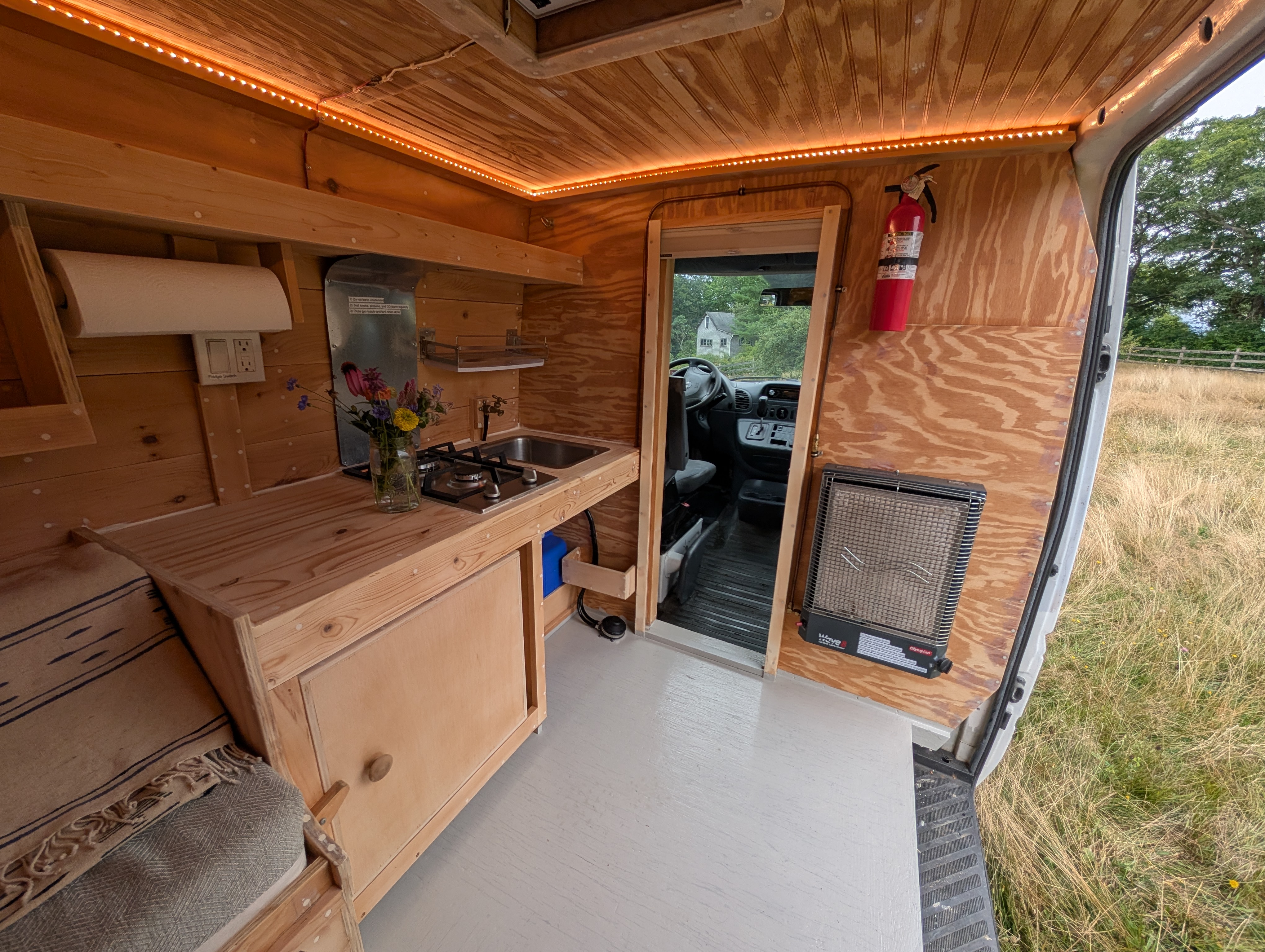
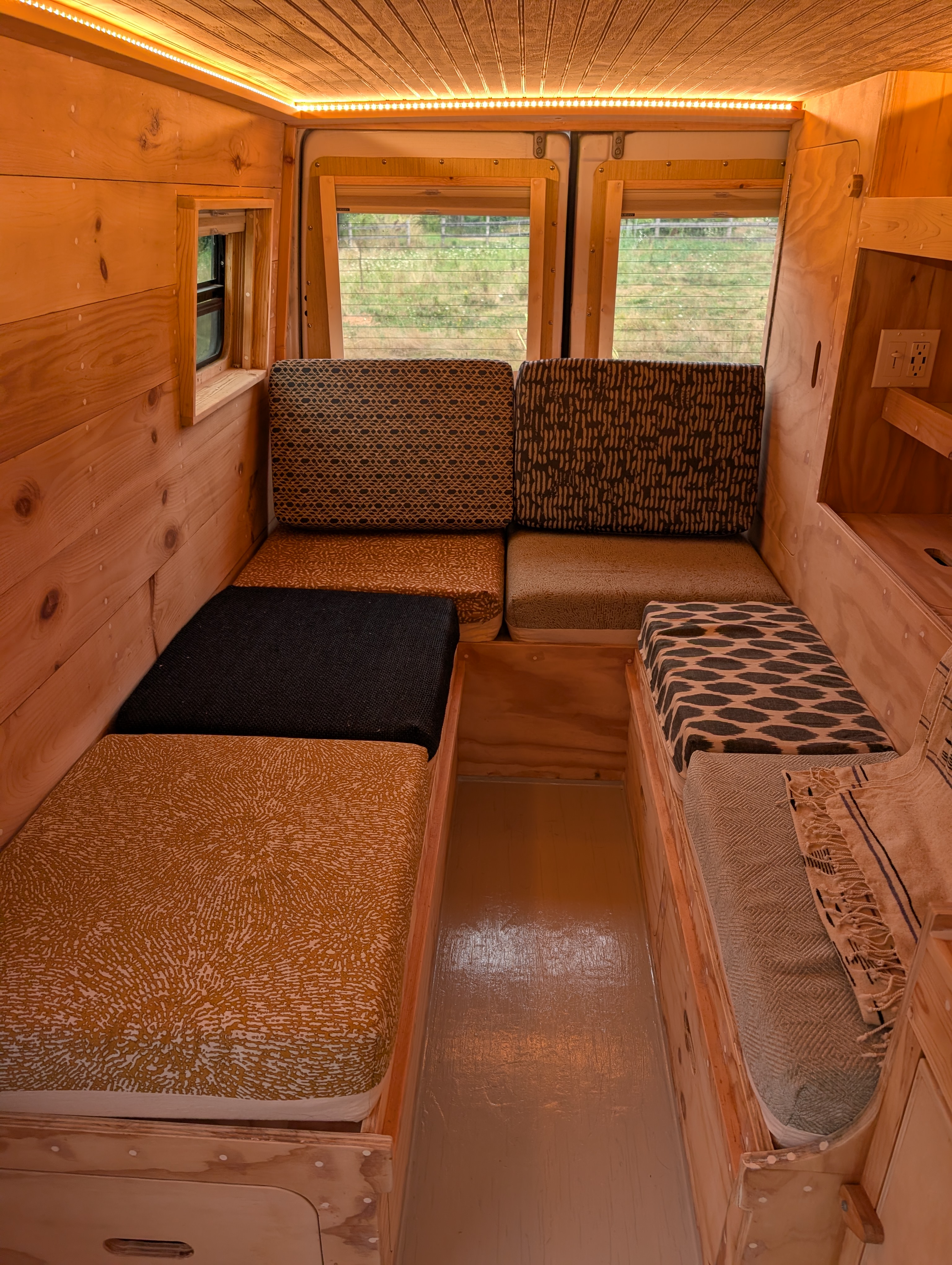
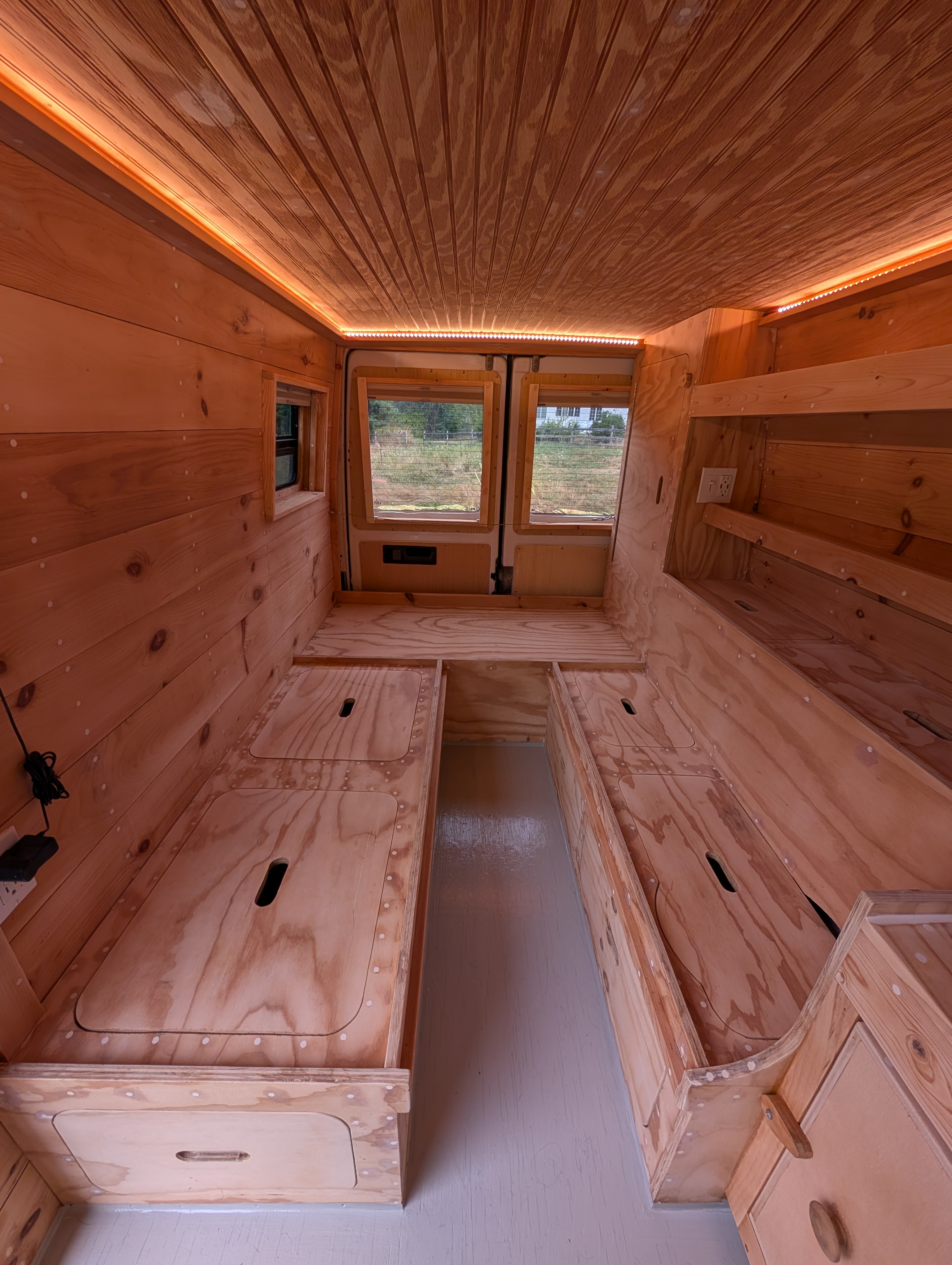
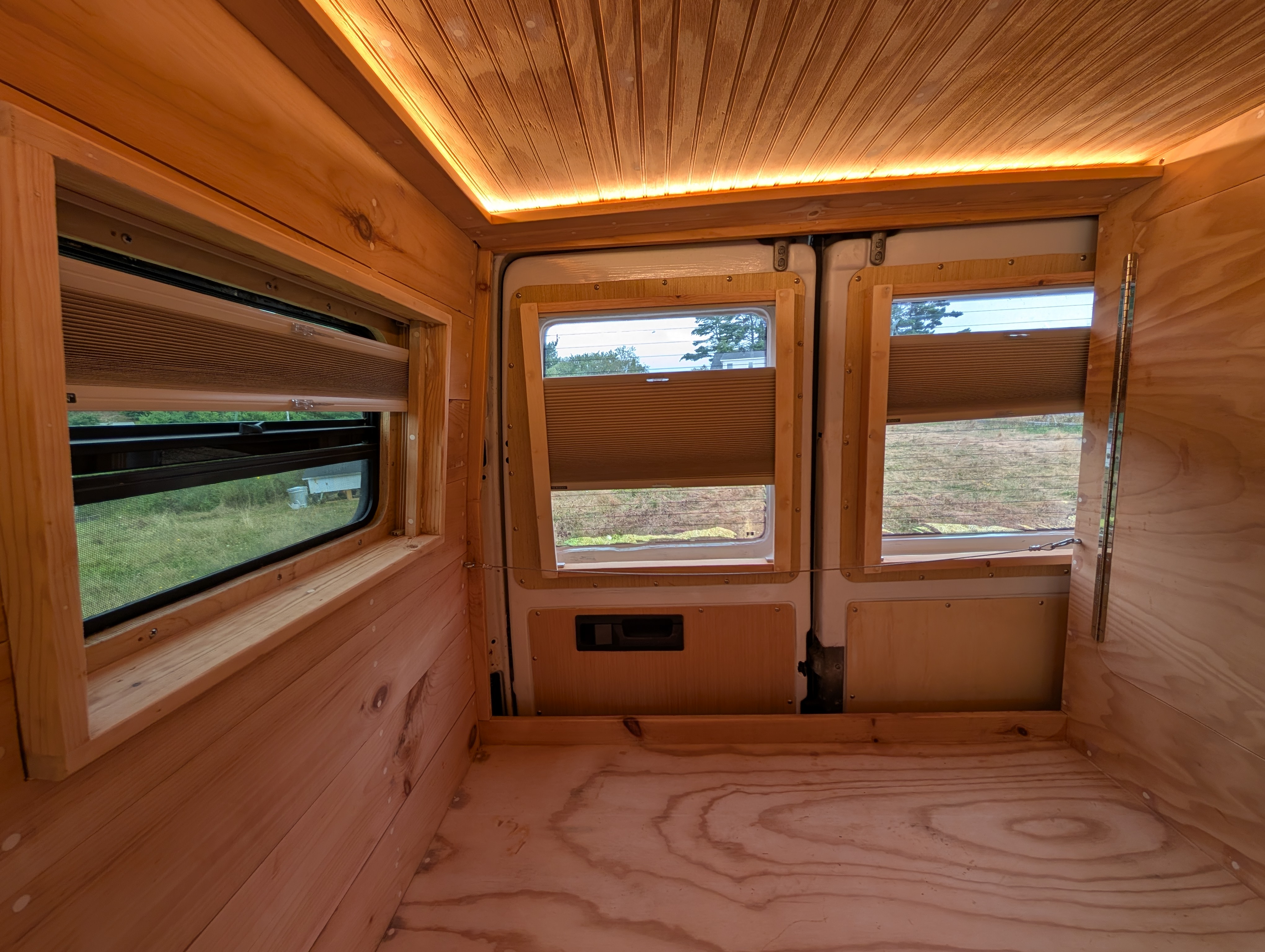
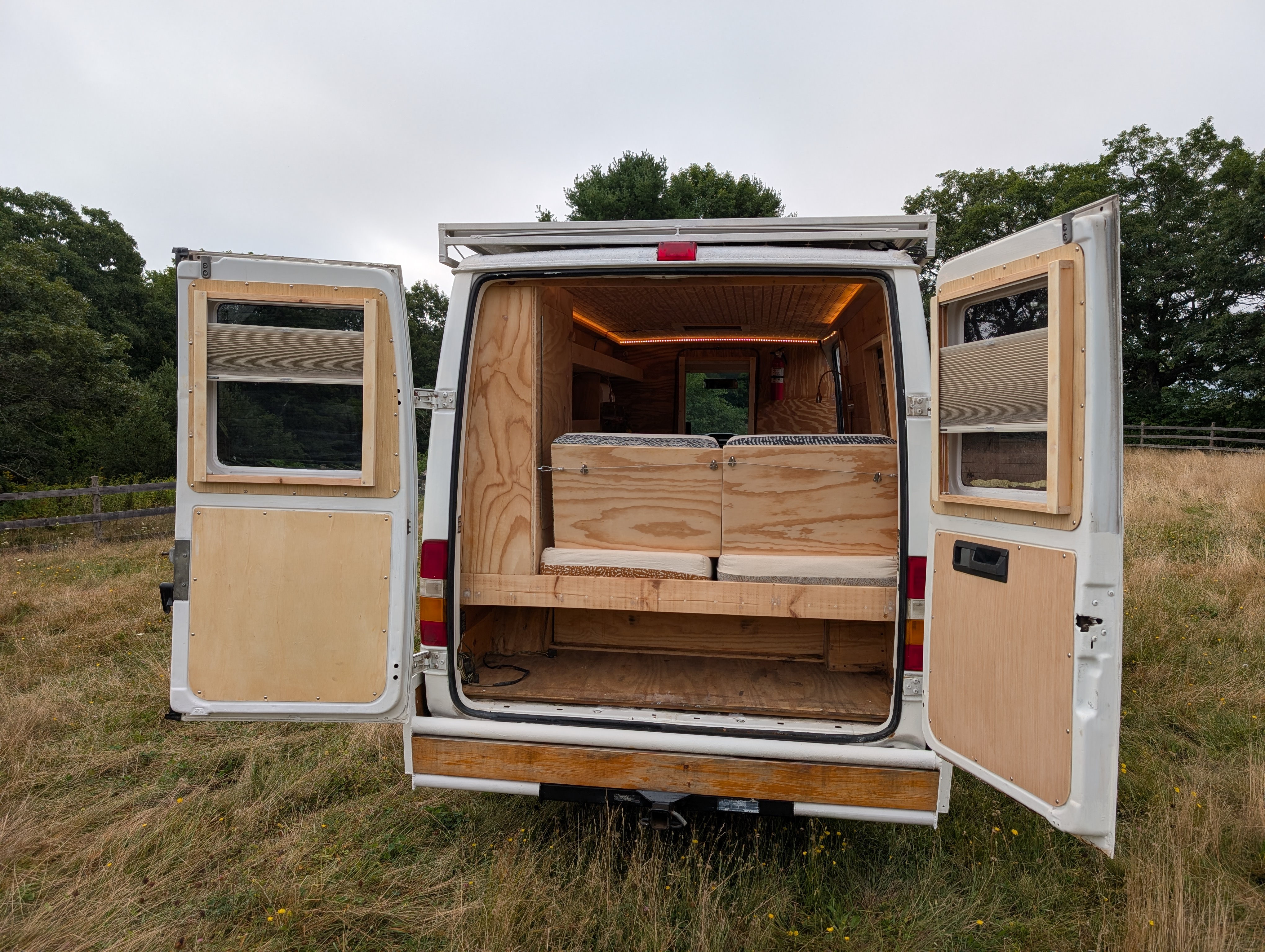
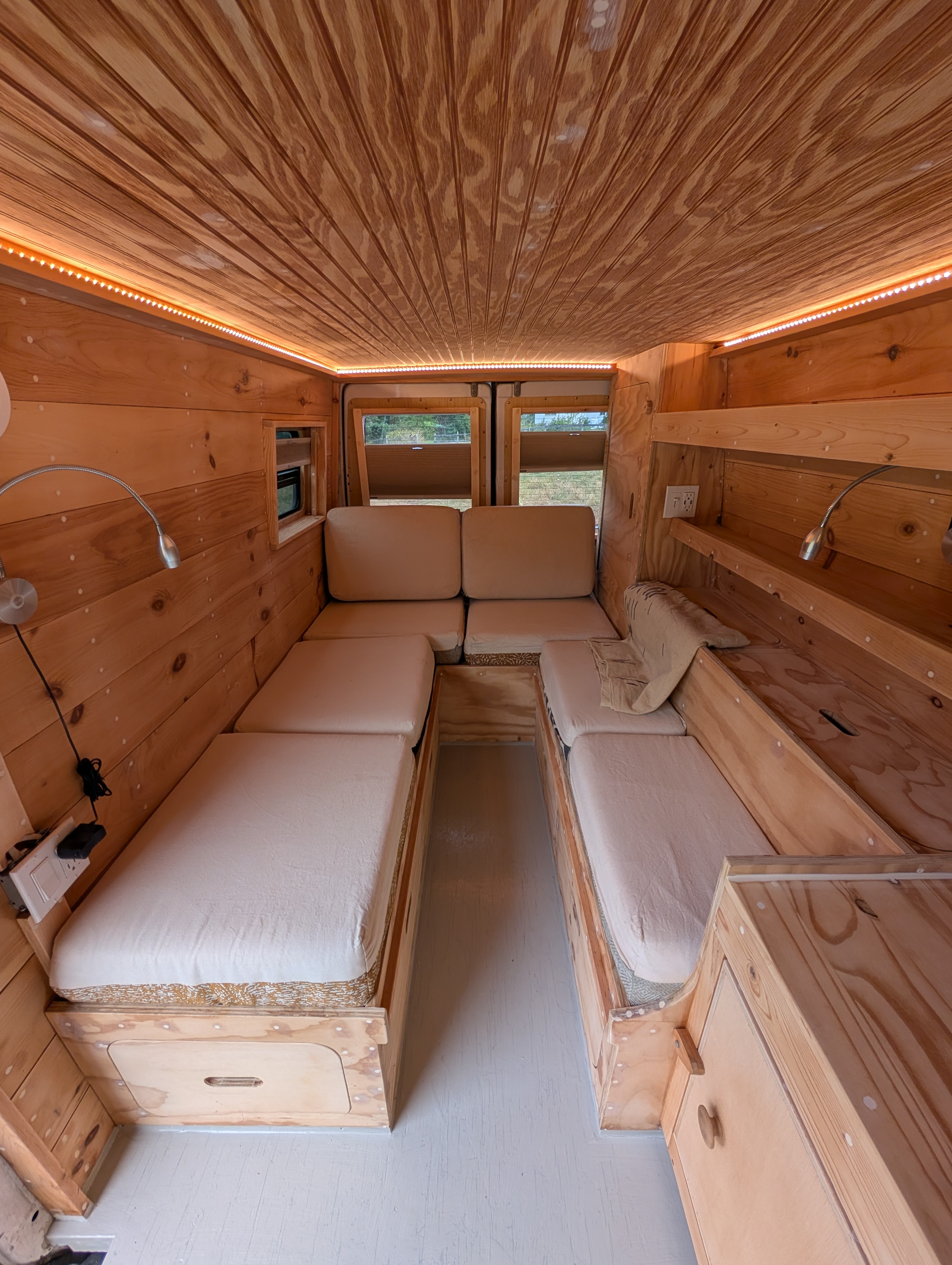
The conversion is rugged and well built, with a cozy and aesthetically pleasing all-wood interior. Any feature of the conversion is well thought out and executed, but kept simple for reliability whenever possible. The build is such that a new owner could add features easily as desired.
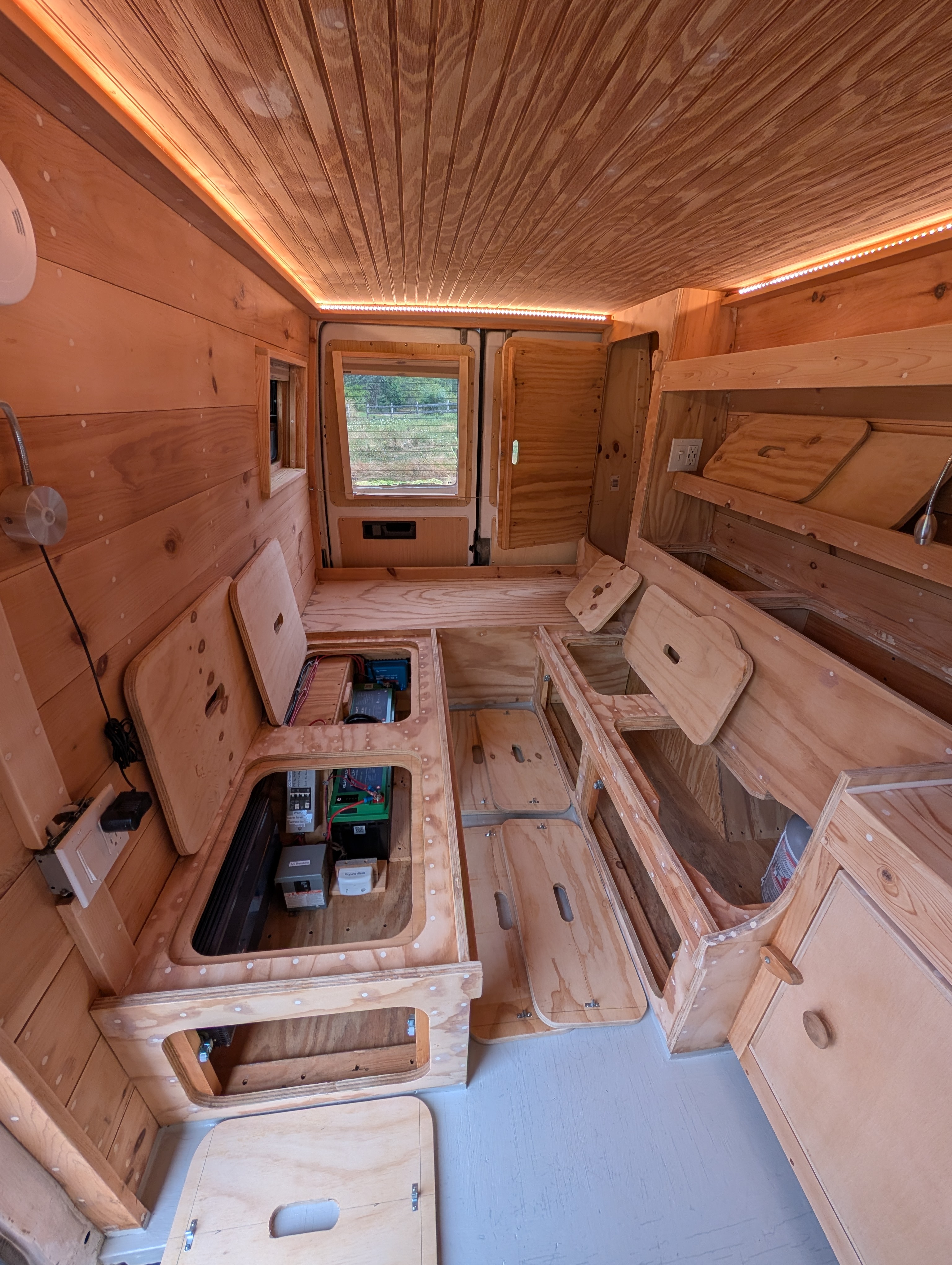
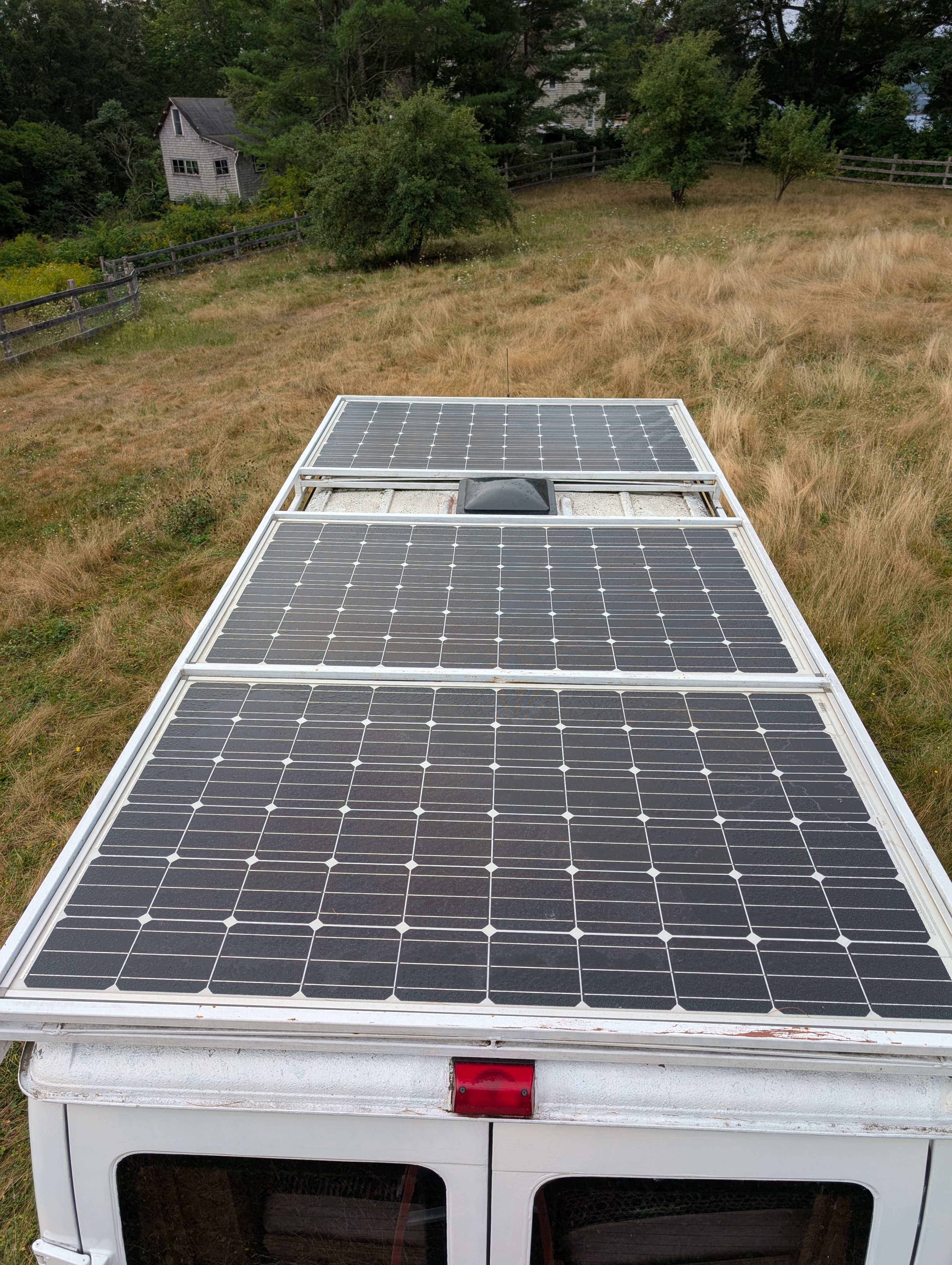
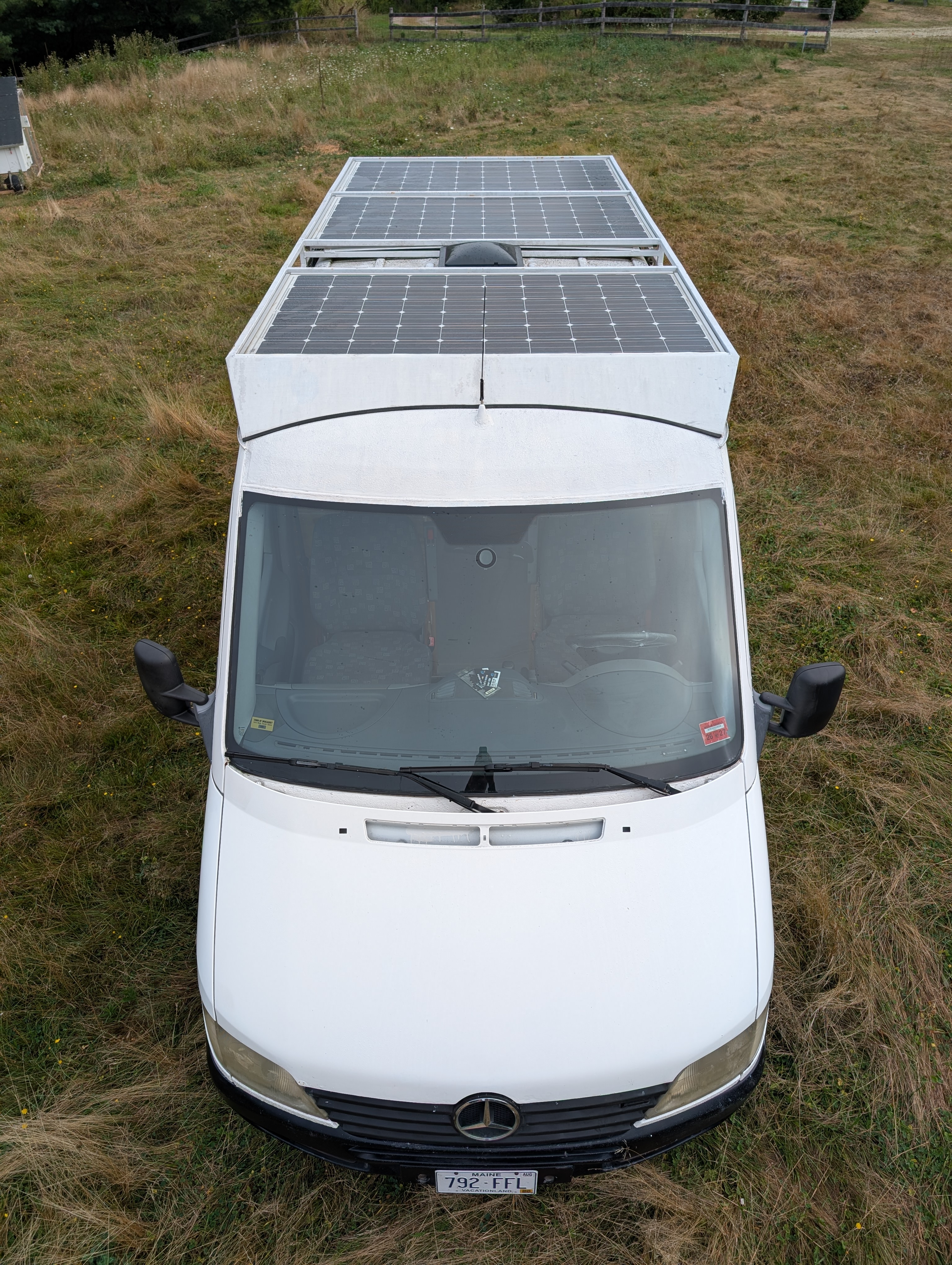
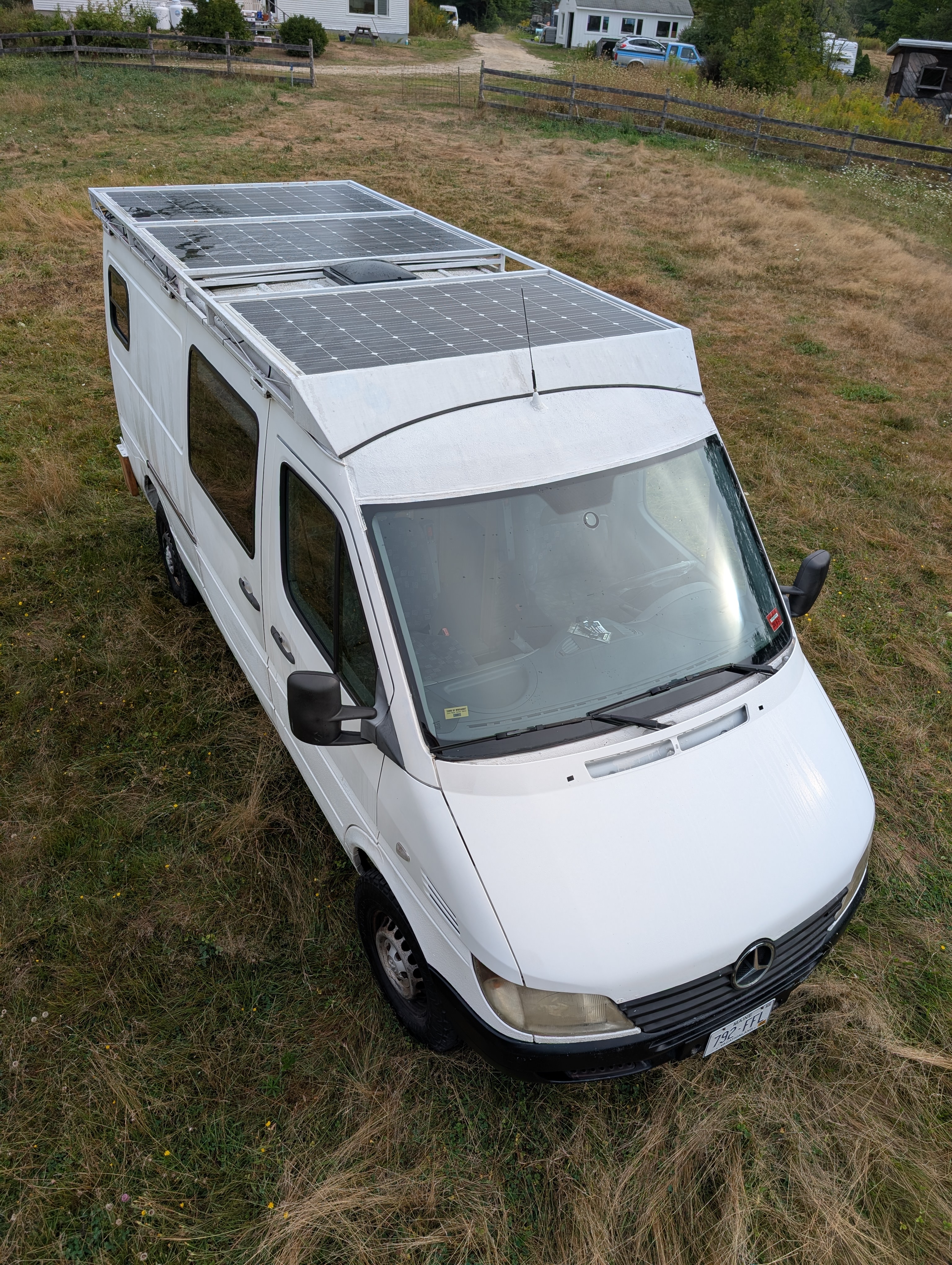
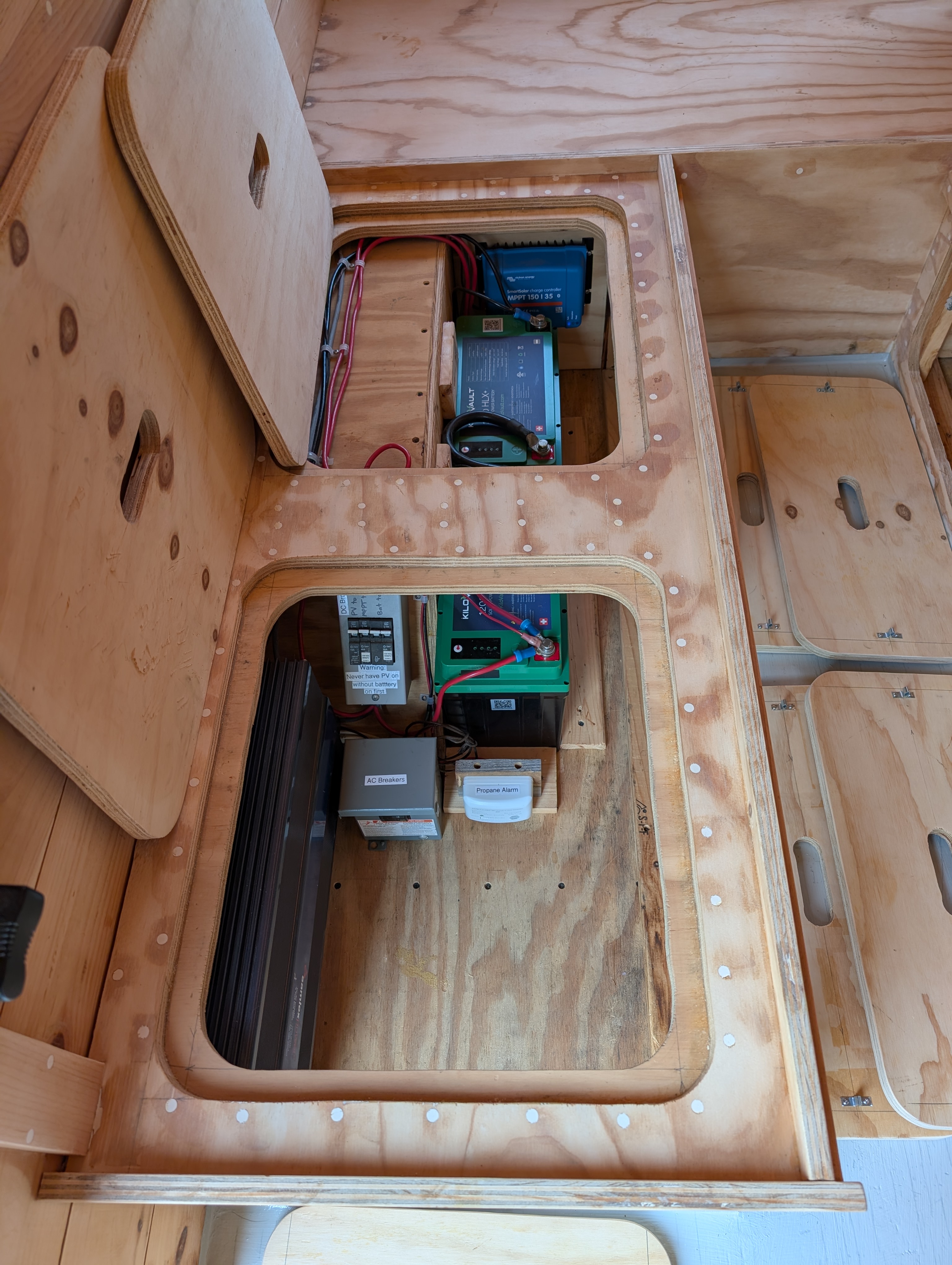
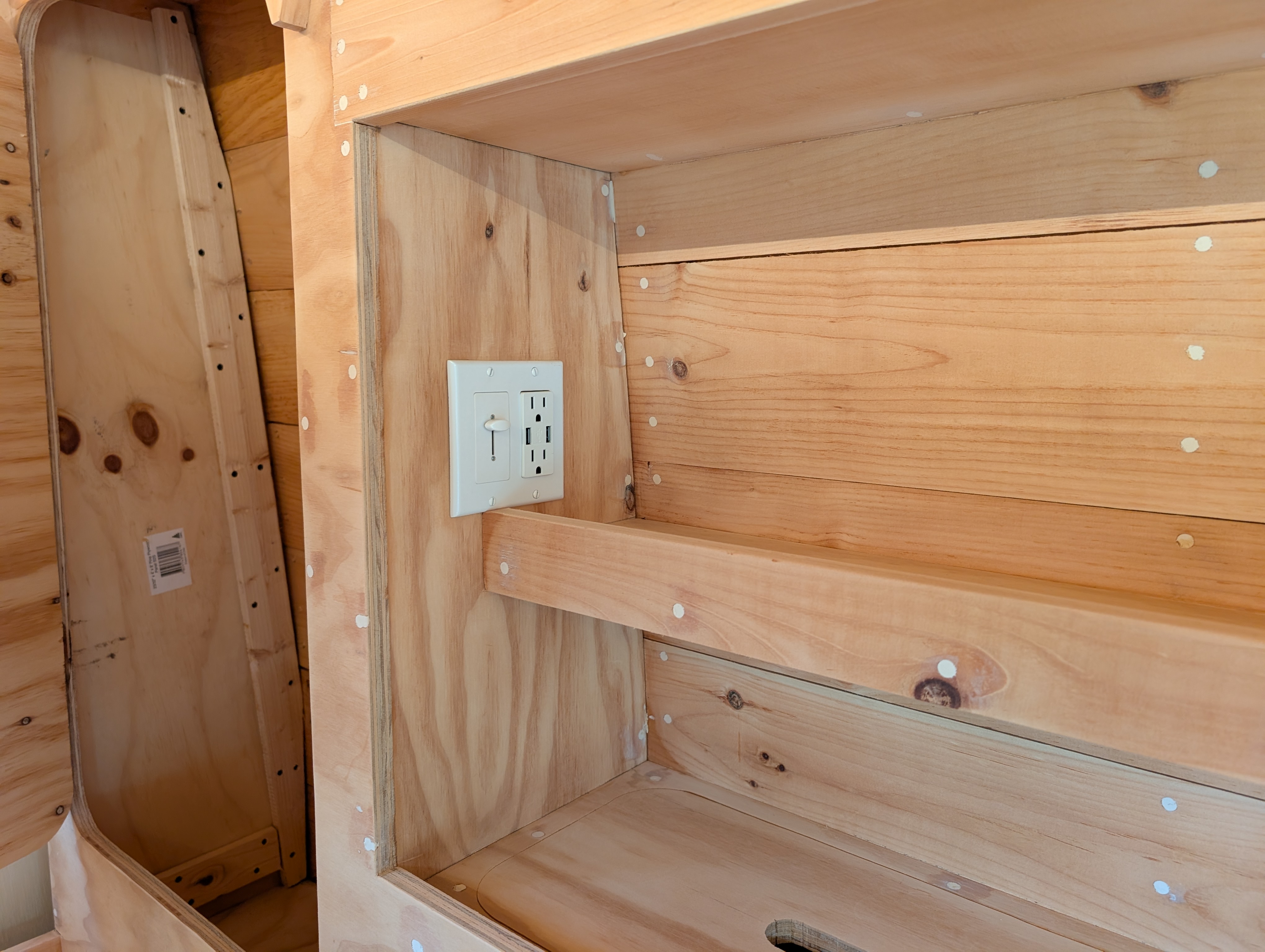
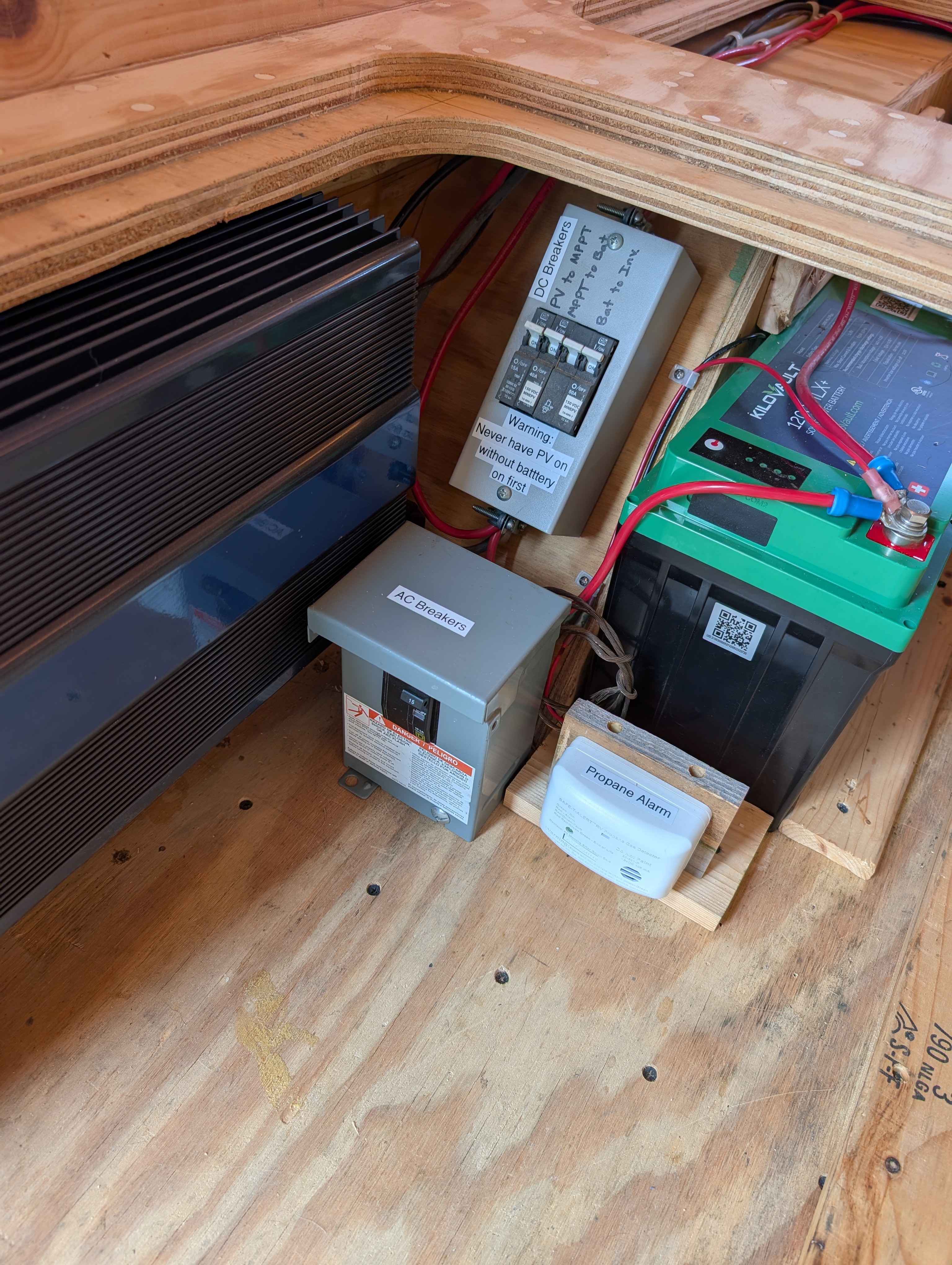
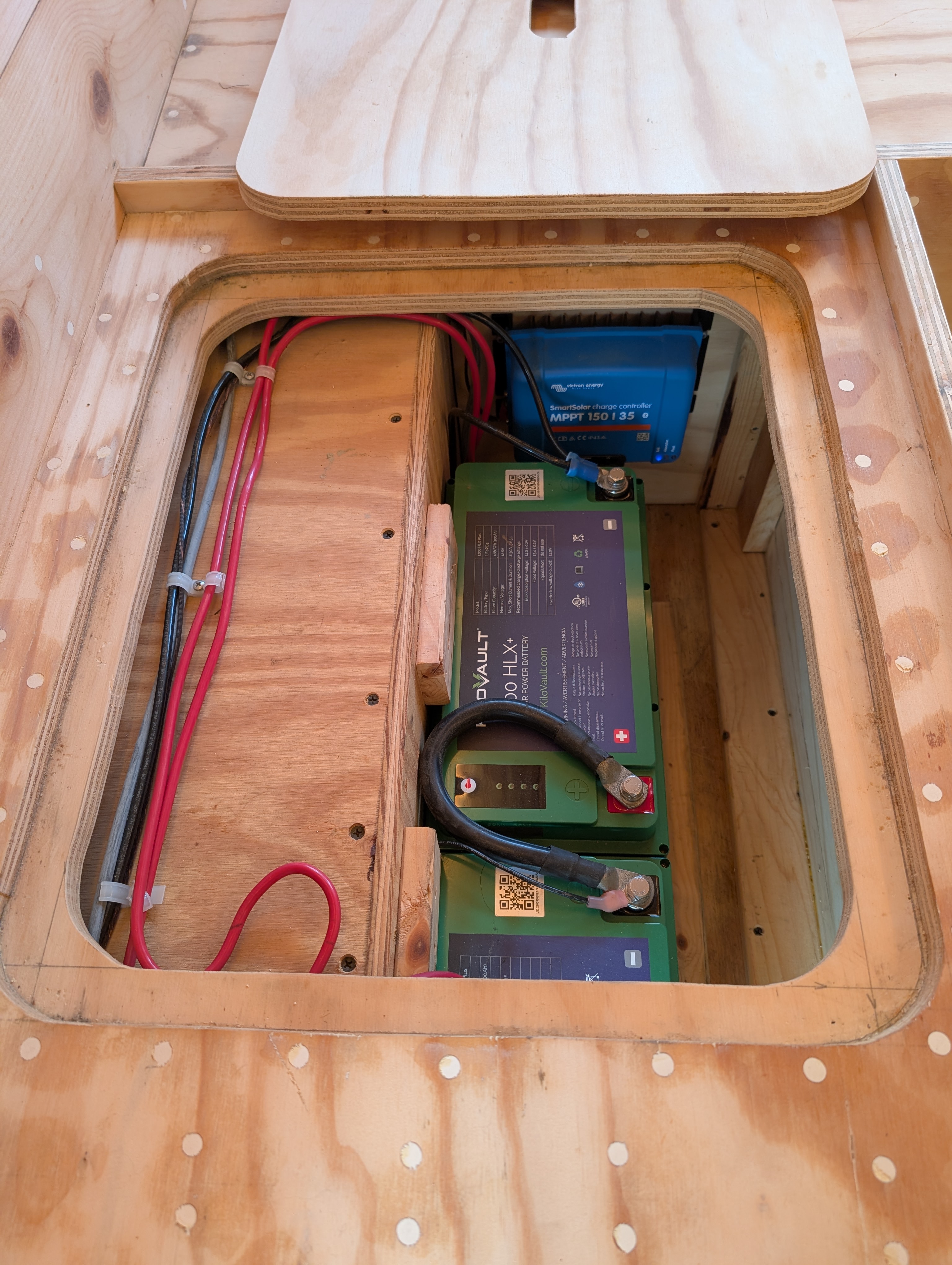
Particular attention was paid to the power system, with three large panels on a rugged custom steel roof rack, making nearly 1 kW. Batteries include two LiFePO4 units rated for 2.4 kW-hr at 24V (total). The charge controller is a Victron MPPT 150/35 and the inverter is a true sine wave Samlex PST-1500-24. All the AC wiring is distributed through the van (including in the driver’s cab) with circuit breakers and GFCI, not just the plugs on the inverter.
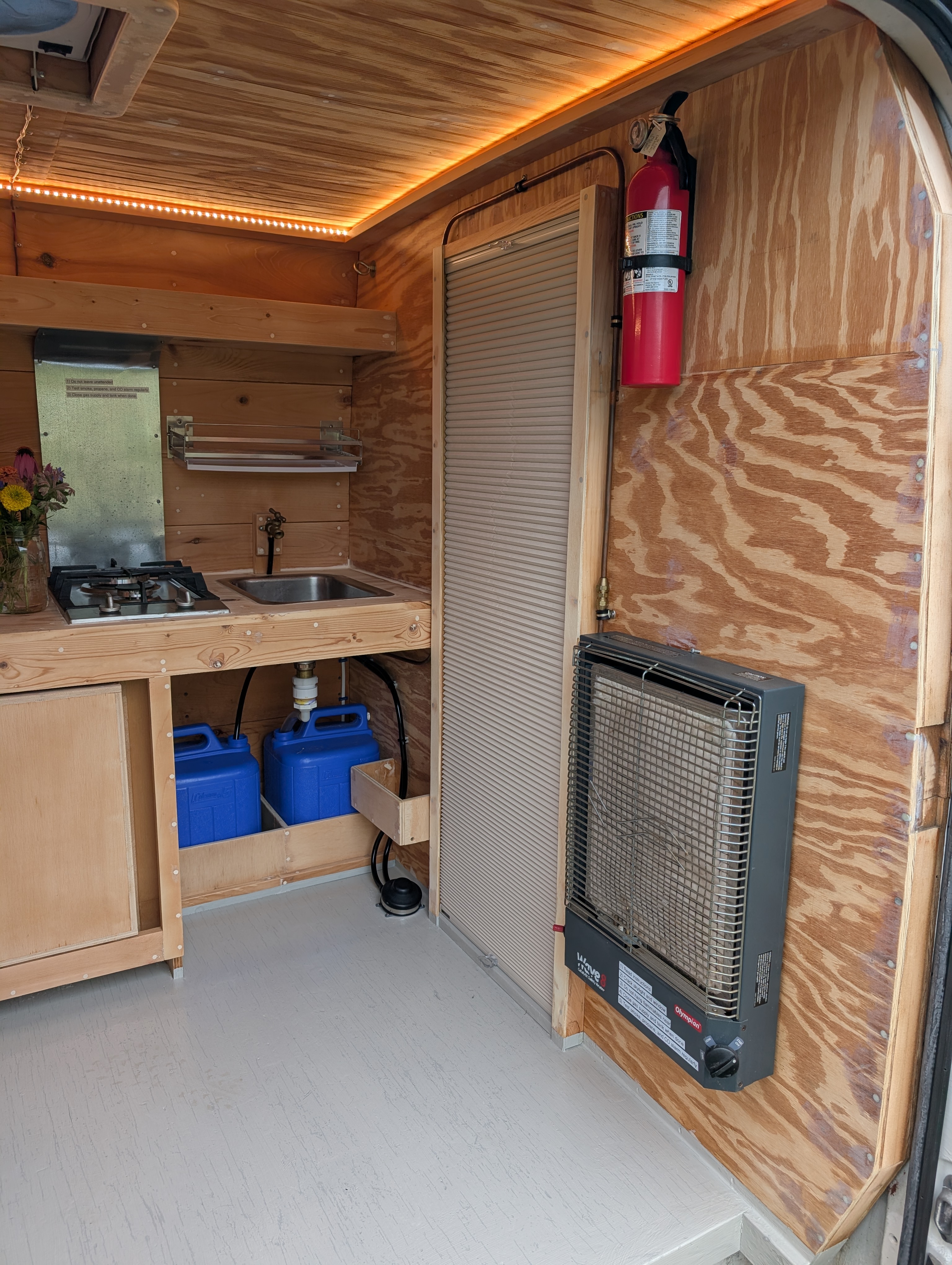
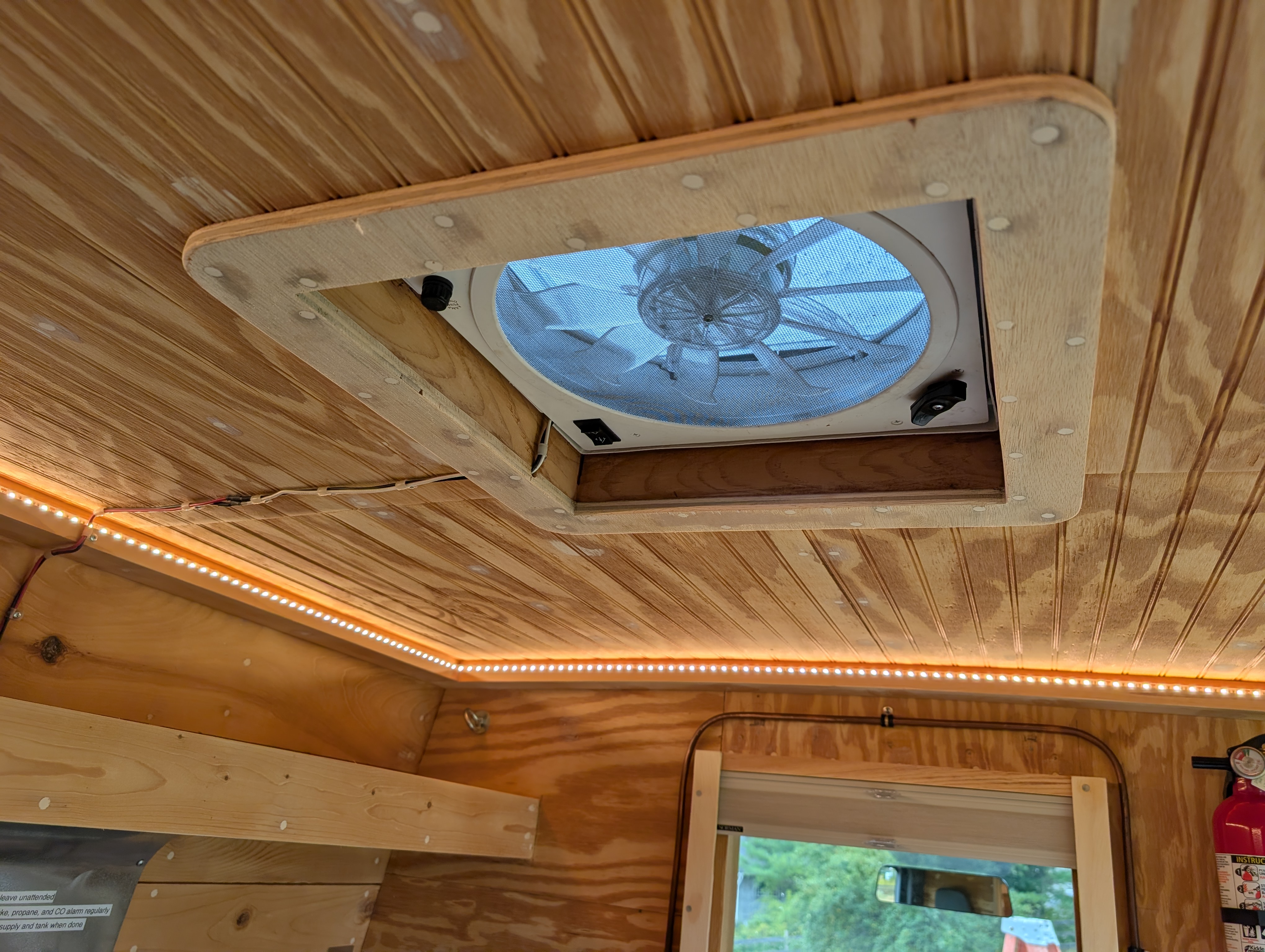
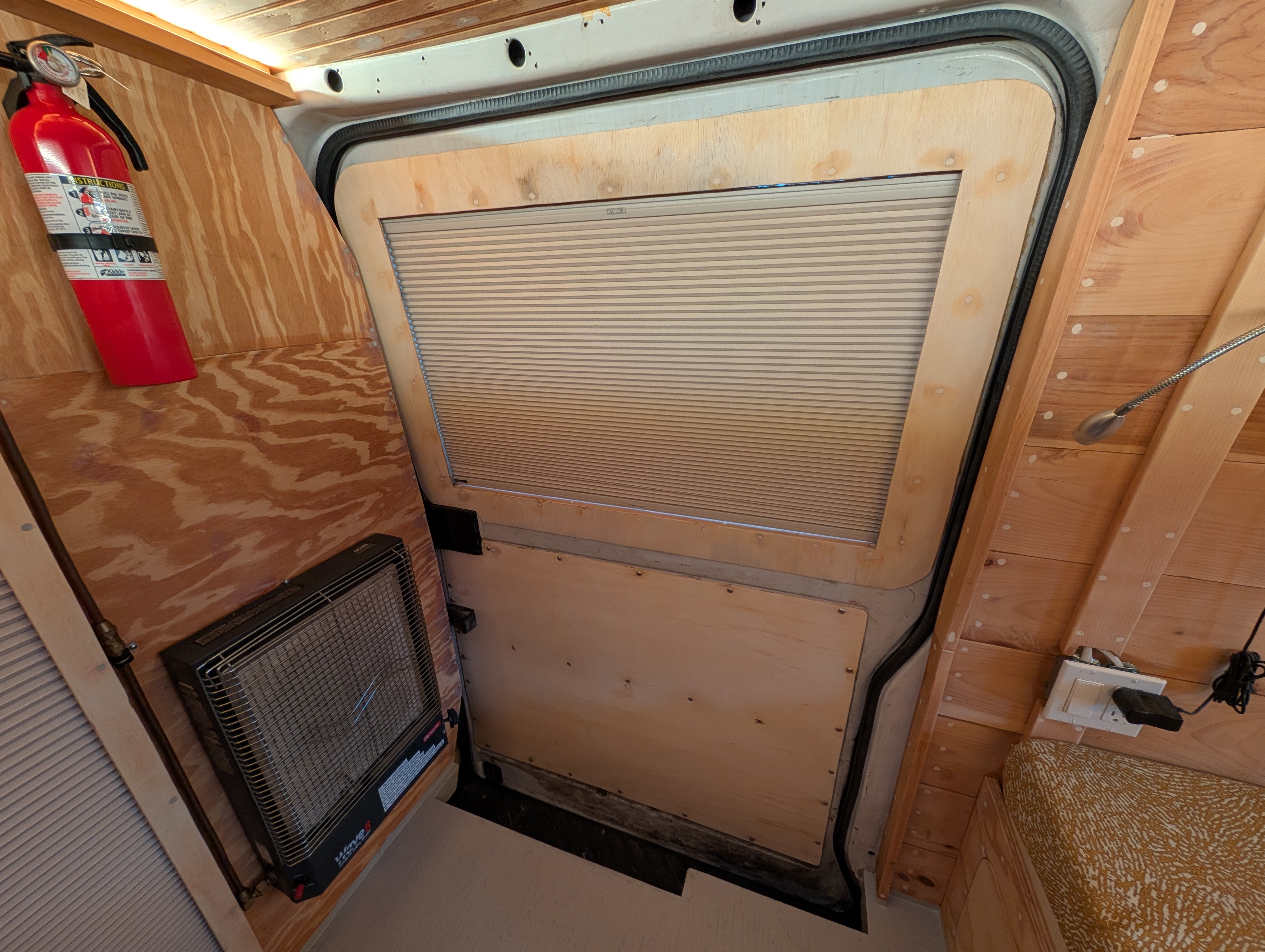
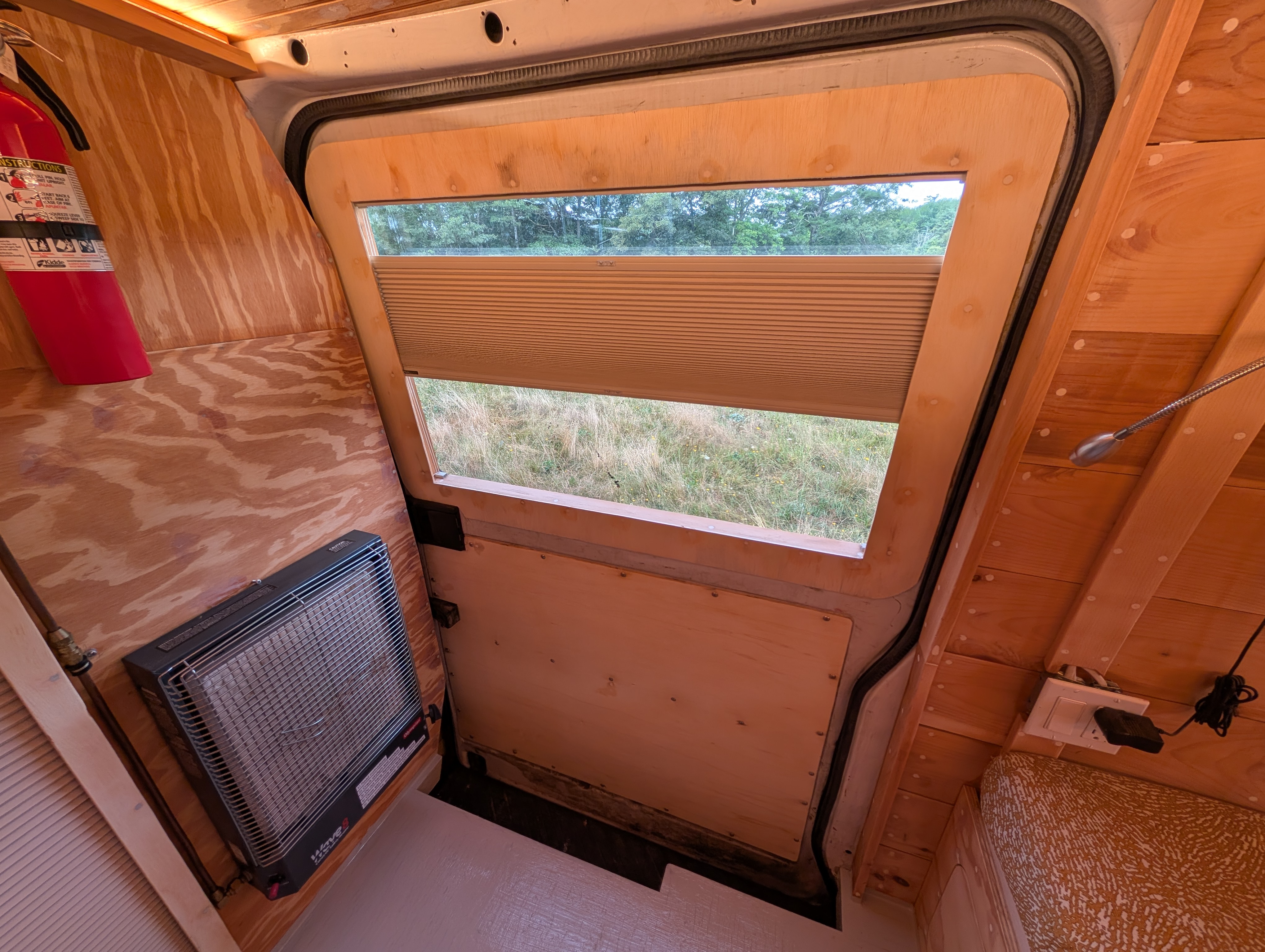
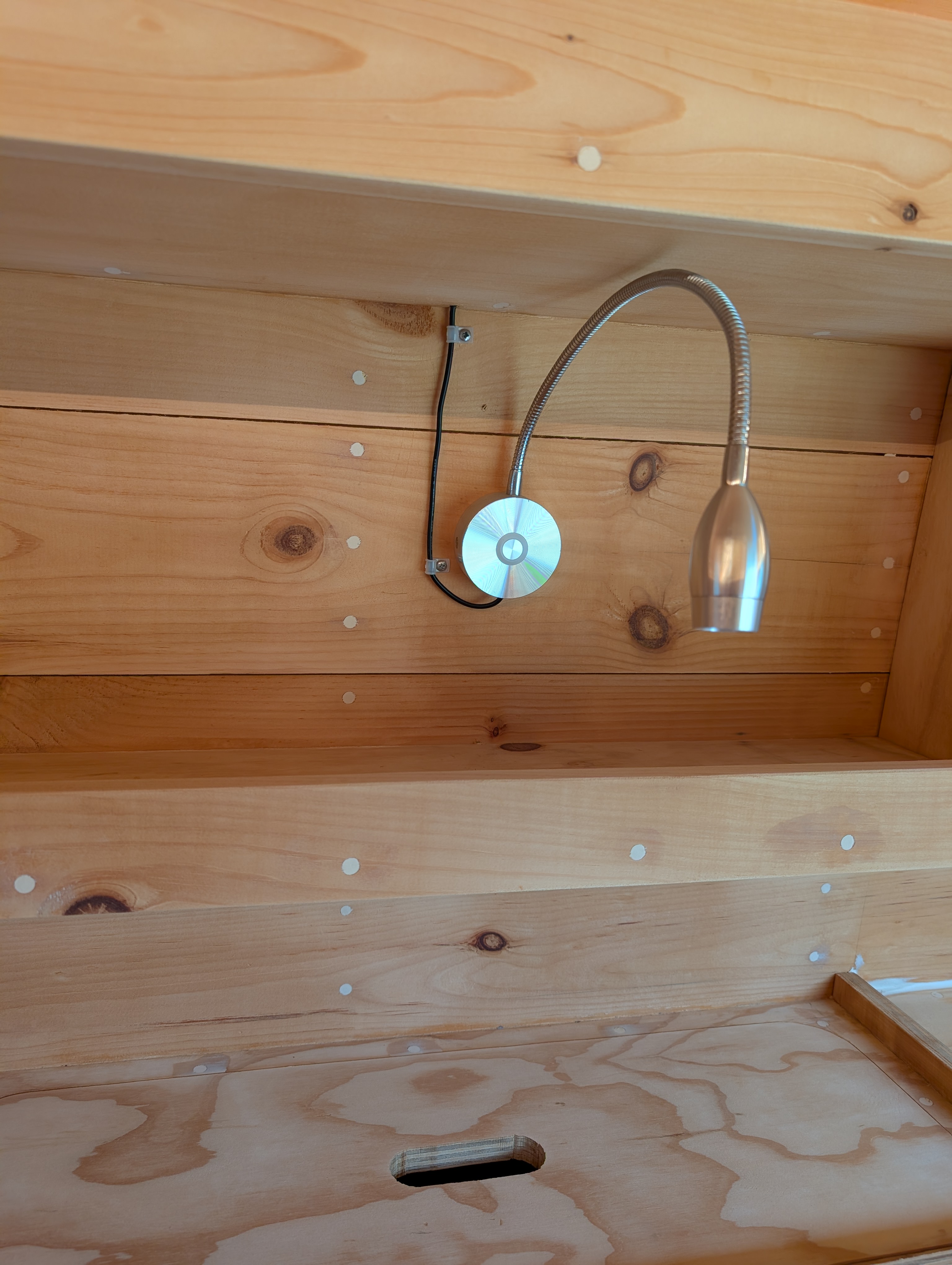
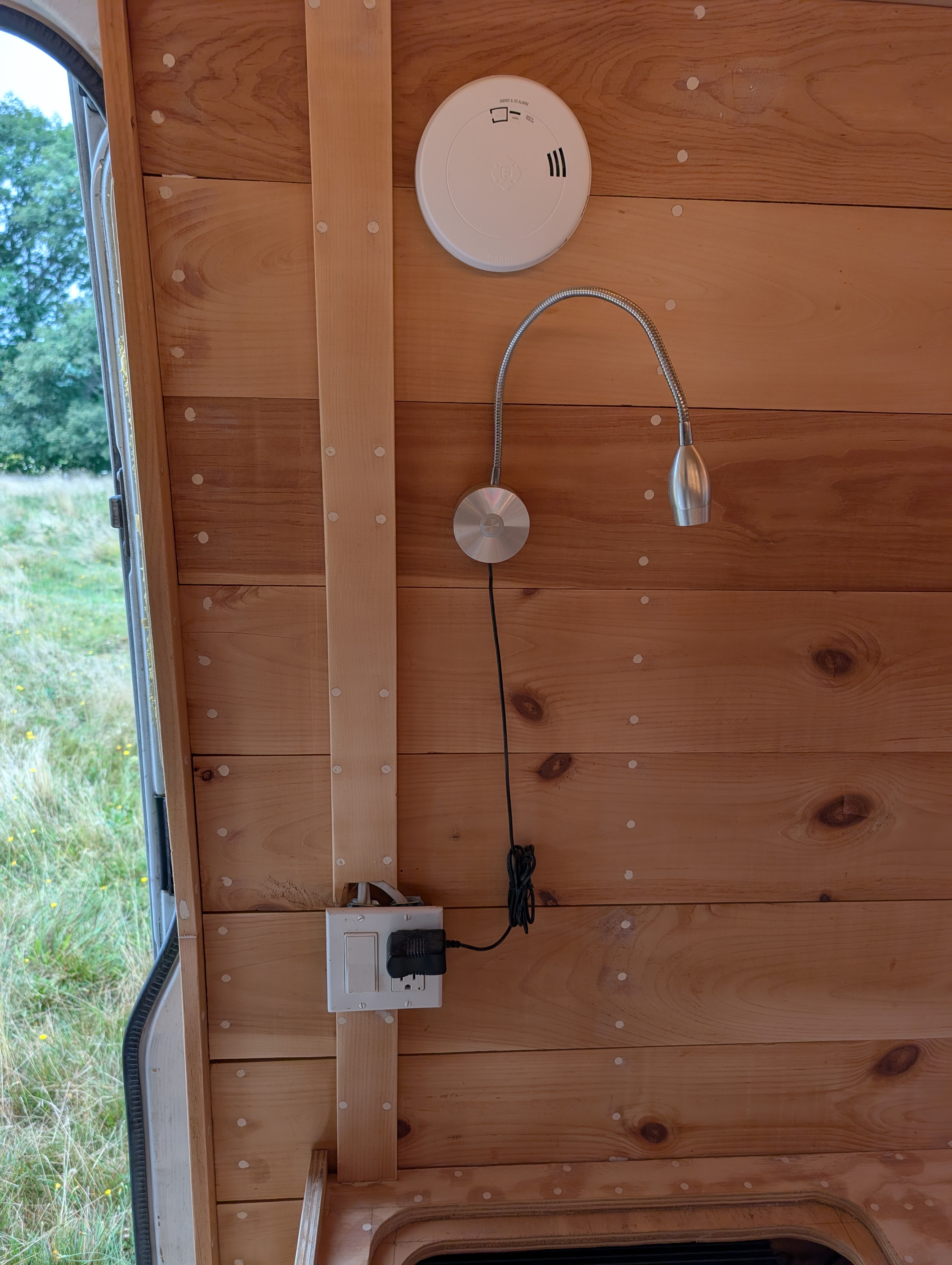
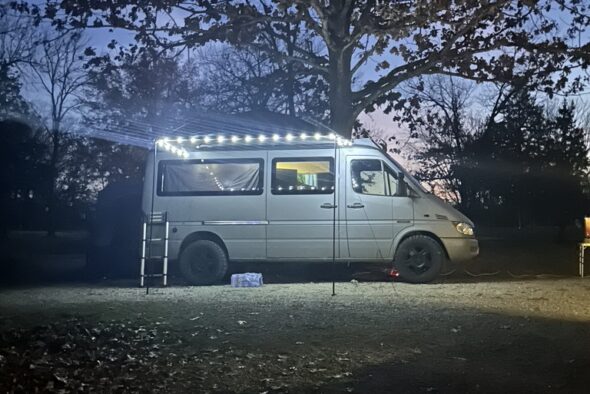
Good lighting was also important to me, so I installed perimeter strip lighting of warm LEDs with a dimmer on the wall, with two additional reading lights. All the windows and the door to the driver’s cab have blackout shades in tracks so the van can be in full “stealth” mode. I lived in the van in Boston for three years prior to COVID. The shades are also excellent insulators for the windows in wintertime; I spent several weeks living in northern Maine with -10 F nights without issues. No fussing with ugly Velcro window mats for privacy and thermal control.
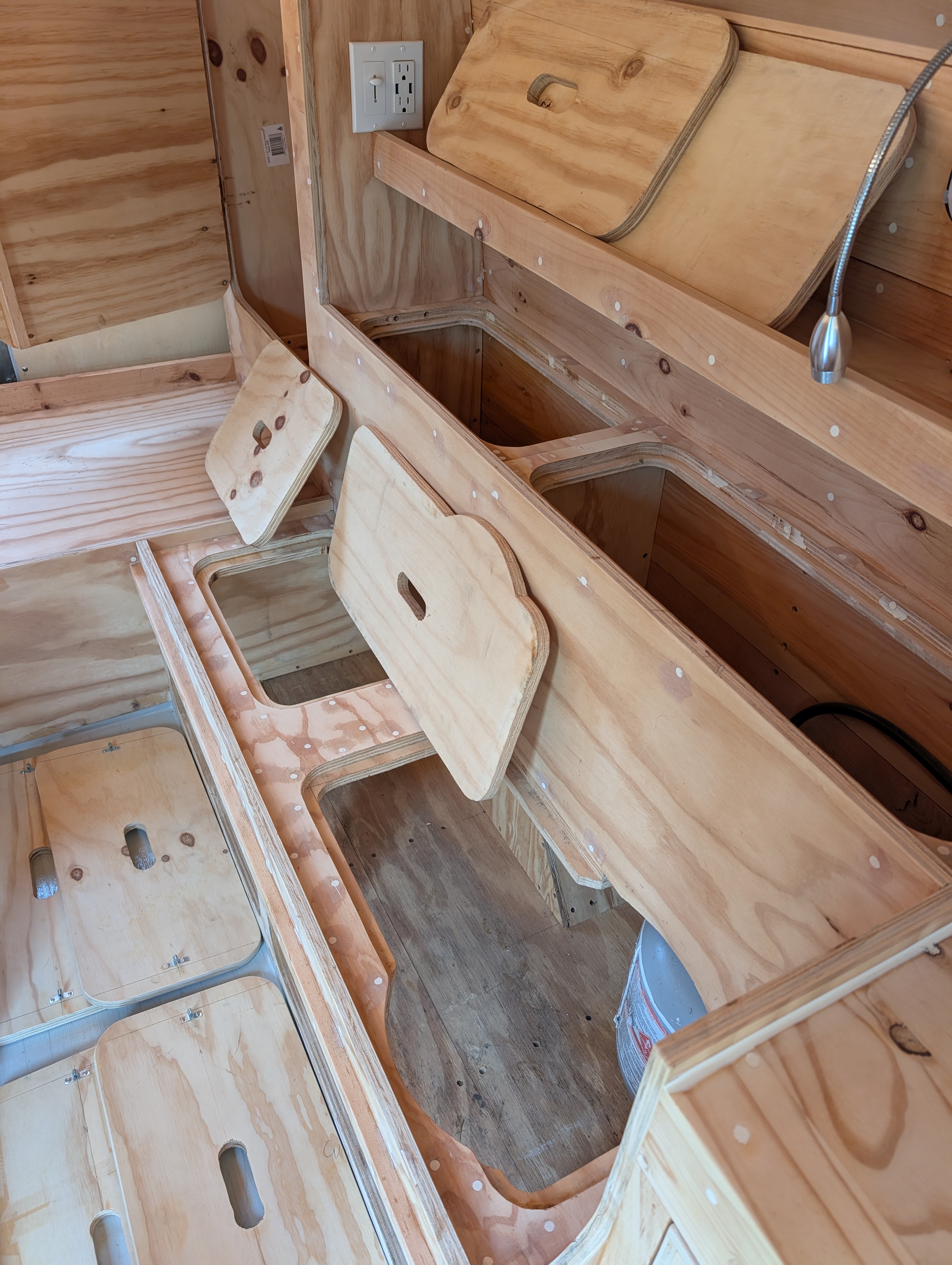
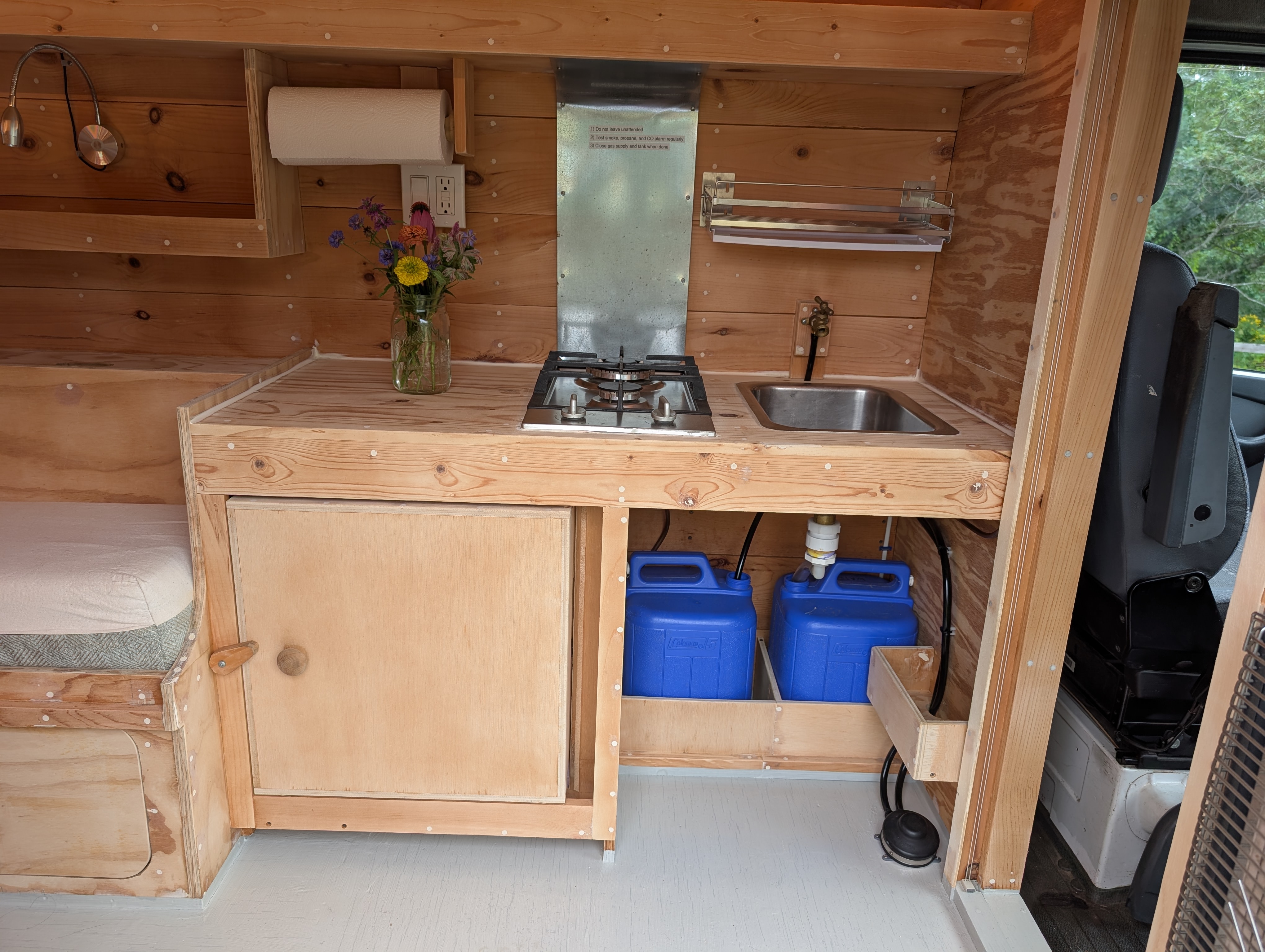
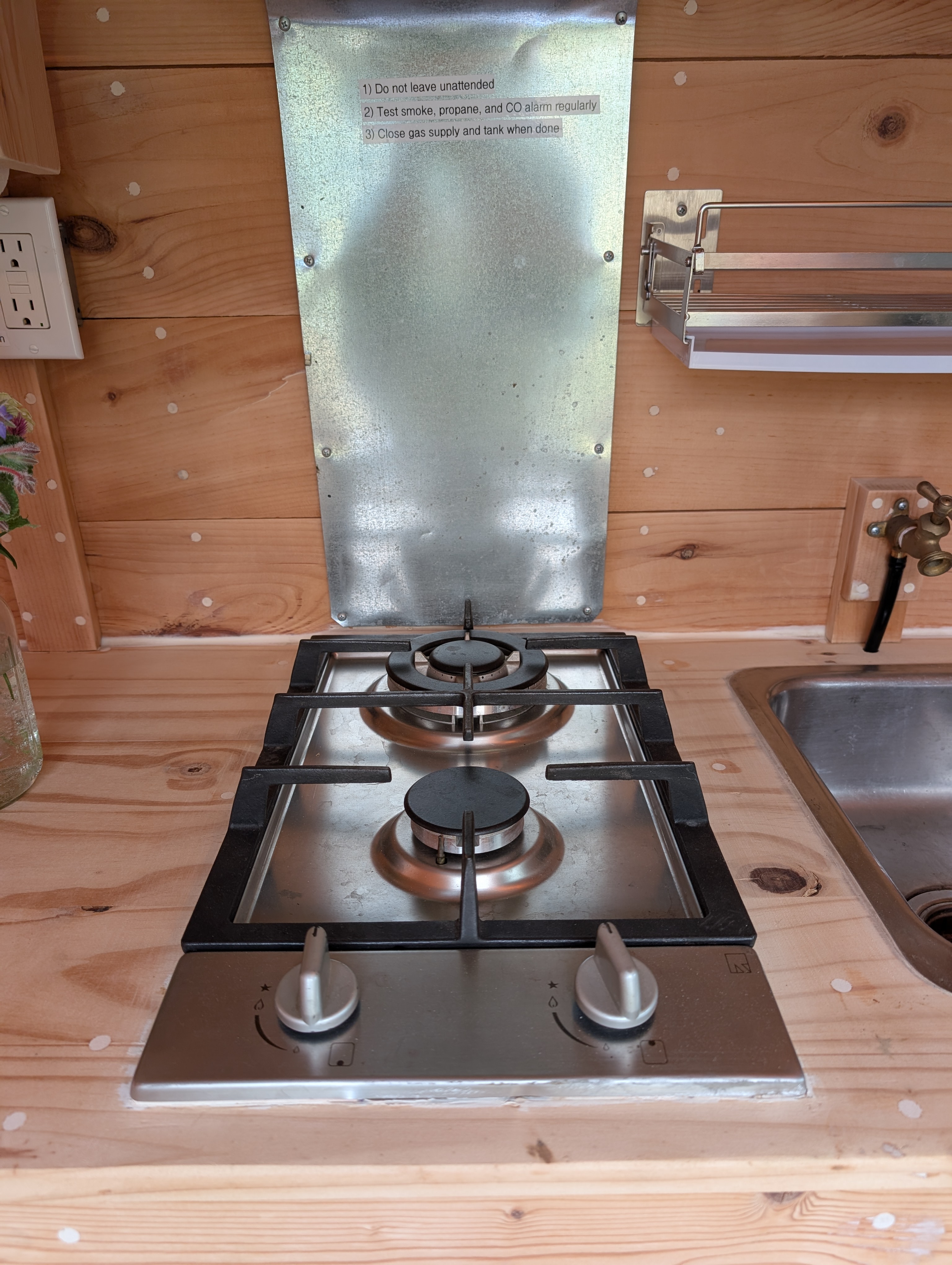
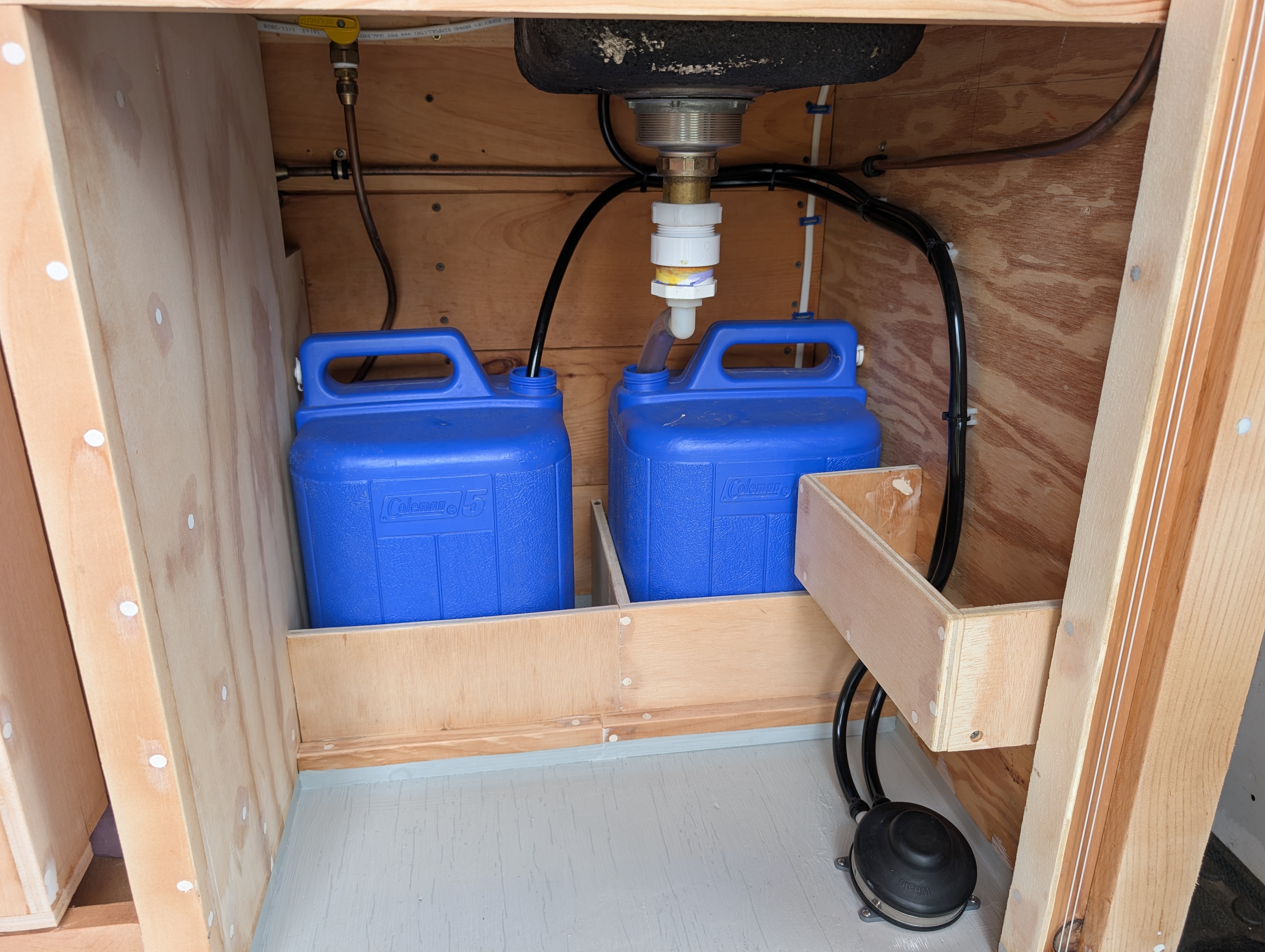
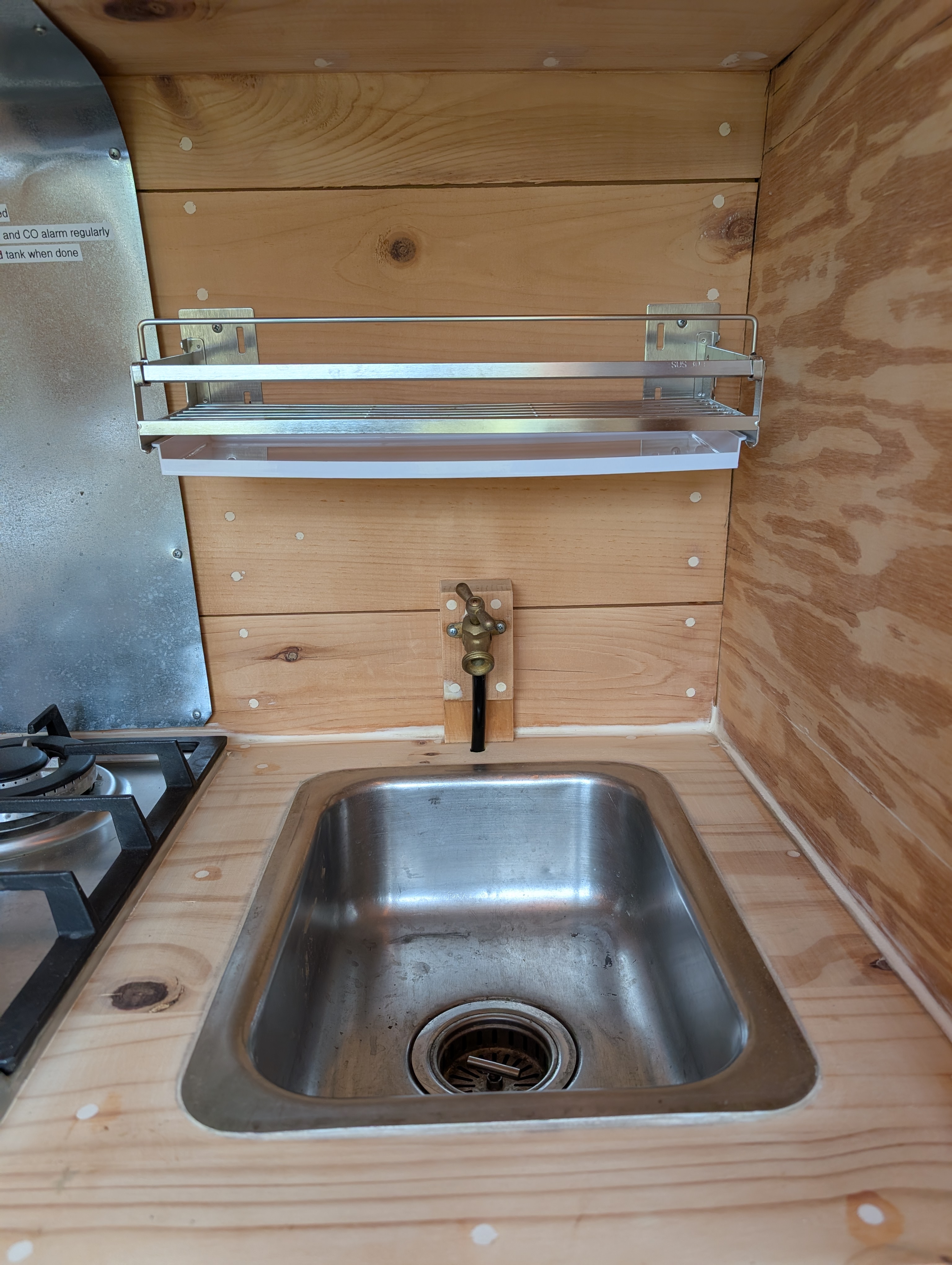
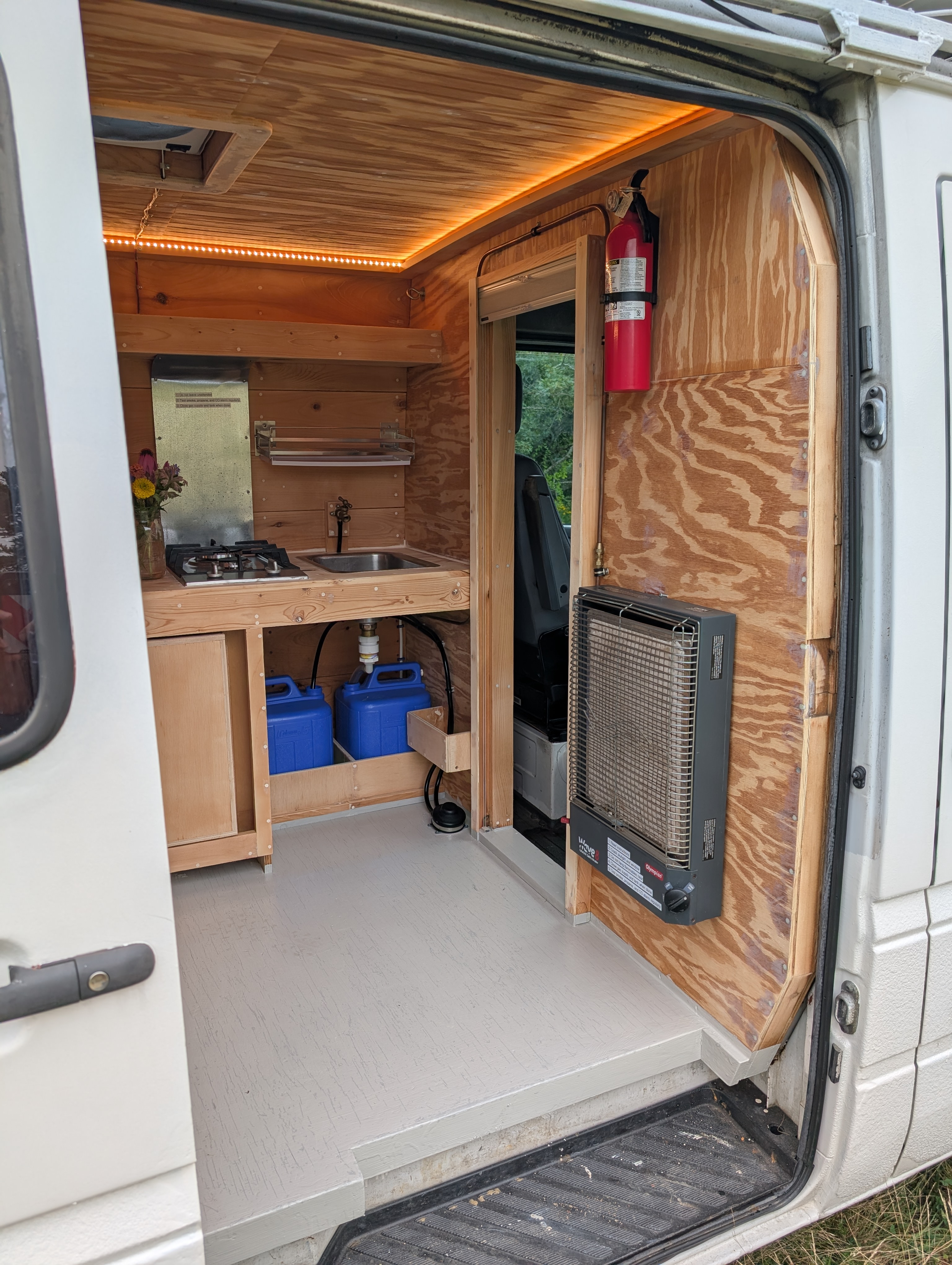
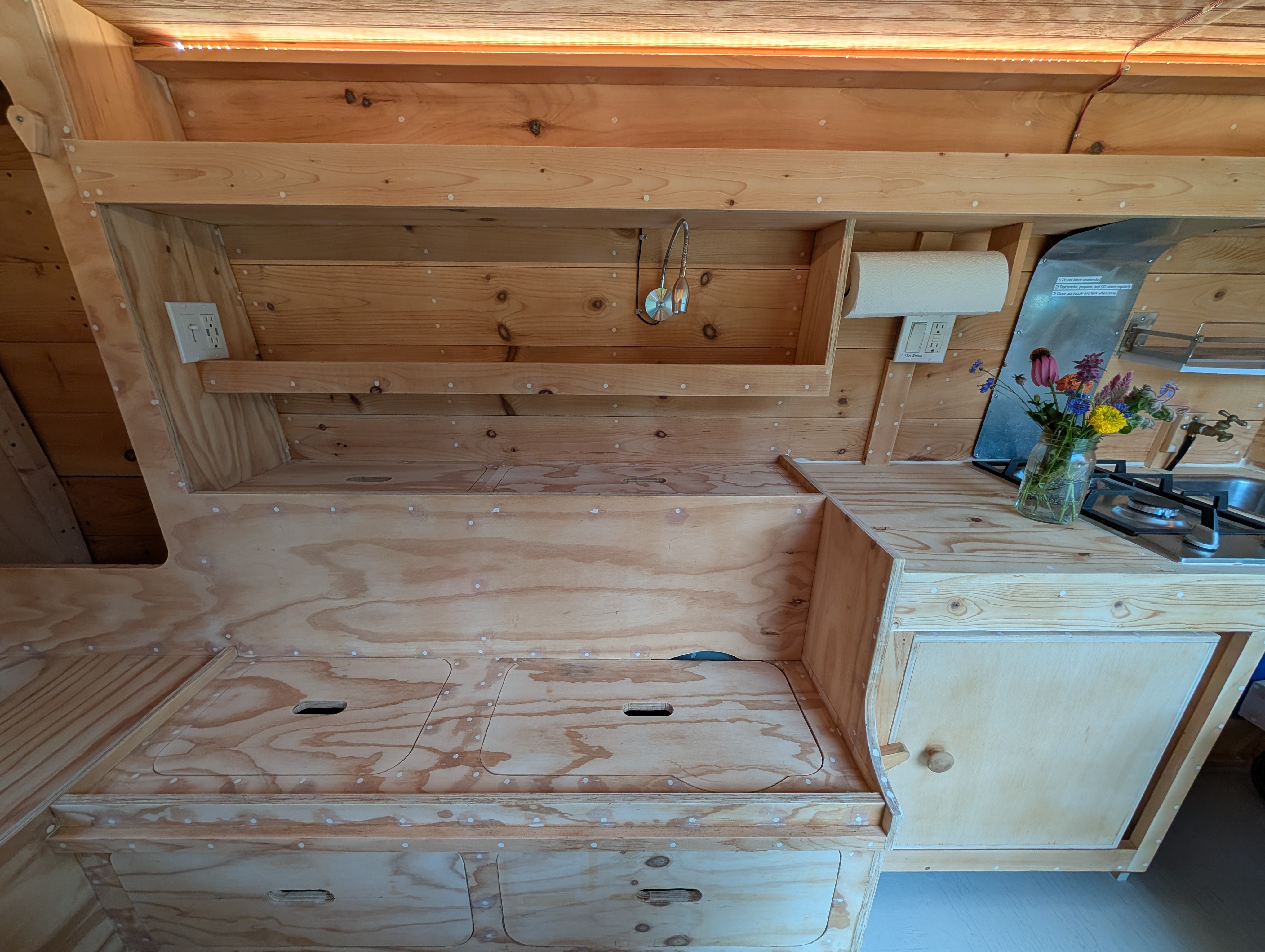
Kitchen features are kept manual but functional, the water is a foot pump under the sink, with a removable gray water and fresh water tank (5 gallons each). The sink is stainless steel with a brass faucet. The stove is a propane 2-burner unit, plumbed into a central Propane supply, with a manual shutoff valve for safety. The fridge is a normal dorm-style unit that I added extra insulation to and a wood front, there is a switch on the wall to easily turn it off if you’re not using it. The solar system can keep it going indefinitely as long as you don’t park in direct shade all the time. Heat is also propane, using an 8000 Btu/hr Camco Olympian Wave 3 heater, capable of sweating you out of the van when set to high. There is a CO, smoke, and propane alarm installed for safety.
I wanted a van I could use in the city so I intentionally didn’t go with a super-high roof, which limits access to a lot of parking lots and underpasses in New England. All interior surfaces of the van have been carefully insulated with spray foam and rigid XPS board, which keeps the interior very livable in the cold. There is a fan with a skylight built into the ceiling for ventilation in the hot weather.
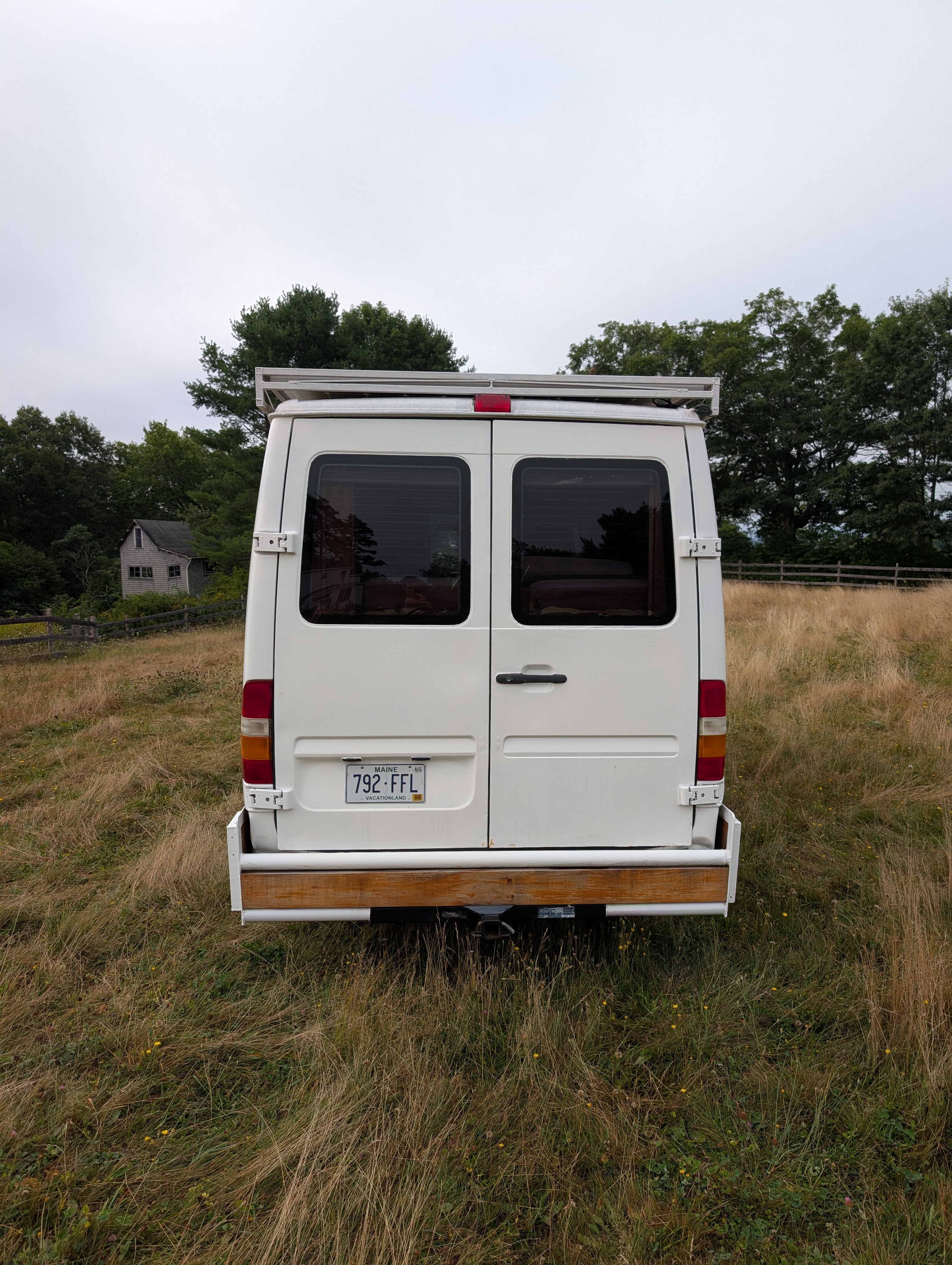
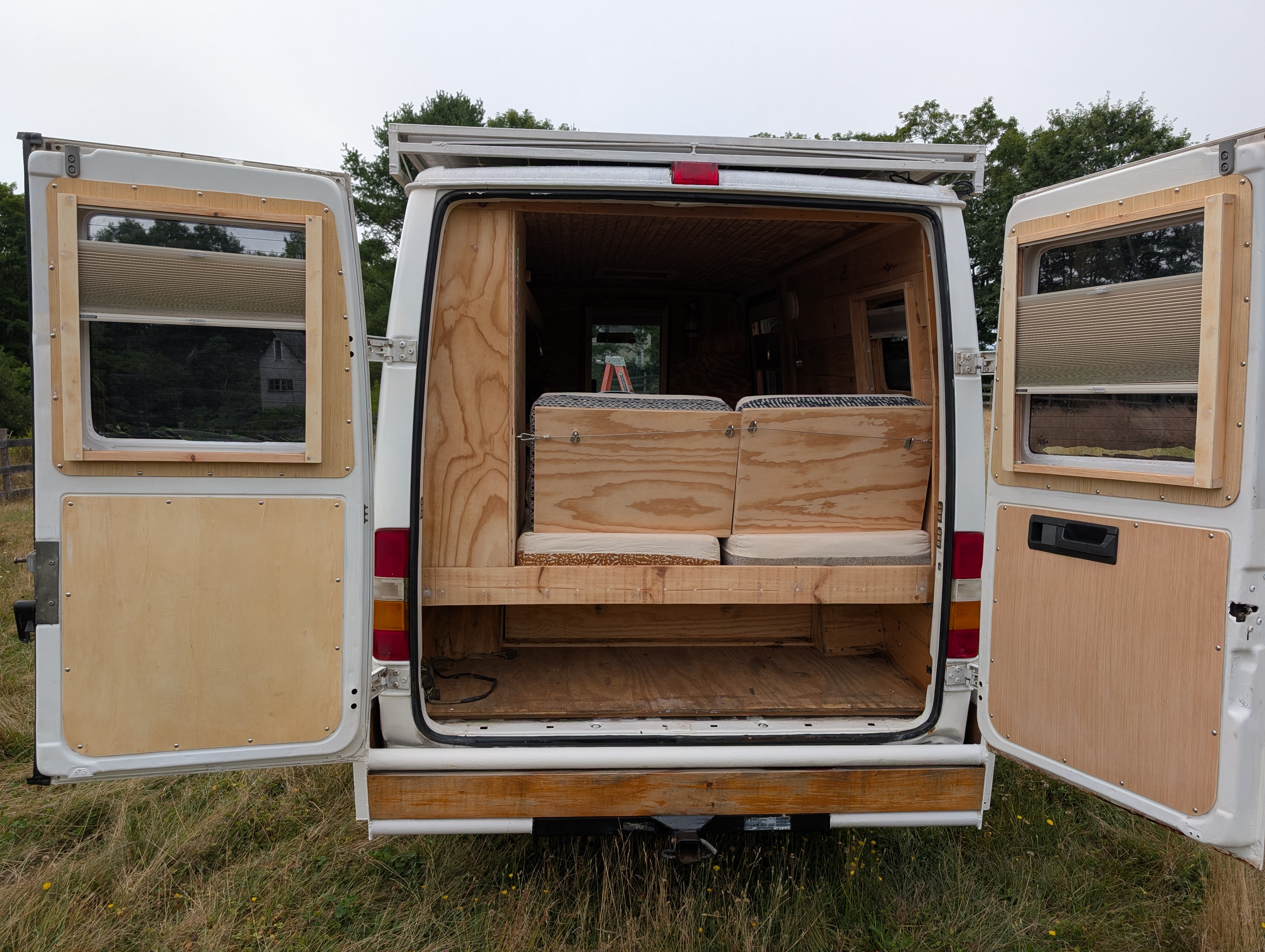
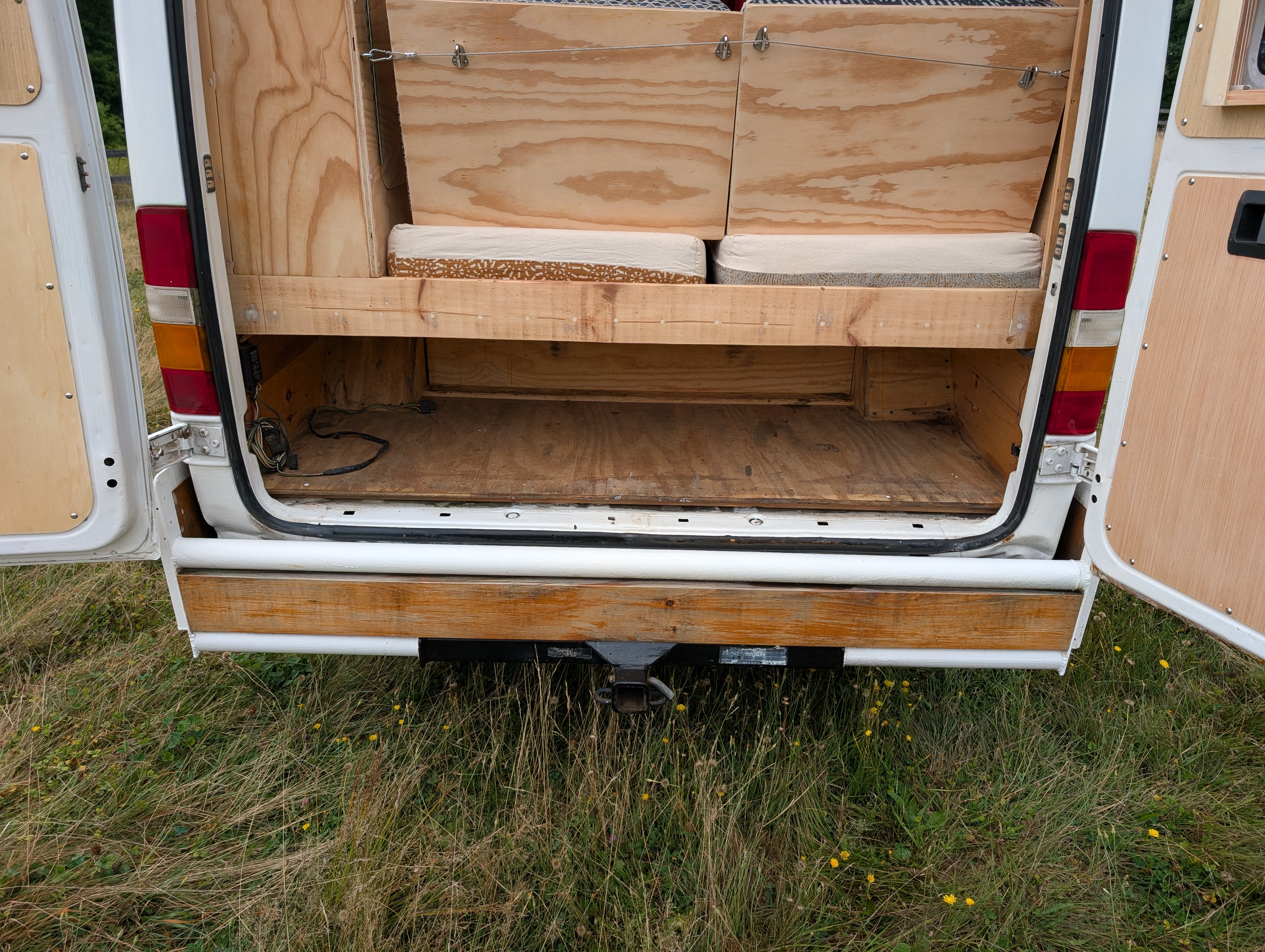
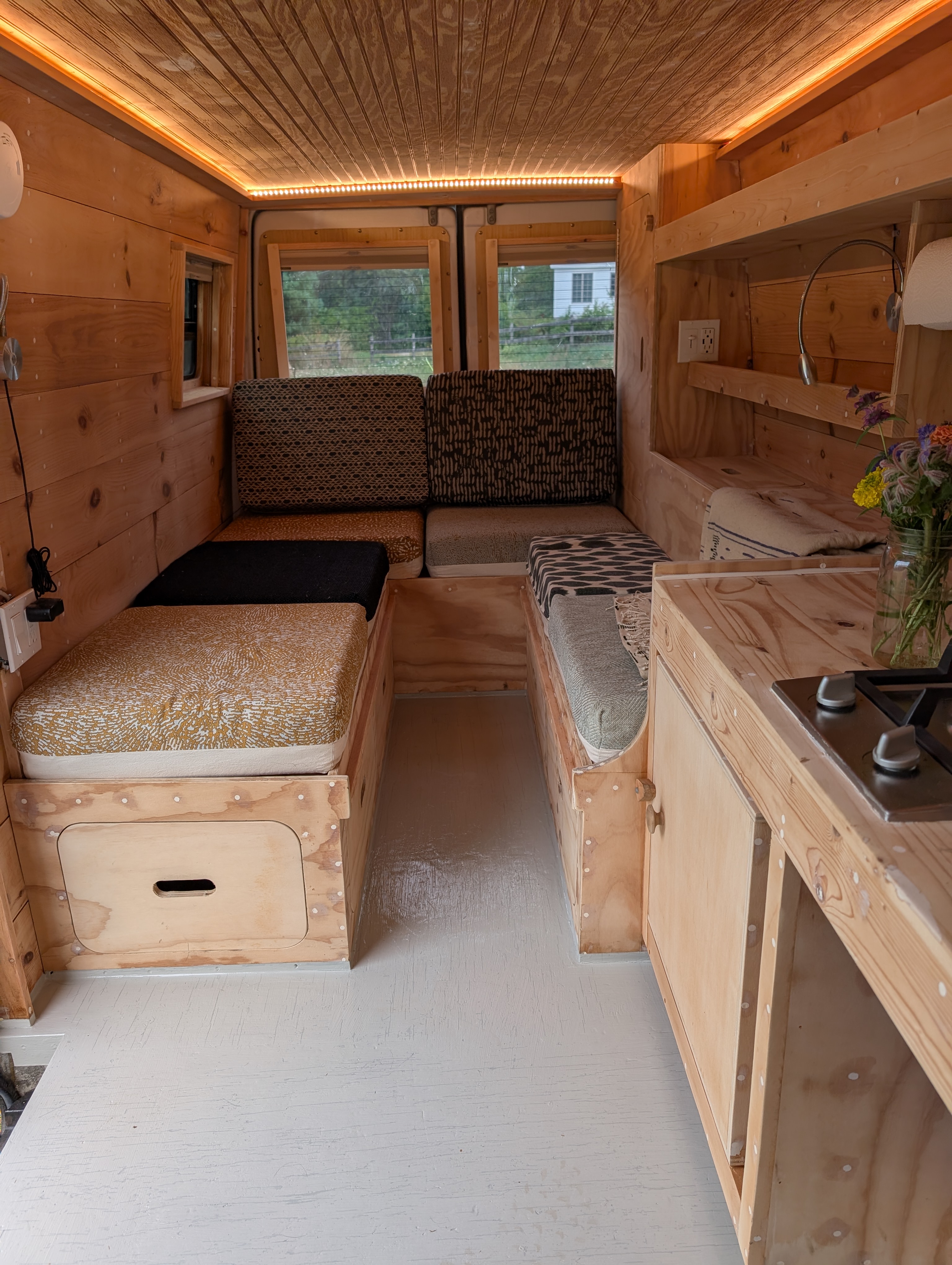
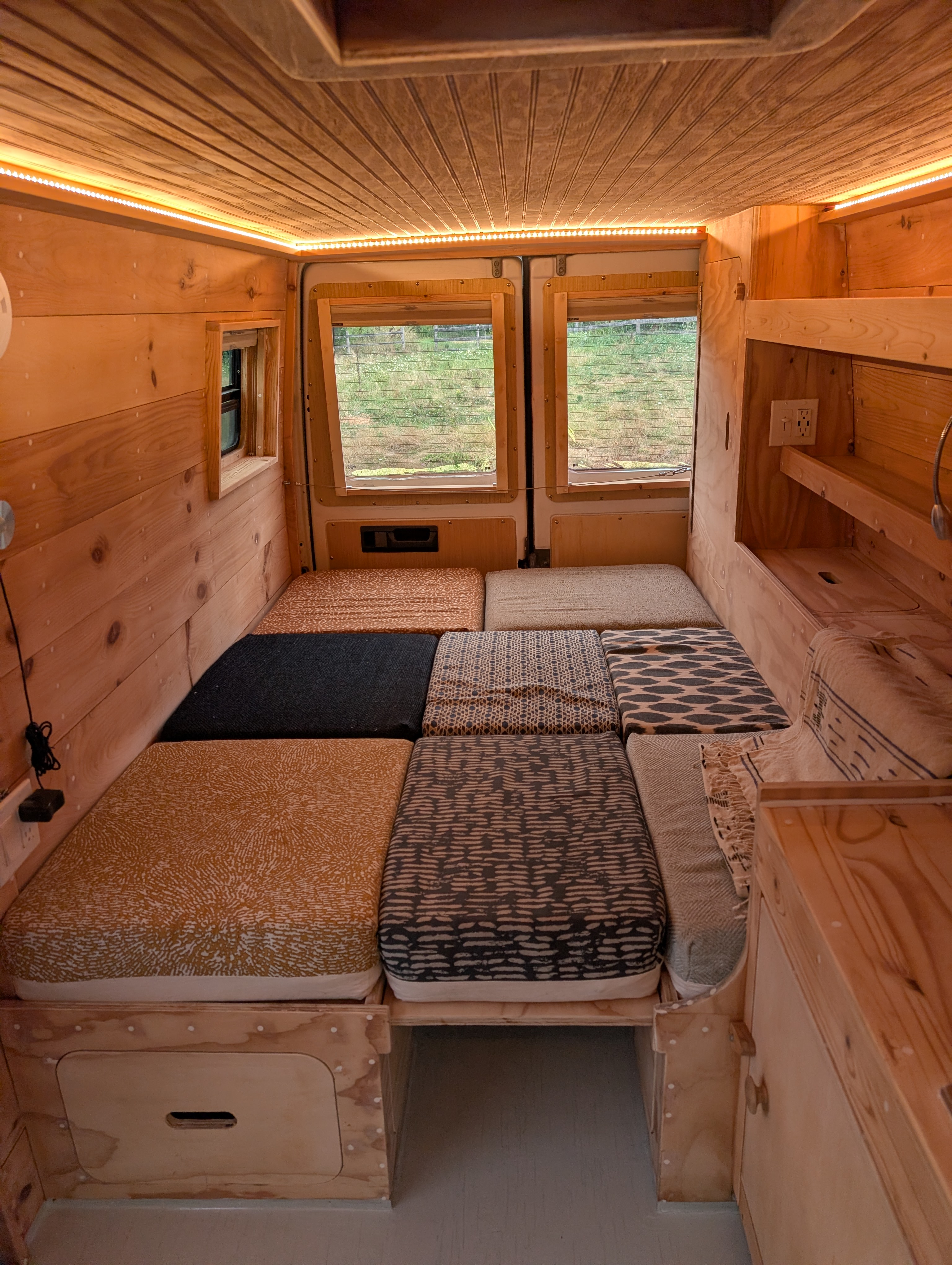
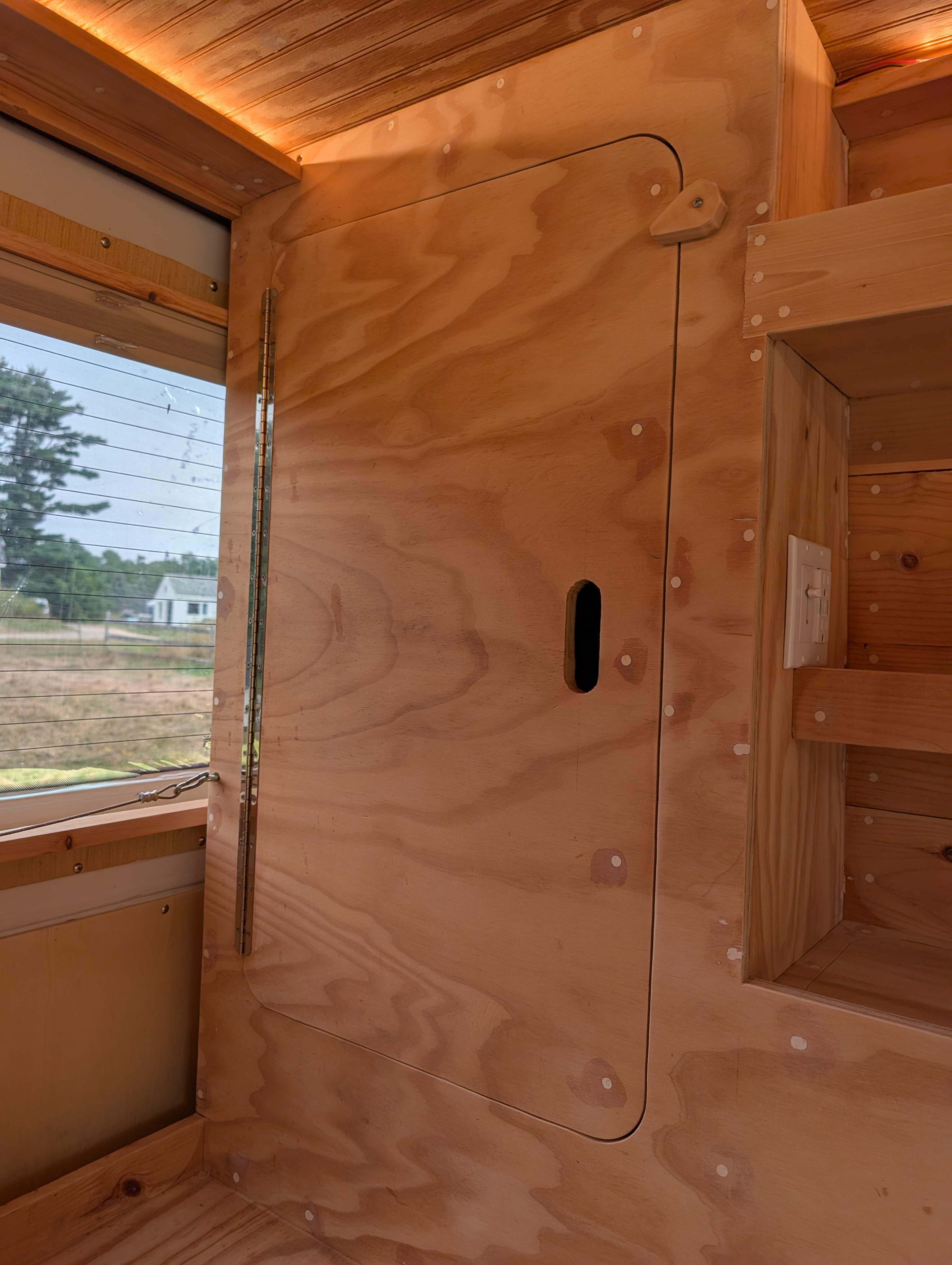
The bed and cabinets are all built from wood with access panels under all the cushions and on the walls to maximize storage. The center cushions come up to form a couch during the day and all of them can have their plain canvas or colorful patterns facing up. When in “bed” mode the cushions form a standard double-sized bed. A taller cabinet in the back of the van works well for clothes on hangers. Shelving over the kitchen works well for food and kitchen storage. A large locker under the bed is accessible from the back doors. The walls are rugged enough that a new owner could add additional shelves as desired. The van also has a class III hitch (with a trailer light controller) that could be used for additional bike or storage racks.
I bought the van many years ago on a budget, the mechanicals were in great condition, but there were rust issues, and the previous owner had attempted to fix it by apply bed-liner to the lower sides of the van. I cared most about making strong permanent repairs, not necessarily perfectly hidden patches, so you will notice visual signs of welded panels on the bottom where I cut out the old repairs and re-did them. You will also notice some textural traces from the old bed-liner on the lower panels. However, there are no more rust issues, and everything was replaced with new, welded, patches, nothing is hiding under a pile of Bondo and fiberglass.
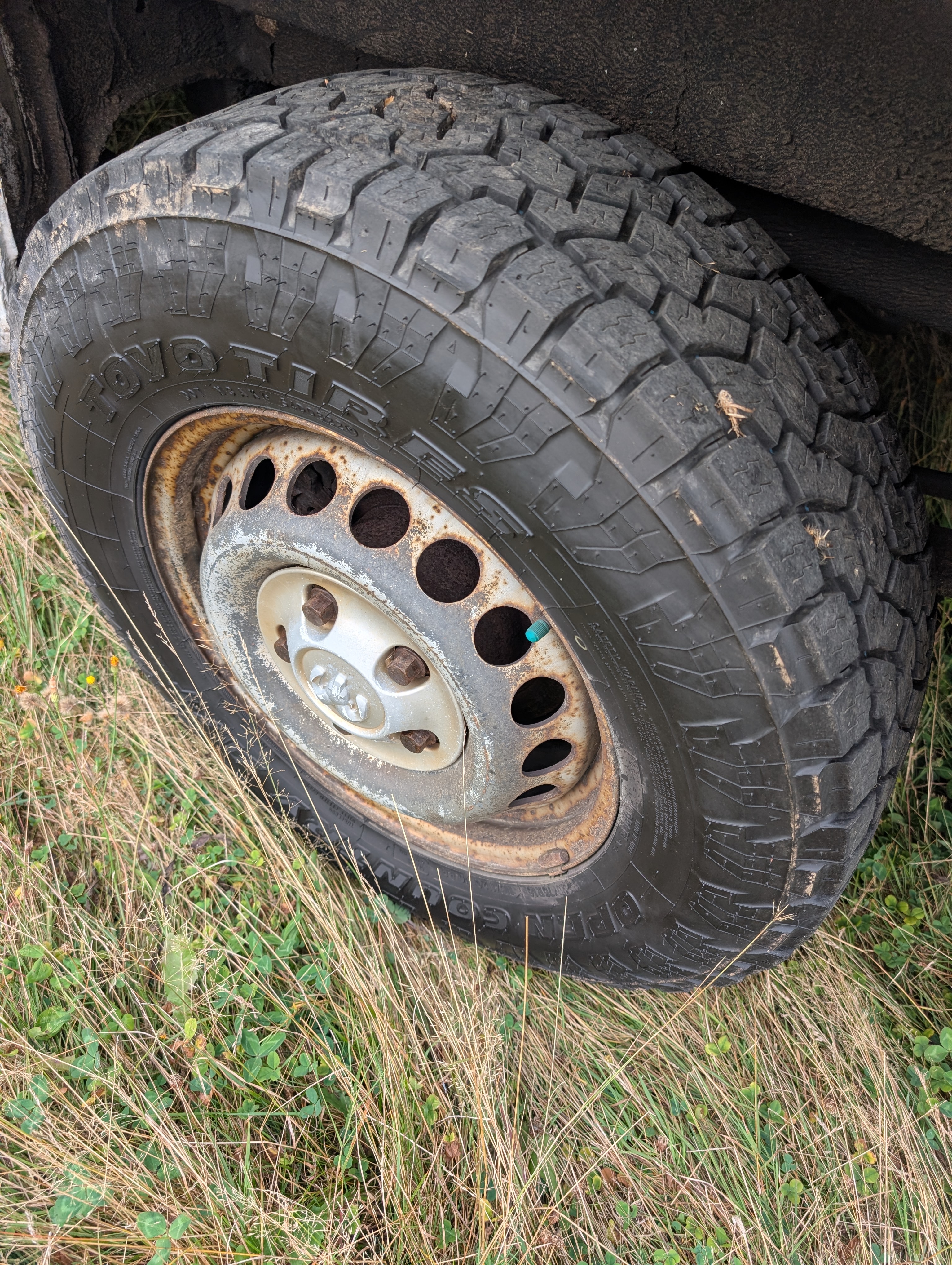
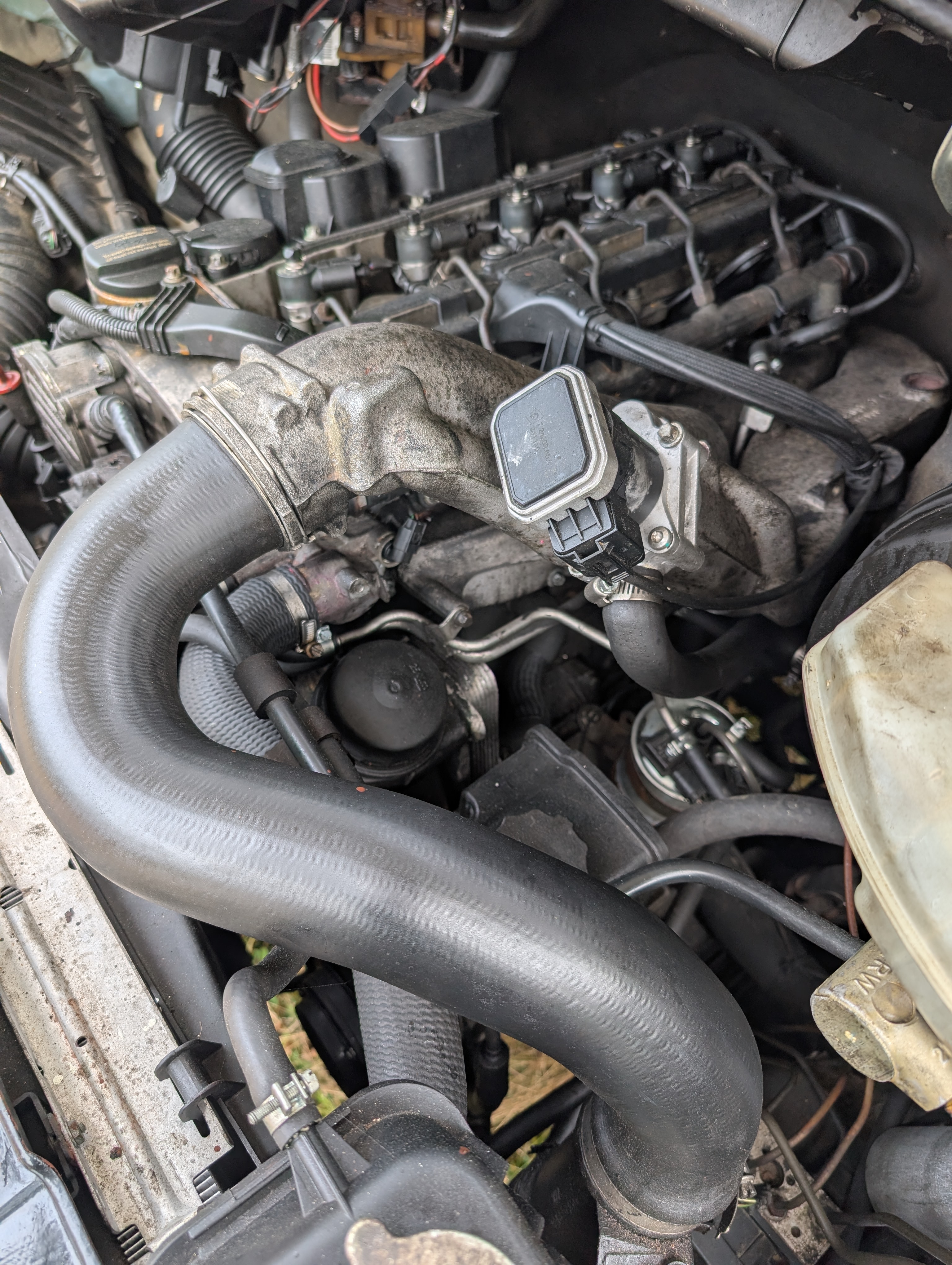
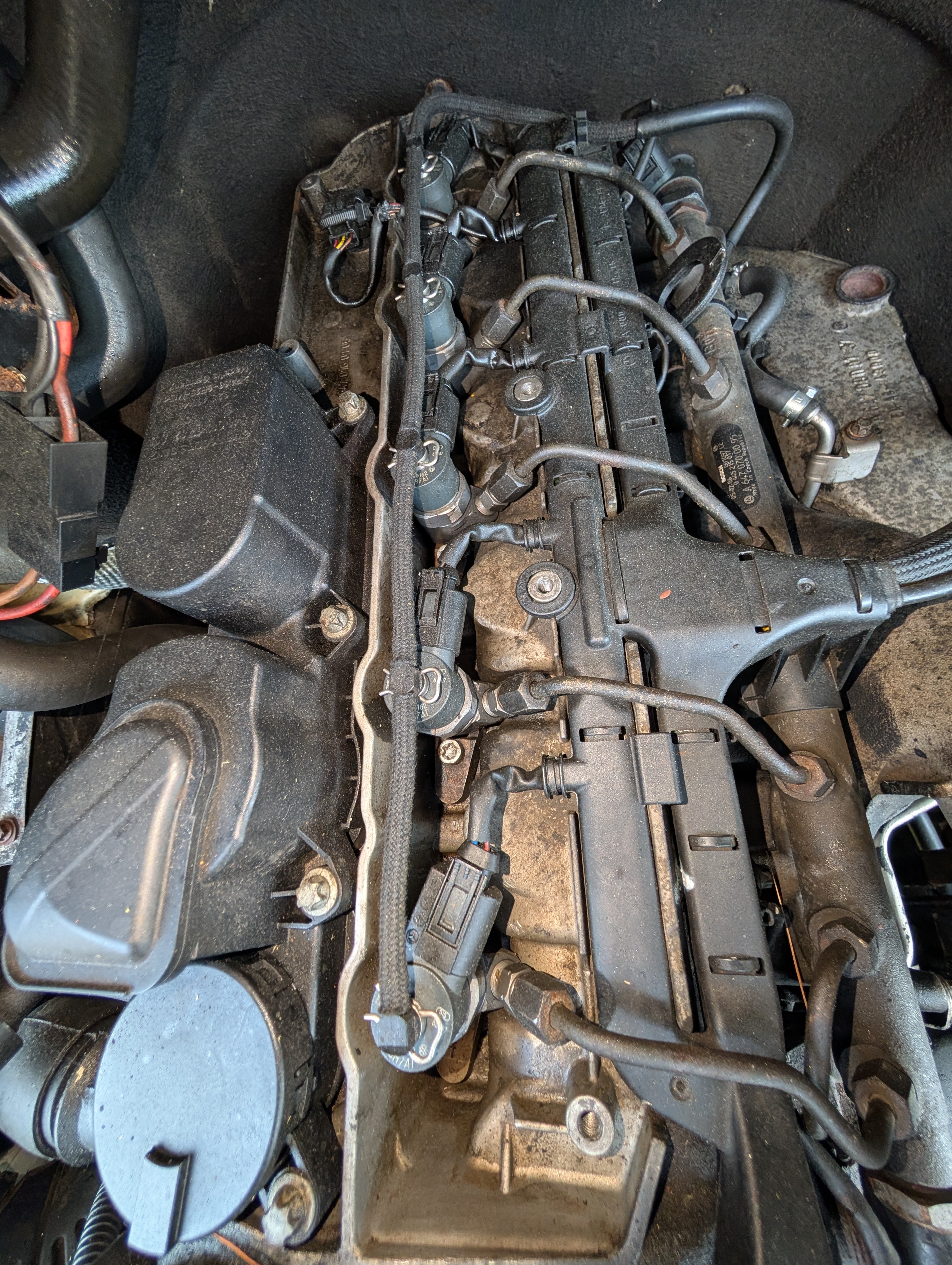
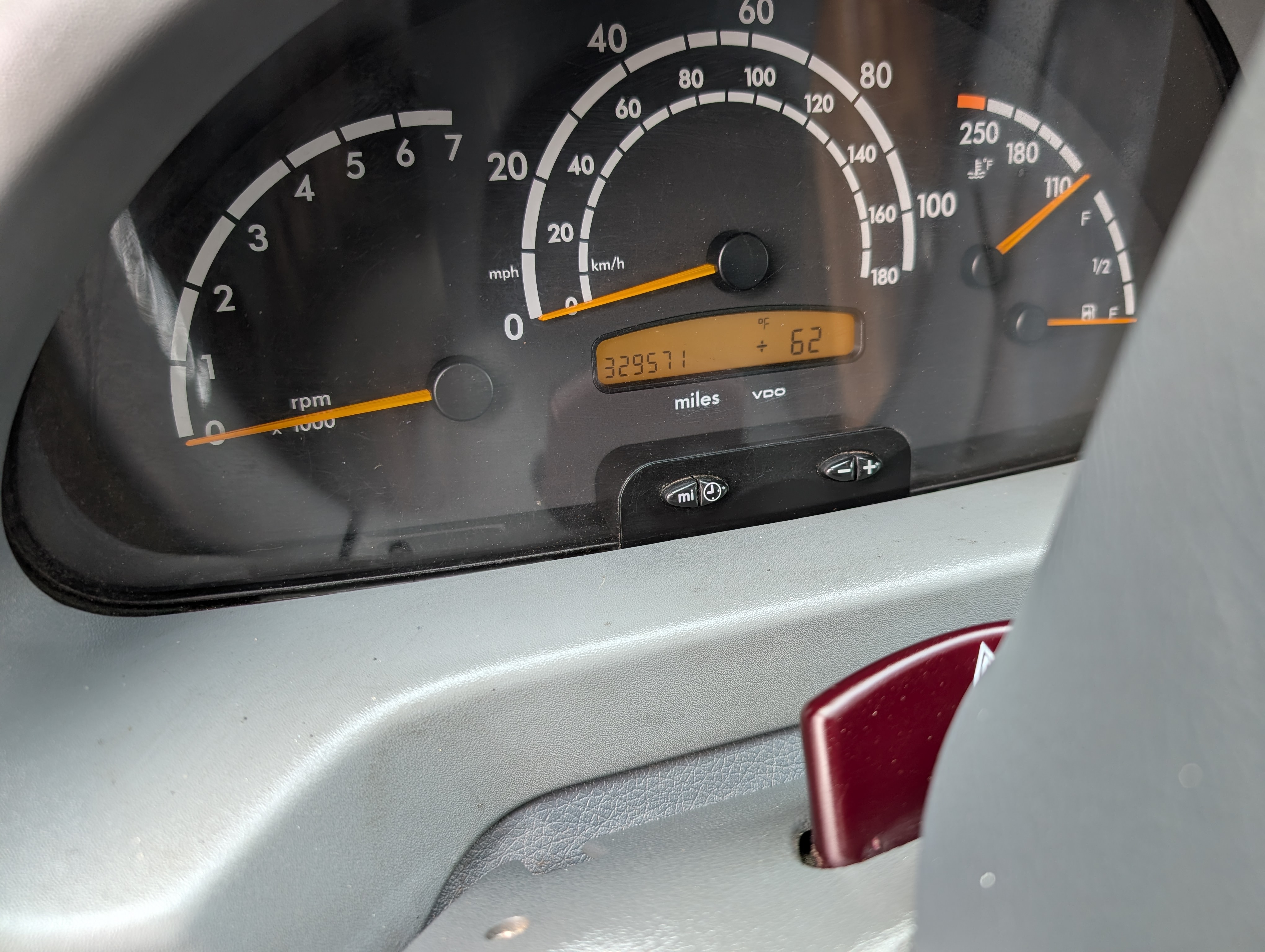
The van has been well maintained, I was religious about fuel filter, oil, and other fluid changes. None of the glow plugs or injectors are fused into the block, so any future maintenance should be easy. I recently did a full service over the winter: new injectors, all rubber hoses, glow plug controller, belts, transmission fluid, differential fluid, coolant, new radiator, new AC condenser, new electric fans, cabin air filter, engine air filter, EGR valve, battery, and all the little things that tend to go wrong on these vans. There is no check engine light and it has a current Maine inspection sticker it passed with flying colors. The AC works well. Some of the classic issues buyers watch out for with this age Sprinter van are the “rumble strip noise” from the transmission and leaky injectors, this van has neither, and I’ve replaced the older generation parts that cause these issues. This was my house on wheels for a long time and I want to make sure the next owner gets many more miles of enjoyment from it! Sprinters are known to go well into the million-mile range when taken care of. I really hope this van finds the right next owner! Thank you for reading.
More photos of conversion process: https://photos.app.goo.gl/Ahnzd9d9Lh4HEtr78