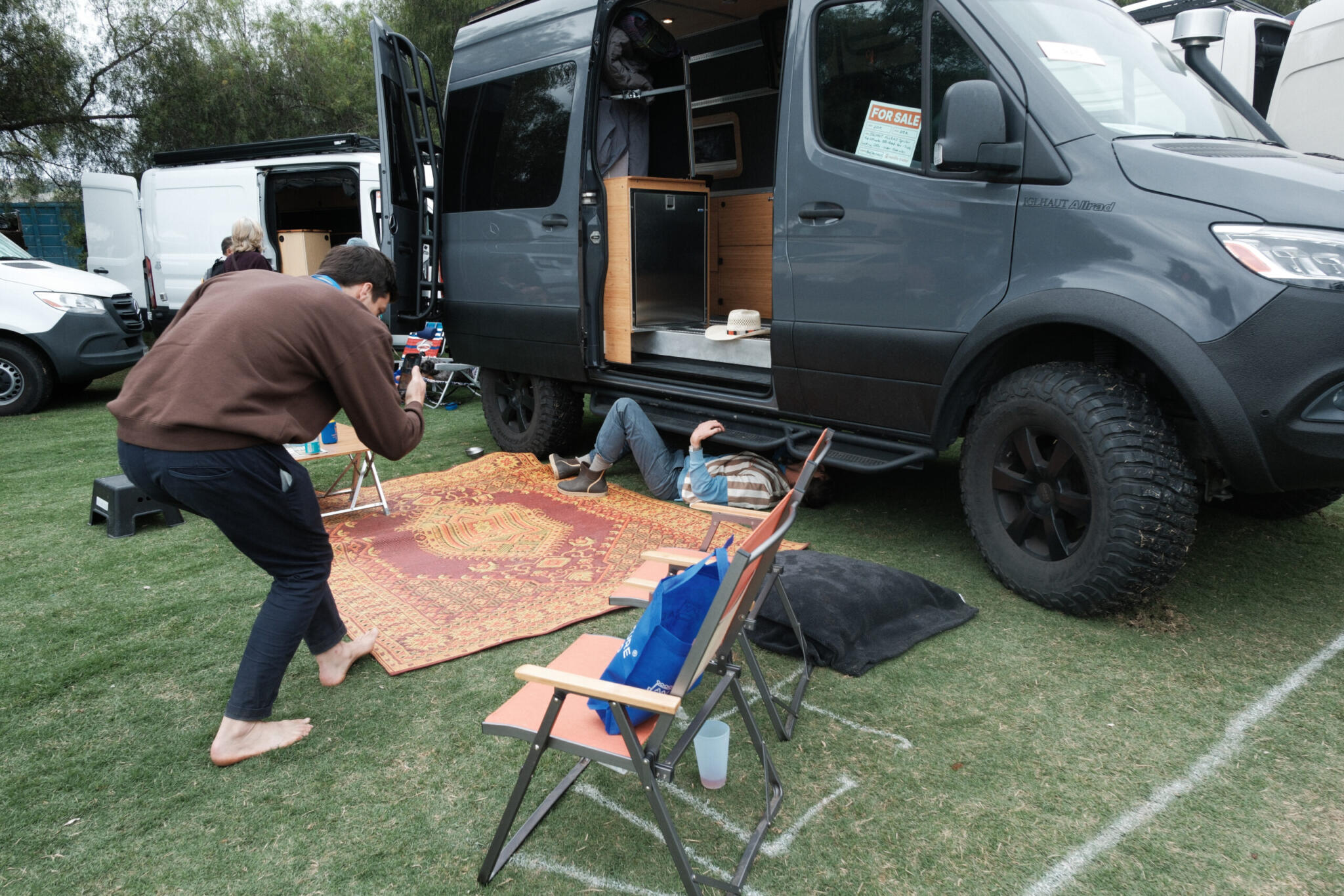
Good airflow is the foundation of comfort in any van setup. Whether it’s through roof vents, portable fans, or strategically placed windows, maintaining steady air circulation keeps the interior cooler and prevents humidity from building up. It’s also important to have water gallons and an answer for air conditioning or airflow at all times in your van. High temperatures can quickly lead to dehydration, heat exhaustion, and restless nights, making it hard to enjoy your travels. The good news? With the right gear and smart planning, you can stay comfortable and safe no matter how hot it gets outside. This guide shares practical, field-tested essentials to help you beat the heat and fully enjoy your summer van life adventures.
How to Increase Airflow
The best way to increase your vans airflow is by using a circulating fan, vented windows, or a powered air-conditioning unit. The Maxxair Fan Deluxe is the MVP of van fans for a reason. It’s built tough, quiet enough to sleep under, and has both intake and exhaust modes so you can pull in cool air at night or kick out hot air during the day. The rain cover is clutch too, you can keep it running during a storm without worrying about leaks. When building your van unless you plan on only going places with cool temps then an air-conditioning unit is a necessity.. Roof-mounted units like the Dometic RTX 2000 or Nomadic Cooling 3000 can drop your van’s interior temperature fast, but they’re power-hungry. Plan your battery system accordingly. Even if you don’t go full-AC, you can still do a lot with passive cooling. Reflective window shades (like Vanessential’s Reflective Covers) and light-blocking curtains make a massive difference.
The Art of Staying Hydrated
Purchase big refillable jugs, consider a water filter like the LifeStraw, Britta, or Sawyer Mini Filter. Electrolyte packets (Redmond Re-Lyte , a personal fave) or LMNT packets for on the go.) If you’ve got a fridge, freeze bottles overnight — they’ll act as ice packs and melt into cold drinks throughout the day. And if you’re off-grid for long stretches, look into compact water tanks or jerry can systems with spigots — no one wants to juggle flimsy gallon jugs in a dusty parking lot.
What Clothes can I Pack for Vanlife?
A van is smaller than a house, storing clothes means we need to get creative and get used to polyester, cotton, and lightweight fabrics that can be folded and stored neatly in any crevice of the van. Go for quick-dry, moisture-wicking fabrics. Think Patagonia, REI Co-op, or honestly anything you’d wear on a long hike. Bring at least one lightweight long sleeve — not for warmth, but for sun protection. There’s nothing like pulling into camp, peeling off sticky driving clothes, and throwing on something dry and breathable before you start cooking dinner.
How to Cook in the Heat
To avoid overheating, move your kitchen outside whenever possible, a folding camp table and something like the Coleman 2-Burner Tabletop Stove are good options. For storage, 12V fridges like the Dometic CFX3 or ICECO VL Series run efficiently off solar and keep food safe for days. If that’s not in the budget, a high-quality cooler with block ice works fine, just be ready to drain it often. Meal-wise, think minimal heat. Wraps, salads, rice bowls, and no-cook snacks are lifesavers. Prep what you can early in the morning before it heats up. The less time your stove is on, the happier you’ll be.
How to Maximize Power Efficiency for a Cool Van?
To boost power efficiency, insulate your van well to maintain cooler temps, use LED lights that draw minimal energy. Not only will you be less comfortable in a hot van but your devices will have to work harder. When it comes to powering everything, portable stations from EcoFlow or setups built around Victron Energy gear can run fans, fridges, and even ACs (for short bursts). If you’re not ready for a full solar install, start with a small system — 200W of solar, a charge controller, and a lithium battery can cover essentials like fans and lights- just make sure to monitor your battery levels when running multiple devices in hot weather — heat can shorten battery life. Also, allways keep your electronics shaded or ventilated. Heat buildup inside storage compartments is real and can fry sensitive gear.
The Real-World Budget Breakdown
Here’s what it really costs to stay cool and comfortable:
Cooling & Airflow:
- Reflective window covers – $25–$60
- Portable fans – $30–$50 each
- Maxxair Fan Deluxe – $450–$500
- Rooftop AC (Dometic/Nomadic) – $1,200–$2,000 installed
Hydration & Water:
- LifeStraw or Sawyer Mini Filter – $25–$40
- Water storage – $20–$80
- Electrolyte packs – $15–$30
Cooking & Storage:
- Coleman Tabletop Stove – $90–$120
- 12V Fridge – $300–$600
- Cooler – $60–$100
Power Setup:
- EcoFlow River 2 – $250–$400
- Victron SmartSolar 100/30 Controller – $250
- 200W solar kit – $250–$400
For weekend travelers, $500–$700 covers most of the basics. For year-rounders, investing $2,000–$3,000 in a solid cooling and power is well worth it.
The Takeaway
The trick isn’t to avoid the heat, but to navigate through it. Travel early or late in the day, park in the shade, use your fans wisely, and be proactive with hydration.. Because once the airflow’s right, the fridge is humming, and the evening breeze rolls in through your open doors — that’s when van life feels exactly like it’s supposed to.